The Stats Guy: Australia is getting angrier – that’s a worse Australia


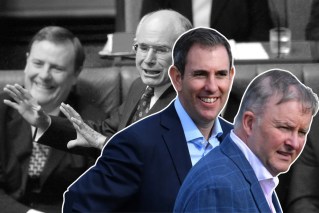
People are angriest where they feel powerless, and they direct that anger at the nearest person wearing a name badge. Photo: TND/Getty
I have published enough columns (this is my 257th for The New Daily) and posted enough on social media (on X I published almost 50,000 data posts in the past decade) to have developed the occupational skill of distinguishing criticism from anger.
Criticism challenges your argument and is always welcome. Anger wants to punish you for making an argument in the first place.
The angry commenter insults your intelligence, questions your motives, or attacks your heritage. Sometimes they threaten you. Even through a short online comment, the anger can be felt.
It is tempting to dismiss this as the internet just being the internet. The data suggest something more significant is happening.
According to the eSafety Commissioner, 25 per cent of Australian adults had seen online hate in the year to August 2019. By November 2022, the figure had risen to 34 per cent.
The share of adults who had personally experienced online hate increased from 14 to 18 per cent. Among 18 to 34-year-olds, almost half had seen online hate and 26 per cent had personally experienced it.
This is a relatively narrow definition of hate, covering attacks connected to characteristics such as political views, race, gender, nationality, age or appearance.
It does not capture every rude Facebook comment, aggressive email or personal insult.
The broader universe of online anger is therefore likely to be much larger.
Reports of serious cyberbullying involving children have risen even faster.
Valid reports to eSafety increased from 536 in 2019 to 2978 in 2024, a rise of 455 per cent in five years. Nearly half the 2024 complaints concerned children aged 13 or younger.
We should not conclude that cyberbullying itself increased fivefold. Awareness of eSafety grew, parents and schools became more willing to report incidents, and children spent more of their lives online.
Still, the current level of exposure is sobering. In a recent national survey, three in five Australian children had encountered online hate, more than half had experienced cyberbullying at some point, and more than a quarter had personally experienced online hate.
The internet did not invent human anger. It industrialised its distribution.
For most of human history, expressing rage required some effort. You had to write a letter, confront someone in person or at least pick up the telephone.
Social consequences encouraged a pause between feeling angry and acting angry.
The smartphone removed the pause.
A stranger can now offend thousands of people before breakfast. Anger can be expressed instantly, anonymously and without witnessing the damage it causes.

Smartphones removed the barrier for many angry people. Photo: Pexels
More importantly, social media rewards the behaviour.
A study published in Science Advances analysed millions of posts and conducted behavioural experiments. It found that people receiving positive social feedback for expressions of moral outrage became more likely to express outrage again.
Users also adjusted their behaviour to match the level of outrage common in their online networks.
I manage two sizeable social media accounts on maps and data (449,000 on Facebook and 256,000 on X) and can see in my analysis tools that aggressive language posts are simply being shown to more people – if you want higher reach, just be more controversial, be more aggressive.
This does not prove that angry Facebook posts cause customers to abuse supermarket workers. But it is reasonable to wonder whether spending years practising public hostility online has weakened our restraint offline.
The workplace data point in that direction.
Safe Work Australia recorded a 56 per cent increase in serious workers’ compensation claims involving assault or exposure to workplace violence between 2017-18 and 2021-22. Over the longer decade, claims increased much faster among women, who are disproportionately represented in public-facing health, education, care, retail and government jobs.
The most common behaviours are not necessarily dramatic physical attacks. They include hostile behaviour, shouting, swearing, intimidation, threats and insulting treatment.
Consider the supermarket checkout.
The SDA’s 2025 survey found that 88 per cent of participating retail and fast-food workers had experienced verbal abuse during the previous year.
One-quarter reported physical violence, double the proportion in 2023. Ten per cent had been spat on. Almost one-third had experienced abuse related to their race, ethnicity or cultural background.
Most revealingly, 59 per cent reported being abused by the same customer more than once, up from 52 per cent in 2023.
This provides a clue about what might be changing. Australia isn’t producing millions of newly abusive people. A relatively small cohort of angry people may simply be acting out more frequently, more intensely and with less fear of consequences.
The same pattern appears at school. The long-running Australian Principal Occupational Health, Safety and Wellbeing Survey found that the share of principals reporting threats of violence rose from 38 per cent in 2011 to 54 per cent in 2025.
Exposure to physical violence increased from 27 to 48 per cent.
Much of the physical violence comes from students, sometimes in complicated behavioural, disability or trauma-related circumstances.
Threats from adults are harder to rationalise. Parents are among those abusing and threatening the people running their children’s schools.
Health workers face a similar deterioration. A NSW Nurses and Midwives’ Association survey found that 88 per cent of participating nurses, midwives and carers had experienced or witnessed violence and aggression during a six-month period in 2025, up from 80 per cent in 2019.
Again, some hospital aggression is driven by dementia, mental illness, intoxication or extreme distress. That cannot automatically be used as evidence that society has become ruder and angrier.
But aggression is also directed at receptionists, nurses and doctors by relatives frustrated about waiting times, access and treatment decisions.
The underlying pattern is familiar. People are angriest where they feel powerless, and they direct that anger at the nearest person wearing a name badge.
During 2022-23, Services Australia recorded almost 9000 face-to-face customer aggression incidents from about 10 million service-centre contacts.
The incidents came from a tiny minority of customers, but they were concentrated among roughly 6200 frontline employees.
Bus drivers report abuse over fares and late-running services. A Victorian industry investigation found that most verbal abuse never entered official databases and concluded that recorded figures dramatically understated drivers’ exposure.
Sport Integrity Australia warns of growing verbal and online abuse directed at players, coaches, referees, spectators and volunteers.
Unfortunately, Australian sporting organisations do not yet publish a consistent national time series of referee abuse, abandoned matches, spectator bans or officials leaving the game.
Even at junior AFL matches, clubs now appoint an “umpire escort”, – an adult tasked with accompanying young umpires on and off the field, and shielding them from confrontations with parents and spectators.
Here we reach an important distinction. Australia appears to be getting angrier, but not necessarily more violent. Phew, some good news.
The ABS Crime Victimisation Survey found that the proportion of Australians experiencing physical assault or face-to-face threatened assault fell from 6 per cent in 2008-09 to 3.4 per cent in 2023-24.
Serious injuries tell a similar story. The Australian Institute of Health and Welfare reports that the rate of hospitalisation caused by assault declined from 85 per 100,000 people in 2015-16 to 80 in 2024-25. Homicide rates have also generally declined over the past decade.
There are serious exceptions, including domestic strangulation, sexual violence and rising stranger-assault hospitalisations. We must not paint an unrealistically rosy picture.
The broad trend, however, is less punching and more shouting. Why?
Financial pressure is one likely contributor. The Scanlon Foundation’s social-cohesion research found that the proportion of Australians describing themselves as poor, struggling to pay bills or merely getting along increased from 31 per cent in 2021 to 40 per cent in 2025.
Only 38 per cent expected their own lives to improve in the near future.
A financially comfortable person can tolerate a delayed bus, a faulty app or a long supermarket queue. A person already worried about the mortgage, rent, grocery bill and job security has a shorter fuse.
At the same time, everyday services have become more frustrating. Customers navigate chatbots, automated menus, password resets, staff shortages, delayed appointments and systems that make them feel they are not being treated as people.
The employees behind the counter did not design the systems, but they become the face of the organisation and can be yelled at.
Some of the statistical increase also reflects progress. Workers are more willing to report abuse. Employers increasingly recognise psychological injuries. Conduct once dismissed as “part of the job” is finally being recorded.
Even after allowing for better reporting, the pattern is difficult to ignore.
Australia has become physically safer over the longer term. Yet the tone of public life has hardened.
Anger has migrated away from the pub brawl and into the comment section, the inbox, the school office, the hospital waiting room and the supermarket aisle.
The internet gave anger an always-open outlet. Economic stress supplied fuel. Frustrating systems provided targets. A small number of repeat offenders discovered that society rarely makes them pay a price.
We should not accept this as the unavoidable mood of modern life.
The first step is to name the problem accurately. Australia is not necessarily becoming more violent. We are becoming less restrained.
The fix likely isn’t a mandated mass meditation retreat, but an economy and political system that feels like it delivers for the majority of Australians again.
Simon Kuestenmacher is a co-founder of The Demographics Group. His columns, media commentary and public speaking focus on current socio-demographic trends and how these impact Australia. His podcast, Demographics Decoded, explores the world through the demographic lens. Follow Simon on Twitter (X), Facebook, or LinkedIn.