The US and Iran are back at war. Thanks to one main sticking point, there’s no end in sight

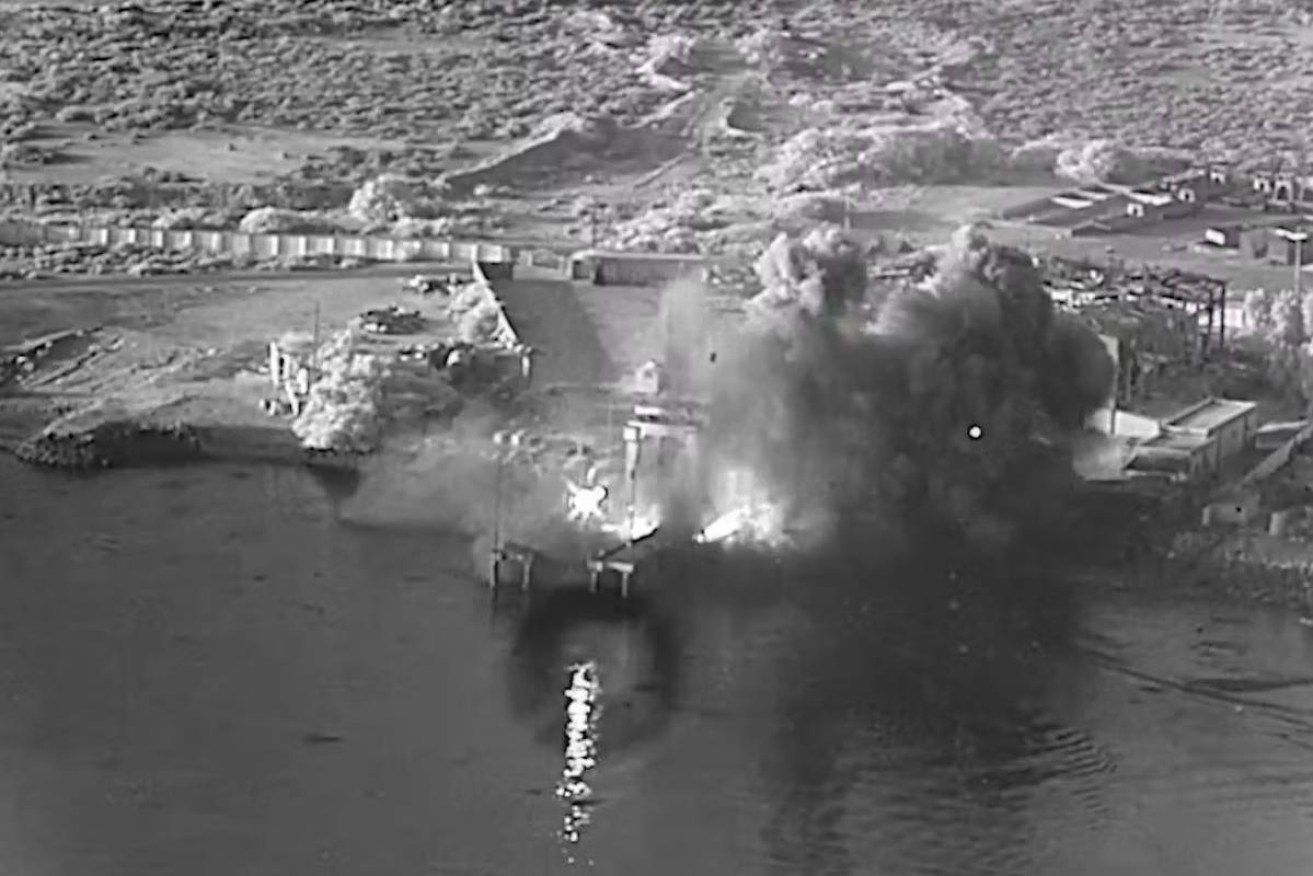
Control over the Strait of Hormuz has become the main bone of contention between the US and Iran in their prolonged conflict. Photo: AAP
Control over the Strait of Hormuz has become the main bone of contention between the US and Iran in their prolonged conflict.
In the face of Tehran’s determination to control the strategic waterway as a critical leverage of deterrence, US President Donald Trump has declared the end of the ceasefire, a renewed blockade of Iranian ports, and a return to war to degrade Iran’s defensive capabilities further and wrest control of the strait.
Trump has also announced a completely non-viable 20 per cent levy on each tanker that passes through the strait – a move to counter Iran’s own plan to impose tolls on commercial ships.
Given this impasse, a potential end to the conflict is nowhere in sight. This will only bring more economic pain to both protagonists, the region and the world.
Why did the ceasefire fall apart?
The irony is that before the US and Israel started attacking Iran on February 28, the Strait of Hormuz was not in dispute. It was open to free shipping, allowing for the daily flow of 20% of the world’s supply of oil and liquified natural gas, exported from the Persian Gulf countries.
Iran’s Islamic Revolutionary Guard Corps (IRGC) closed the chokepoint as part of its response to the US-Israeli military campaign, causing worldwide energy shortages and threatening a global economic crisis.
Tehran then set up the Persian Gulf Strait Authority to manage the waterway, potentially along with Oman on the southern side of the strait. It also signalled the imposition of a management toll on ships passing through the waterway.
The Trump administration rejected this move, but had no plan on how to deal with it – or end the war. Under increasing economic and political pressure after six weeks of fighting, the administration was forced to resort to a diplomatic resolution.
The 14-point memorandum of understanding that Washington and Tehran signed last month to end the war was vague and open to different interpretations.
But it was relatively clear on two critical issues:
- there would be a 60-day ceasefire across the board, including Israel’s assault on Lebanon, while a negotiated settlement was finalised
- and the Strait of Hormuz would reopen to commercial shipping.
Other points in the agreement were more contentious, such as the status of Iran’s nuclear program, the unfreezing of Iranian assets in the West, and a payment of US$300 billion ($430 billion) for Iran’s reconstruction.
Israeli Prime Minister Benjamin Netanyahu was unhappy with the interim agreement and his military has continued its strikes in Lebanon.
And Trump faced opposition, not only from Netanyahu, but also many pro-Israel, Republican supporters in the US who thought the MOU was too favourable to Iran and many Democrats who argued that it fell short of the 2015 Iran nuclear agreement achieved by the Obama administration.
Then, late last week, Iran fired on unauthorised ships going through the strait. The US Central Command responded by firing on Iranian military sites, prompting the IRGC to hit US assets in the region.
Who’s calling the shots?
When the war began, Iran adopted a decentralised military command structure known as the mosaic defence strategy. This allowed IRGC commanders across the country to take retaliatory actions independent of the leadership in Tehran.
The attacks in the past week have exposed the lack of sufficient coordination between the political and military wings of the government.
There is also a divide between the moderates in the government who favour a negotiated settlement and the hardliners who want to punish the US and Israel as much as possible for starting the war and killing Supreme Leader Ayatollah Ali Khamenei.

Iran hardliners want to punish the US and Israel as much as possible. Photo: AAP
On the other side, the Trump administration is now pursuing a policy – imposing a toll on ships in the Strait of Hormuz – that runs counter to what it had previously articulated. Just weeks ago, Secretary of State Marco Rubio said the strait was an international waterway and must be free of any toll.
Trump has not fully explained how the US would collect these tolls, how much the operation would cost, or how the IRGC would be deterred from targeting ships to prevent their passage.
Nor has he addressed the devastating effect his plan would have on the price of oil, gas and fertilisers, with the potential to cause a worldwide recession.
He’s also said nothing about how long the US would be prepared to maintain its costly massive force deployment in the region.
The Iranian Islamic regime is accustomed to fighting wars of attrition. It fought Iraq for eight years (1980-88), while enduring massive human and economic costs. In the end, neither side won.
But Iran did not to lose an inch of its territory and managed to deny Iraqi dictator Saddam Hussein – backed at the time by Washington – from claiming any kind of victory.
The danger of Trump’s new plan is that it could make the conflict much longer and worse than it was before, with more widespread consequences. And it is unlikely to serve the US or the world well, geopolitically and economically.
Amin Saikal is Emeritus Professor of Middle Eastern Studies at the Australian National University, The University of Western Australia and Victoria University.
This article is republished from The Conversation under a Creative Commons license. Read the original article.