Another poll shows One Nation’s surge has turned around. Has the party peaked?

In the months since the Bondi terror attack in December 2025, One Nation’s popularity has surged.
Opinion poll after opinion poll has support for the right-wing populist party gaining. support, mostly at the expense of the Coalition which has been unable to find its footing since its drubbing at the 2025 federal election.
There was always going to be a point at which that surge would abate, and recent opinion polls show we might have reached it.
In the latest Resolve poll, for example, One Nation’s primary vote dropped three percentage points to 26 per cent. At the same time, leader Pauline Hanson, who has been shown to be the most popular pick for prime minister in some recent polls, dropped 8 points to 25 per cent.
Other polls have also shown One Nation’s momentum stalling, with its primary dropping back below Labor’s – but remaining well ahead of the Coalition.
Does this mean it will head back to being, and polling like, a minor party?
It’s not that simple.
Other pollsters such as YouGov paint a more mixed picture, showing some growth in One Nation support – but an improvement for the Labor government after the distribution of preferences.
Taken together, these polls tend to suggest that One Nation is struggling to move its primary beyond the 30% barrier. However, it is maintaining a solid second place in the electorate – ahead of the Coalition.
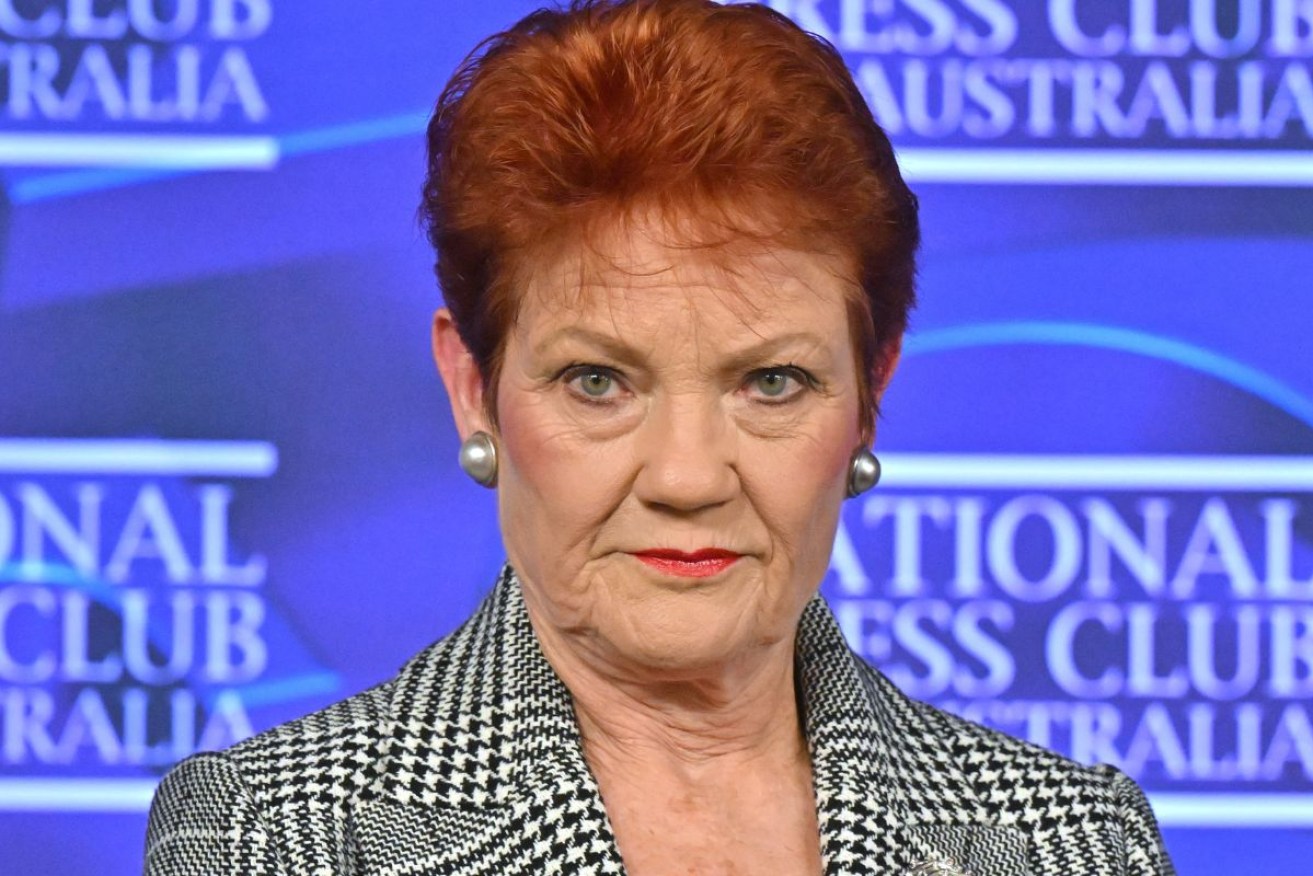
There are two factors that might explain the recent tapering of its support: Hanson’s controversial appearance at the National Press Club, and the government’s recovery from its immediate post budget slump.
The press club address – a mask-off moment?
Pauline Hanson’s press club address announced no new policies. However, it offered Hanson a first-time platform to reiterate her core messages. It also afforded some of One Nation’s less conspicuous policy positions greater visibility.
Particularly blunt was Hanson’s advocacy for a “monocultural” Australia. As noted by eminent historian Frank Bongiorno, this is not a new for position for Hanson.
But it was a clear expression of anti-immigrant and anti-diversity sentiment.
Hanson also attacked young workers for being lazy – with calls for stronger employers’ rights to hire and fire. This was combined with strong criticisms of maternity leave and working-from-home arrangements, and scepticism of the gender pay gap.
Economically, Hanson outlined orthodox neo-liberal policies at odds with much of her populist positioning.
The speech can be seen as something of a “greatest hits”: she attacked “transgender ideology”, “radical Islam” and Indigenous reconciliation.
However, while hitting traditional One Nation issues – Hanson’s wider industrial relations positions may be cause for pause for working class supporters in outer suburban areas, which have helped fuel One Nation’s polling surge amid housing and cost-of-living crises.
Can One Nation’s support hold up?
Essential research polling suggests low support for some of One Nation’s key positions.
Only 20% of respondents supported ending Australia’s support of multiculturalism and an even lower 18 per cent favoured strengthening industrial laws in favour of employers at the expense of workers.
Only 15 per cent supported Hanson’s call to defund the ABC and just 11 per cent supported her plan to abolish SBS.
These attitudes in the electorate have perhaps helped Labor to staunch its slow bleed of support to One Nation.
After initially being panned by the electorate, Labor’s changes to negative gearing and capital gains tax signalled a break from the status quo.
Being perceived as part of politics as usual and promising orthodox economic policy is one of One Nation’s greatest electoral dangers.
Many voters see it as a wrecking ball against the existing political establishment, and are willing to support the party as a disruptive influence. This is despite not endorsing key planks of its policy platform.
Without this outsider appeal – One Nation’s path to gaining support becomes more difficult.
One Nation’s support will endure
One Nation is likely to retain the support of around a quarter of the electorate, unless the Coalition can recover some of its core voters.
The Coalition is in a catastrophic position, losing support to both the left and right.
Opposition Leader Angus Taylor recently outlined an immigration policy based on values discrimination to try to recapture support from One Nation. So far, polls have not shown any gain for this position.
Comparative research suggests that mainstream centre-right parties struggle to win back support from far-right challengers if they simply parrot the policy positions of far-right parties.
Lessons from across the globe suggest the Coalition’s path to winning back support from One Nation is by simultaneously establishing One Nation as illegitimate and dangerous, while appealing to the policy preferences of their supports.
Hanson’s engagement with far-right extremists such as Tommy Robinson might help the Coalition make this case.
Contrasting with Hanson’s embrace of Robinson, Reform Party leader Nigel Farage left his previous Brexit Party following Robinson joining its membership, arguing Robinson was “entirely unsuitable to be involved in any political party”.
Despite this recent polling stagnation federally, Redbridge polling has One Nation in first place in a tight three-way context in Victoria in advance of the November state election.
The party also faces a key contest in the Secret Harbour state by-election in Western Australia. This is an outer-suburban Labor fortress – but one that also fits within Andrew Hastie’s federal seat of Canning.
Both these contests will offer insights into whether economically insecure voters who are feeling cost of living pressures are backing One Nation’s anti-establishment challenge, or whether concerns over policies might cause them to stick with the major parties.
Josh Sunman is Associate Lecturer in Public Policy at Flinders University.
This article is republished from The Conversation under a Creative Commons license. Read the original article.
Want to see more stories from The New Daily in your Google search results?
- Click here to set The New Daily as a preferred source.
- Tick the box next to "The New Daily". That's it.


AI front and centre of Albanese govt's agenda