Taylor Swift got married – so why did the world care so much?

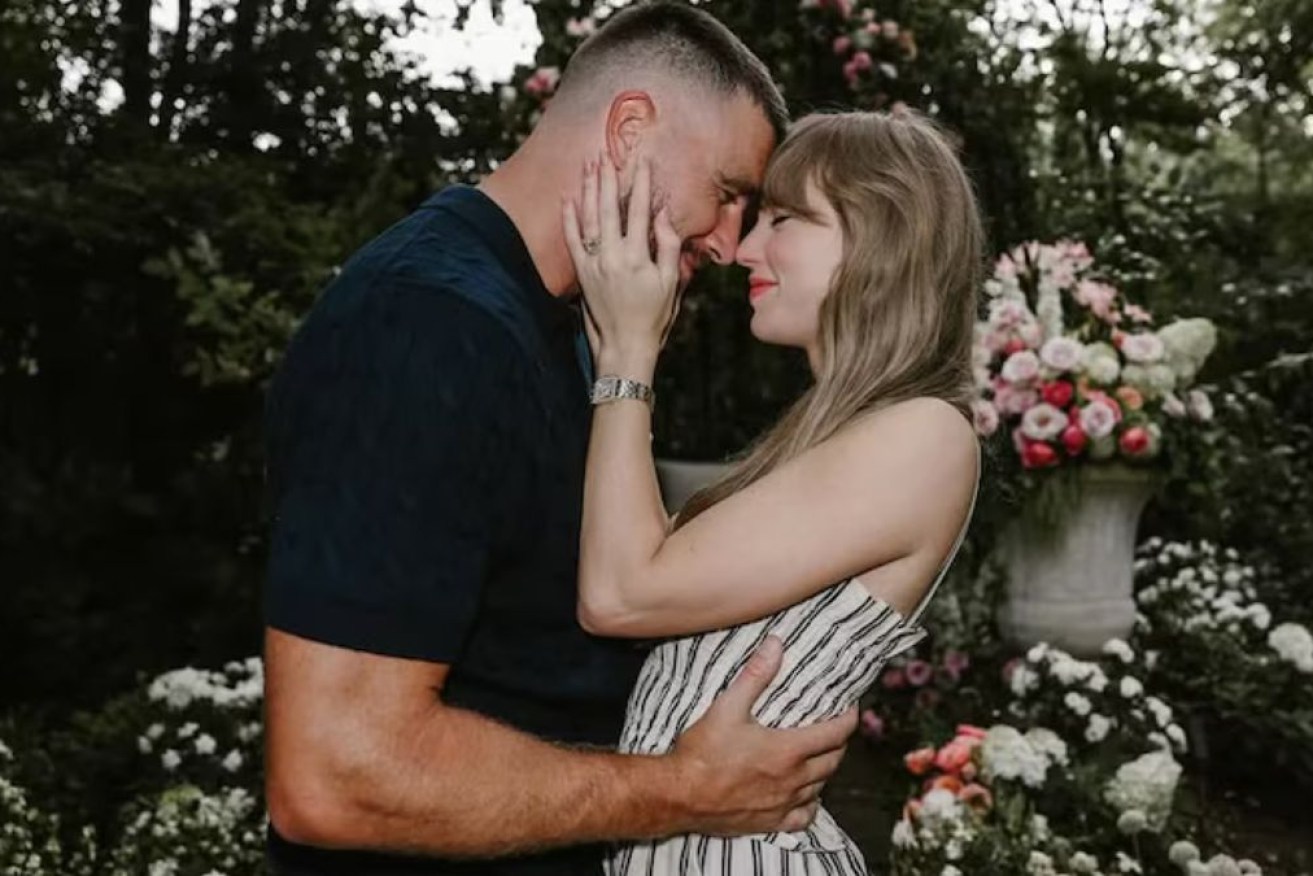
Kansas City Chiefs player Travis Kelce and Taylor Swift had been dating for two years. Photo: Instagram
Few cultural moments reveal our contradictions quite like a wedding.
We live in an era where marriage is no longer considered the inevitable destination of adulthood, yet when Taylor Swift entered one of society’s oldest rituals it seemed the whole world watched.
Swift’s wedding became more than a celebrity spectacle, it became a conversation about feminism, romance, wealth, late-stage capitalism, tradition and the enduring human desire for commitment.
Why did this wedding matter so much to so many people?
Swift’s marriage arrived at a moment when Australia’s relationship culture is undergoing a quiet transformation.
Marriage is no longer the near-universal marker of adulthood it once was. According to the Australian Bureau of Statistics, the national marriage rate has fallen from 7.1 marriages per 1000 adults in 2004 to 5.5 in 2024.
Australians are also marrying later than ever before with the median age at marriage now 32.8 for men and 31.2 for women.
At the same time, living alone has become increasingly common, with the number of single-person households growing from 1.6 million in 2001 to 2.6 million in 2021 – a 62 per cent increase.
These shifts reflect broader changes in how Australians approach relationships, with partnership increasingly viewed as one pathway to fulfilment rather than the defining milestone of adult life.
Younger generations are delaying marriage, prioritising education, careers and financial security, and increasingly rejecting the notion that being single is simply a temporary state before “settling down”.
At the same time, movements such as “boysober” have encouraged women to step away from dating and redirect energy towards friendship, creativity and self-development.
Online conversations around celibacy and intentional singlehood have reframed opting out of romance as a choice rather than a failure.
Writer Chante Joseph has captured this cultural mood, arguing that heterosexual relationships have become increasingly “cringe” within online discourse – less an uncomplicated fantasy and more a space where questions about gender roles, emotional labour and inequality are examined.
Yet Taylor Swift got married, and millions of hearts and minds were captured. The contradiction is precisely what makes the moment culturally significant.
Swift represents perhaps the clearest example of female independence in contemporary popular culture.
She has built a billion-dollar career, fought for ownership of her artistic work, maintained creative control and achieved a level of professional success rarely afforded to women. She embodies many of the freedoms feminist movements have fought for. So why did her wedding become such a defining cultural moment?
Importantly, feminism has expanded the stories available to women, but it has not eliminated our longing for romantic narratives.
US philosopher bell hooks argued that love must be understood critically: Not as a passive fantasy or a social institution that reinforces inequality, but as an active practice grounded in care, respect and freedom.
Her work challenged the idea that women must sacrifice themselves for romantic fulfilment, while also resisting the idea that intimacy itself is something women should reject. This distinction is important.
The feminist critique was never that women should not marry. It was that marriage should not be the only acceptable ending to a woman’s story.
Yet culture continues to return to the wedding as a powerful symbol.
Sociologist Eva Illouz has written extensively about the relationship between romance and capitalism, arguing that modern love is shaped by consumer culture, markets and systems of choice.
Romantic experiences are increasingly packaged, displayed and consumed, from dating apps to engagement rings to the spectacular wedding itself.
Celebrity weddings make this particularly visible. They transform private intimacy into public spectacle, think the Bezos extravaganza or more recently Dua Lipa’s marriage. They become both fantasy and commodity: Something audiences emotionally invest in while simultaneously consuming as entertainment.
Swift’s wedding therefore sits at the centre of a cultural contradiction. We critique the commercialisation of romance while remaining captivated by its most extravagant expressions. But the wedding’s power cannot be explained by capitalism alone.
It also fulfils a psychological need.
Perhaps this is why weddings remain so culturally powerful despite changing attitudes towards marriage itself.
As described, marriage is no longer the cultural milestone it once was. Yet the global wedding industry is projected to exceed US$400 billion ($570 billion) by 2030, fuelled not simply by the legal institution of marriage but by the enduring emotional and cultural significance of the ritual itself.
We may be questioning marriage as a social expectation, but we continue to invest in the ceremony that marks commitment. In many ways, we are reimagining the institution while preserving the ritual.
That may be the central lesson of Taylor Swift’s wedding.
It does not represent a retreat from feminism. Nor does it prove that women secretly desire traditional roles after all.
Instead, it reveals a more complicated truth – autonomy and intimacy are not opposites, and that the wedding may be one of the few collective rituals that still captures a sense of hope. Not because it promises happily ever after, or because every life needs one, but because it celebrates the radical act of choosing another person in a culture that increasingly prizes individualism.
The enduring appeal of Swift’s wedding is not that she found a prince. It is that one of the most successful, wealthy and culturally influential women in the world demonstrated that love need not diminish ambition, and ambition need not preclude love.
The story resonates not because women aspire to marriage above all else, those times have passed, but because it suggests that fulfilment can hold both autonomy and intimacy.
Dr Lisa Portolan is a casual academic at the University of Technology Sydney. Her PhD on dating apps and intimacy from Western Sydney University was published in 2024. It has also been released as a book: Love, intimacy and online dating (Routledge, 2023)

Listen, deliver, rebuild trust to quiet the populist right