The era of the ‘safe seat’ seat is over and traditional election arithmetic is overturned

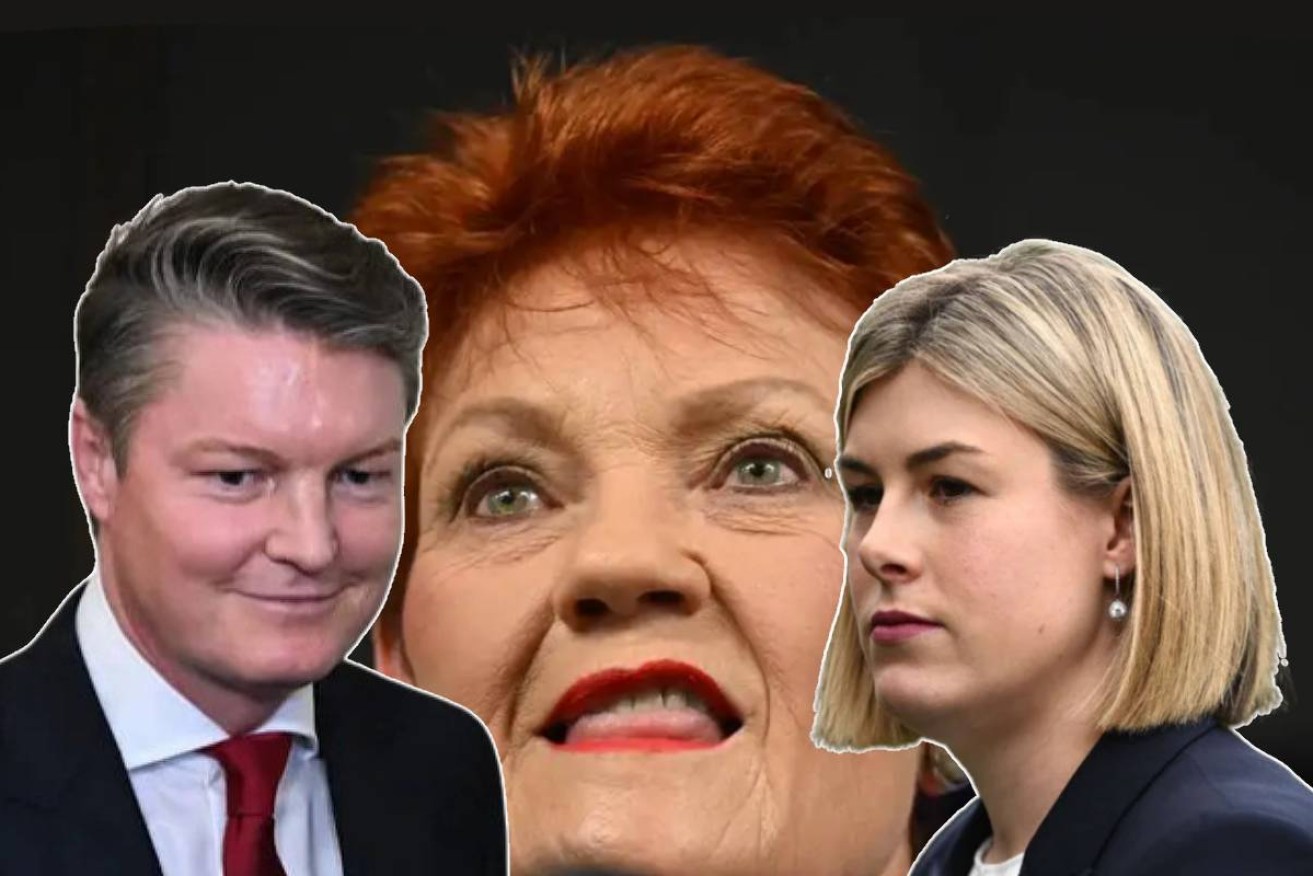
Victoria's election will reflect a major change in politics. Photo: TND/AAP
For decades Australian elections were guided by the pendulum – two parties, one swing, and a list of seats ordered by margin that told you what was safe and what was in play at any given election.
A pollster gave you a two-party figure, the pendulum told you which seats fell, and most seats did not move at all.
On November 28 we will witness a drastic change to this electoral custom and Victorians will be the first to showcase it.
In 2022, Victorian Labor won 56 of 88 seats and the campaign was fought in perhaps 15 of them. Although, as I have written before, the warning signs were present at that election and at many others across the country.
That world has gone. The three largest parties in Victoria now sit within nine points of each other and the old question, “which of two parties wins?” has been replaced by a harder one – “which of three finishes second or third?”.
Preference flows now matter in every seat, and they differ from seat to seat so a single number describing the primary vote can no longer describe the result. A range can, and the political machines built for the old question are the last to notice it has changed.
The political machines that have quickly adjusted to this new world will at least not be surprised on the night of November 28.
Our latest Redbridge Victorian poll for the Australian Financial Review has the Coalition on 31, Labor on 23, One Nation on 22, the Greens on 15 and others on 9.
To turn those numbers into seats we use a seat model built on our most recent Victorian survey of more than 7000 Victorians modelled down to an estimate of the vote in each of the 88 districts.
The model takes the statewide poll, moves each district’s vote in step with it and then runs the preference count in that district to find the winner. Run once, it gives a single answer – a Coalition majority of 55 seats.
That single answer is less useful than it looks, because it treats the poll as exact and every seat as settled. So we ran the model thousands of times.
In each run the statewide primaries are moved by the normal error of a poll three weeks out, about two points on each party, and each district’s vote is moved within its own margin of uncertainty so that every run is a plausible election night.
Counting the runs gives two things a pendulum cannot. The first is a range for each party’s seats, where the 90 per cent range is the span that holds the result in nine runs out of 10.
The second is a win probability for each seat, which is simply the share of runs in which a party wins it. When I illustrate a seat reading Liberal 55, One Nation 32, Labor 13, those are not votes. They are chances of winning.
The Coalition’s 90 per cent range runs from 44 seats to 65 and Labor’s from 14 to 35, while the Greens sit between three and eight and One Nation between none and nine.
A Coalition majority comes up in 94 runs out of 100 and a hung parliament in six. Twenty-one seats separate the Coalition’s floor from its ceiling on a poll most readers would call settled, but the number of seats that are not settled is the real story.
The majority itself is shallow. Strip out the seats the Coalition wins in fewer than 90 runs out of 100 and it is left with 34, 11 short of a majority.
Twenty-one of its 55 seats are in play from the day it is sworn in, 14 of them below 80 per cent and eight below 70, and 19 of the 21 were Labor’s at the last election. A government built that way has not won those seats so much as been lent them.
At the level of the individual seat, the new world reveals itself. Of 88 districts, only 22 have a result we would call dead certain, a winner we can put at 99 per cent or better, and 21 of those are Liberal and National heartland seats – Brighton, Kew, Malvern, Hawthorn, Lowan, Gippsland South and their like.
Labor has one, Dandenong. Everything else – 66 seats – is in play to some degree, which means three-quarters of the Victorian parliament will be decided by what happens in the campaign rather than by what the pendulum said before it began.
The degrees matter. Forty-one seats clear 90 per cent and 47 do not. Twenty-five sit below 70 per cent – the territory where a candidate, a local issue or a preference recommendation decides the result – and five are coin tosses.
Kororoit, among Labor’s safest seats in 2022, now gives it a 49 per cent chance against the Liberals’ 48. Labor holds seven seats with a win probability below 60 per cent and only one above 99, which is why the simulation puts it at 24 seats rather than the 27 a single run of the model gives.
Then there are the three-cornered seats, where three parties hold a live chance and the winner depends on who is excluded first.
In Bass, the Liberals win 55 runs in 100, One Nation 32 and Labor 13; in Eureka, in Ballarat, it is Liberal 54, Labor 33 and One Nation 13. Morwell is the only seat where One Nation is favoured, winning 55 runs in 100 against the Nationals. Furthermore, it is critical to emphasise that a party that records fewer simulated wins can still end up securing that seat.
Three-party contests
The reason small moves become big ones is the preferential count itself. The candidate with the fewest votes is excluded and their ballots pass to each voter’s next choice, so in a two-party contest a point of primary vote is worth a point of two-party vote.
But in a three-party contest it can be worth nothing or everything.
When One Nation finishes third in a Labor and Coalition seat, its preferences decide the winner. When it finishes second, the Coalition’s preferences decide, and they flow differently.
Which of the two happens turns on a few hundred votes at the point of exclusion, which is why the scenarios we published earlier this month moved so far.
Three points to Labor on an otherwise unchanged poll took the Coalition from 52 seats to 45, and three points from the Coalition to One Nation took it to 43 and a hung parliament, while the statewide vote barely moved.
This inverts the usual logic of a campaign. The Coalition’s seat count depends less on its own vote than on One Nation’s, Labor’s depends on finishing second rather than first in 30 seats, and One Nation needs the Coalition to fall, not Labor.
Each party’s fate rests on a variable it does not control.
It also makes victory temporary. In the two-party era, a majority was earned by a swing and had to be unwound by one of similar size, which gave governments time.
A majority assembled from second place finishes and borrowed preferences has no such protection. The three points that delivered it, moving the other way at the next election, take it back – the scenario that puts the Coalition on 43 is the same world as the one that puts it on 55, with One Nation three points higher.
The NSW equation
NSW votes on March 13, and the same three-way structure is already in its polling, with the parties in a different order.
Polls in that state place NSW Labor in the low 30s, the Coalition and One Nation in the low 20s and the Greens in the low teens. The non-Labor vote is split down the middle, and which half finishes second will vary from seat to seat.
NSW adds a feature Victoria does not have – optional preferential voting, under which a voter can stop numbering after one box, and the ballot then counts for nobody once that candidate is excluded.
In 2023, 62 per cent of One Nation ballots exhausted this way rather than flow to anyone, and exhausted ballots lower the bar for the leading candidate.
Election analyst Antony Green has shown that a seat where Labor polls 40 against a Liberal and a One Nation candidate on 30 each goes to the Liberal under full preferences, and to Labor under the flows NSW recorded in 2023.
Labor leads on primaries but holds 46 of 93 seats, one short of a majority. Its result depends on whether the Coalition and One Nation recommend preferences to each other, whether their voters follow, and how many simply stop numbering.
The Hunter, the Central Coast and Sydney’s outer-west will produce three-cornered contests where the winning line is not half the votes cast but half the votes left. Whoever wins in March will win the same way, and hold it on the same terms: Temporary and borrowed.
The established parties are organised for the two-party era. Their money, their candidate pipeline and their internal politics all assume a stock of seats that cannot be lost, and in Labor the factions carve up those seats and fill them with the loyal: Staffers, union officials and organisers whose qualification is service to the faction.
Promotion follows the same rule, because loyalty can be measured and ability cannot, and in a safe seat it was never tested.
The machine spends accordingly. Its money and its best people go to protecting those seats from challengers inside the party, because the voters were never thought to be the threat, and that made sense when a dozen marginals decided the election and the rest looked after themselves.
It makes no sense when only 22 of 88 seats are dead certain, when 47 sit below 90 per cent, and when the outer suburbs, the factions’ heartland, are the least settled part of the state, with 20 of their 31 seats in play. Kororoit at 49 to 48 is the end of the assumption.
The revamp this demands is not cosmetic. Resources have to follow risk rather than faction, and candidates have to be chosen for the ability to win a seat that can be lost, which means local standing, a profile outside the party and the capacity to hold a room of voters who owe the party nothing.
Furthermore, every party will have to plan for governments that last a term rather than a decade, because the seats that make a majority will change hands as readily as they were won. One Nation, with no safe seats and no factions, is built for the new world by default.
Four things follow. Polls will look wrong more often, because a two-point miss on a primary now becomes a 10-seat miss on the result. Campaigns will be won and lost in the exclusion count, which makes candidate quality and preference recommendations matter more than they have in a generation.
Victories will be shallow and temporary, won on seats held with a 55 per cent chance and lost on the same arithmetic in reverse, and governments will be formed on arithmetic nobody can see until the count is nearly done.
The reader’s job has changed too. Stop looking for the number and ask for the range. And when a commentator calls a seat safe, ask how many of the 88 in Victoria, or the 93 in NSW, are safe in the old sense – held for a decade, whoever stands and whatever the third party does.
Twenty-two Victorian seats are certain this time. None is safe beyond it.
Kos Samaras is a director at research and strategy firm RedBridge Group
This article first appeared in Pearls and Irritations
'No-alition' must stop blocking gas for Australians
Draconian laws, dereliction of duty – done in minutes


Aus in 1986 v 2026: When would you rather live?