Want affordable housing? Then house prices must fall

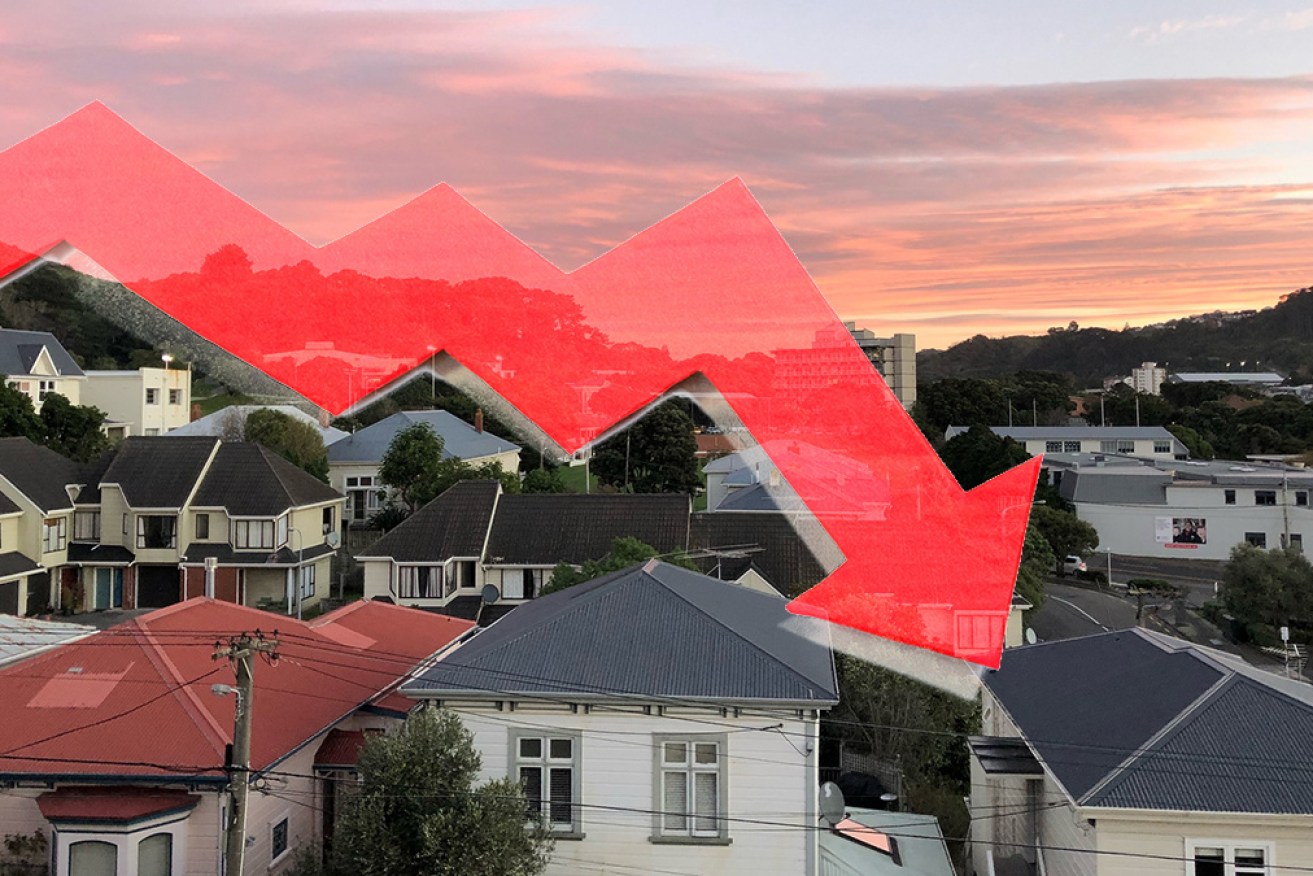
Relying on rising incomes to make it easier to buy a house in Australia will take a generation. Photo: Getty
Australia’s house prices have far outpaced incomes. Relying on wage growth alone could take a generation to restore affordability, making lower prices and greater housing density essential.
At the beginning of this year, before the Reserve Bank’s now five interest rate hikes started, housing affordability was a major political issue.
In Australia the ratio of the median housing price to the median income had risen to around 9.9, and as high as 13 or more in Sydney. This was a huge increase in the Australian ratio compared to around 3½ back in 1980 and even less when my wife and I built our first home in 1962-63.
Furthermore, the cost of housing in Australia is much higher than in other similar countries. For example, the ratio of median house prices to median household income is only 4.5 in the US and 5.2 and 5.3 in Britain and Canada respectively, compared to 9.9 in Australia.
In other words, housing is twice as expensive in Australia as in other English-speaking nations with similar expectations, and consequently only half as affordable.
Indeed, we have now reached the point where the huge size of the loans required to buy the first home means that most people cannot afford to buy it unless they get substantial financial help from the bank of mum and dad. But, of course, many young couples cannot get such financial help from their parents, and thus a continuation of the present very high dwelling prices will add greatly to inequality and change our society.
Logically we should therefore welcome lower housing prices. But as John Howard reportedly remarked – no one ever complained to him about their house price going up. Indeed, all of us existing homeowners tend to feel good when we think our wealth is increasing.
Consequently, there seems to be an implicit assumption gaining strength that if we want to restore housing affordability we should seek to do that without a fall in house prices. The idea is that way no one will need to suffer.
However, if house prices don’t fall then we are relying entirely on the growth of incomes over time to restore housing affordability. In that case, if house prices don’t fall but stay the same, then to halve the ratio of median house price to median incomes from 9.9 to 4.5, incomes would need to more than double, increasing by a factor of 2.2.
But, if we want inflation to remain in the Reserve Bank’s target range of 2-3 per cent, and with a projected average annual rate of productivity growth of 0.5 per cent, then the annual rate of increase in nominal incomes cannot be more than around 3 per cent.
Modelling shows it would take around 26 years with incomes increasing at an annual 3 per cent before the median house price to income ratio returned to a more normal 4.5, even if house prices never go up. For many of us, waiting for as long as another generation before housing affordability is restored would be unfair as it would take far too long.
Instead, the conclusion must be that we should all welcome the recent fall in house prices if we genuinely care about restoring housing affordability and an equitable distribution of wealth.
That then raises a further question about how we ensure that house prices continue to fall. The recent drop in house prices has been driven by increasing interest rates, but that increase is likely to be relatively short-lived, so how can we expect to bring prices down further and longer after monetary policy eases and returns to normal?
The obvious answer is that governments must increase the supply of dwellings where people want to live, and the only way to do that is to increase the housing density in inner and middle suburbs. We know that, but we need to be a bit more on the front foot in explaining and advocating for increased housing density as the only way to achieve a lasting return to housing affordability.
Finally, in response to those existing homeowners who will object to a policy to bring house prices down, and thus apparently damaging their wealth, the following should be pointed out.
First, at the beginning of this year, house prices were almost two-thirds higher than they were six years ago in 2019.
Second, most homeowners keep their present property for more than 10 years and when they sell, even with falling house prices, they would most likely receive a larger sum than they previously paid back then. Indeed, even if they sold after less than 10 years, there is still a good chance that they will receive more than they paid.
Third, even if a home-seller receives less than they paid a few years ago, the chances are that this sale is not their first home, and they will get more than they originally paid to become homeowners. In the most likely case, where they are selling to move to a different home, the price of that home has probably fallen by roughly the same percentage as for the home that they are selling. So they are no worse off, really.
The only people who can lose from a fall in house prices are very recent first-home buyers, and even then it is a paper loss, as they still have the same home providing the same services as before, or they can buy another home at the new lower price.
Michael Keating is a former secretary of the departments of Prime Minister and Cabinet, Finance and Employment, and Industrial Relations. He is presently a visiting fellow at the Australian National University
Republished from Pearls and Irritations

Aus in 1986 v 2026: When would you rather live?


'Hard to describe': Where did Labor’s ideas go?