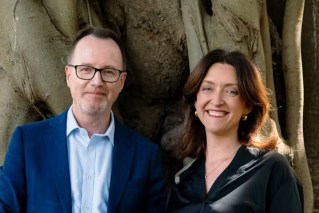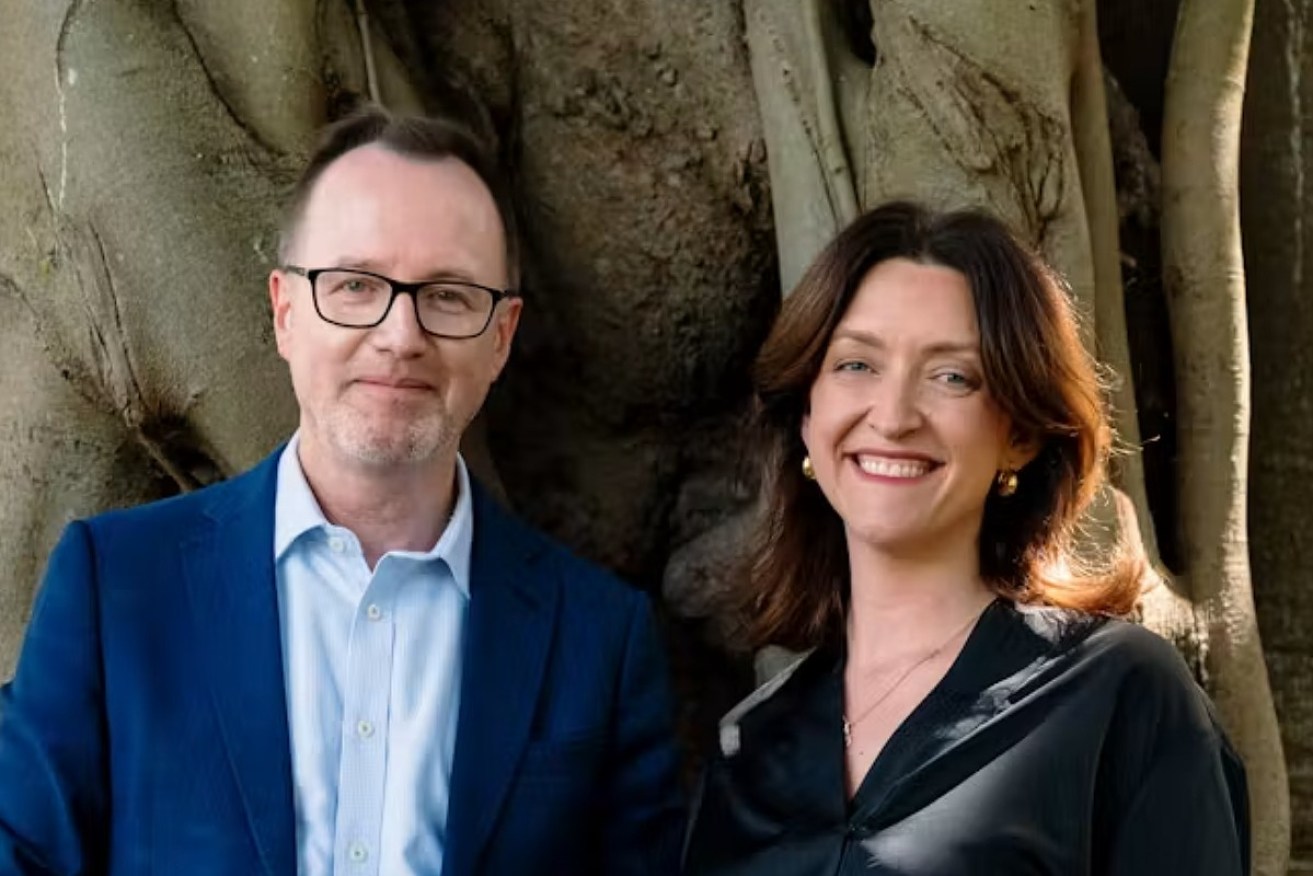
New South Wales Senator David Shoebridge was elected Leader of the Australian Greens at a party room meeting organised prior to Senator Larissa Waters’ announcement that she was stepping down from the party leadership owing to health issues.
Victorian Senator Steph Hodgkins-May was elected deputy leader, with whom Shoebridge ran on a joint ticket.
Three contenders, including Shoebridge, stood for election at the party room meeting – with South Australian Senator Sarah Hanson-Young (who remains as Manager of Greens Business) and fellow NSW Senator Mehreen Faruqi also throwing their hat in the ring.
Faruqi stood on on a joint ticket with Tasmanian Senator Nick McKim as deputy.
Leadership selection in the Australian Greens is a matter for the party room, unlike the Labor Party, where members have a say, and unlike some of The Greens’ counterparts in other countries, such as New Zealand and the United Kingdom.
In the final vote, between Shoebridge and Faruqi, Shoebridge prevailed seven votes to four. This was the first time the federal party leadership was contested in a party-room ballot, with all previous leaders elected through a consensus-style process.
So who is Shoebridge? And with One Nation on the rise on the right, will he be able to help his party gain similar traction on the left?
Who is David Shoebridge?
Shoebridge is fairly new to federal politics but has cultivated a notable profile as a senator, particularly on foreign policy issues, including Australia’s military and strategic alliance with the United States and AUKUS.
He has also earned a reputation for his forensic questioning in Senate estimates.
Together with Hodgkins-May, who entered the Senate in 2024 following the resignation of Victorian Senator Janet Rice, the new leadership team address a perceived need to reset the party at a time when One Nation’s support is surging, and The Greens’ support remains steady.
A former barrister, Shoebridge was elected as a senator for NSW in 2022. Prior to this, Shoebridge served as a member of the NSW Legislative Council from 2010–22, and before that was a local government councillor.
A key priority for Shoebridge as leader will be building the party’s profile, support and membership – matters the party has struggled with in recent years.
In particular, Shoebridge will want to win over disaffected voters who are turning away from the major parties but who have largely flocked to One Nation.
A more adversarial approach?
In their joint pitch for the leadership of the party, Shoebridge and Hodgkins-May stated they would seek to build the party as a left-wing alternative to One Nation for these voters and to “replace” rather than “reform” Labor.
In Waters’ relatively short tenure as party leader, she proved earnest, and was lauded by her colleagues for her inclusive and collegial approach to leadership.
However, her efforts to cut through and build the party’s support largely went unrewarded.
A key part of Waters’ leadership pitch was a willingness to negotiate with Labor.
Yet, for some, Water’s more pragmatic approach was too timid, with former party leader Bob Brown arguing the party needs a very strong negotiator as leader to “not just to make incremental changes, but very big changes”.
Others, such as Executive Director of the Green Institute and former Greens MP, Max Chandler-Mather, similarly called for a leader who will take a more adversarial approach to “replace” Labor. Shoebridge’s election as leader will likely appease those dissatisfied with the more measured approach taken during Waters’ leadership.
Pragmatism or populism?
Certainly, in the UK, The Greens grew their support after electing new leader Zack Polanski last year.
As leader, Polanski has raised the party’s profile through a left-wing populist pivot that sought to position The Greens as an alternative to both Labour and the ascendant far-right party, Reform.
Both Faruqi and Shoebridge have expressed a desire for The Greens in Australia to emulate the approach of left-wing populists such as Polanski.
It’s also likely Shoebridge will be called on to support Chandler-Mather’s call, backed by the youth wing of the party, the Australian Young Greens, for the Greens membership to select the federal party leader. Chandler-Mather and the Australian Young Greens both issued statements calling for the party to adopt a one-member-one-vote model for selecting the leader.
When announcing his leadership tilt, Shoebridge indicated his receptivity to “calls for genuine grassroots involvement” and pledged to “work on this with the party”.
Following Shoebridge’s election, Faruqi also voiced her support for party members to elect the leader, saying “without a member vote, we cannot call ourselves a grassroots party”.
Shoebridge’s leadership also augurs some potentially interesting new intra-party dynamics.
This is the first time in the party’s history that the federal party leadership will be based in NSW, a party division known for being more hardline and ideological than the other divisions.
Under the NSW Greens state constitution, NSW Greens MPs are delegates of their party and bound by their collective decisions. This may present a challenge for Shoebridge in balancing the federal party room and the NSW branch.
The balance between attention and authenticity is not easy for a leader to strike. Yet an effective party leader can make the difference between obscurity and votes, especially in an age where the party leader is playing a more important role in voter choice.
Certainly Brown excelled at cut-through, as did Adam Bandt. The question is whether Shoebridge can do the same.
Nathan Fioritti is Lecturer in Politics at Monash University and Narelle Miragliotta is Associate Professor in Politics at Murdoch University.