Going up, or blowing up the Australian dream? Greater urban density risks dividing our communities


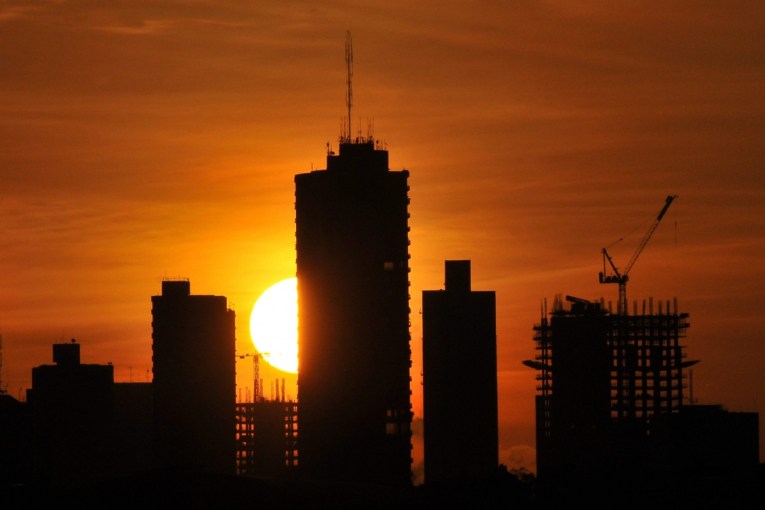
From time to time, we are afforded an opportunity to envision a better Australia. Photo: AAP
Decades of poor planning has led to a nationwide housing shortage, along with an increasing affordability gap.
There are only two long-term solutions. The first requires a significant increase in average wages and salaries. The second is we stop cramming more people into already overcrowded capital cities.
Fifty years ago, the country’s most short-lived yet arguably most progressive government – led by Gough Whitlam – championed a policy manifesto designed to dramatically change Australia.
Since then, most of what Whitlam called “The Program” has been implemented – often by political parties of a different persuasion.
A national decentralisation policy is the one glaring omission.
As we scurry to catch up with housing demand, advice from no doubt well-meaning prominent citizens and numerous interest groups risk creating adverse unintended consequences.
They argue we should keep cramming more people into our already overcrowded and, consequentially, overpriced capital cities. In many cases, it’s reasonable to conclude they have a secondary agenda.
The Committee for Sydney obviously has a vested interest in opposing decentralisation. It uses its well-connected members to lobby hard for government-funded improvements to transport infrastructure and for relaxed planning policies that favour high-rise developments, especially around railway stations.
Sydney YIMBY is a community-based group that focuses on lobbying local councils. It advocates higher density rules and relaxed planning regulations. It’s difficult to determine its motivation, or who its backers are.
The Nature Conservation Council supports increased density to reduce urban sprawl and thereby better protect the natural environment.
The Urban Taskforce, Property Council, Housing Industry Association and the Urban Development Institute all come down in favour of greater densification.
There are also high-profile academics and self-proclaimed “industry experts” who use the media to advocate a personal point of view – and to promote themselves and/or their businesses.
The attention given to the housing crisis in our nightly news bulletins in recent years is arguably causing additional stress for already housing-stressed people, especially those struggling to buy their first home.
Every second week there’s a “new report”. The trouble is, for each one that forecasts a rise in prices, there’s soon another one telling us the market is about to crash.
We are currently experiencing what economists call a “correction” – a decline in the number of house sales and a fall in prices. We know the market will bounce back and that the impact will be short-lived. The problem has not been solved.
Social media is full of instant experts keen to showcase their intellect by venting on the social, economic and political aspects of the “housing crisis”.
“Everyone wants to live in the city” is one line, touted by people living in cities. Some of the most vocal keyboard warriors seem to think that everyone wants to live in the inner-city.
“Apartments are all we need” is another line from people who, presumably, are not raising teenage children in one.
According to the Grattan Institute: “Many people would prefer a townhouse, semi-detached dwelling, or apartment in an inner or middle suburb, rather than a house on the city fringe …”
No doubt, but that’s because we continue with the practice of corralling office workers in soulless CBD offices.
Those on high salaries habitually live in nearby prestige suburbs, while “average” workers are more likely to live in the outer suburbs, where they face increasingly long commutes.
Then there’s political economy buffs who assure us big cities are more efficient, whatever that means?
Not to forget the sociologists, psychologists and other health practitioners who either reckon cities are good for building community spirit or are the cause of alienation and problematic mental health.
Everyone has a point of view. Pressure, pressure, pressure.
There’s nothing inherently wrong with high-rise apartments, of course. However, right now they seem to be our governments’ only strategy for dealing with the housing shortage.
Decentralisation already under way
But even without formal government policies encouraging it, decentralisation is already happening.
For some time we have experienced a net outflow from our major capital cities.
According to research by the Regional Australia Institute and the Commonwealth Bank, more than half the exodus is millennials and gen Z.
The United Nations has pointed out that we are one of the world’s most urbanised countries. Building up means making our capital cities even more congested.
In the process, we risk creating a new class distinction between those who can afford a house and those forced to settle for an apartment.
It’s not just about detached houses. The price of apartments continues to rise significantly in our major capital cities. Not as much, but nevertheless many are not a heap cheaper – especially the ultra-high-rise towers popping up everywhere.
We, therefore, also risk heading back to a pre-boomer era when most lower-income families rented their homes for life.
Vale the Australian dream
More than 350 million Americans have spread out and live in 300-plus towns and cities. Few are anywhere near the size of our major capital cities.
This quirk of history is due to the “go West young man” mantra that accompanied European settlement to the US in the 1800s.
Consequently, a comparable house in the US costs half to a third of the price being paid in Melbourne or Sydney.
Australia’s colonial history – with the creation of a limited number of states, each with one major city – led us to become over-urbanised. Costly housing is the result.
Building costs have gone up significantly since Covid, but the biggest single element in the price of a capital city house is the unimproved land value.
If more homes are built in already jam-packed cities with limited expansion options, the problem will become even worse. It’s a simple supply and demand equation.
The good news? The internet has changed the way most jobs are performed. With obvious exceptions, where face-to-face delivery is essential, work for many has become highly mobile.
During Covid, necessity provided the proof-of-concept. Working from home is now entrenched. Attempts by the owners of CBD office towers to convince governments to mandate a full-time return to the office have so far failed.
Advanced technology also provides the option for innovative companies to create satellite offices in regional centres. Many could reduce their property overheads while providing their staff with a more affordable future and life in a more amenable environment.
As is the case in our capital cities, workers could spend some days at home and others in an office much closer to where they live.
There are numerous companies with thousands of workers trudging into city offices, enduring ridiculously long commutes. Most leave the building only to buy their lunch.
A better Australia
Suitable incentives would probably be required, but however much they cost it would be less than the billions of dollars funding new roads, tunnels, bridges and metros in Sydney – in a losing battle to keep the city moving.
Our state and federal governments should be diverting funding to regional centres for improved infrastructure and community services to match the needs and wants of our regional communities.
Fast rail is often suggested as an alternative to further expansion within our capital cities – allowing more people to commute to a CBD office.
Numerous politicians have called for fast rail, only to go quiet when they find out how expensive it would be. It’s viable in Europe and Japan because they have enough sufficiently large settlements along the routes. We don’t.
What’s more, fast rail from distant towns still leaves commuters with longer travel times than if they worked close to home in a regional location.
From time to time, we are afforded an opportunity to envision a better Australia. Now is such a time.
We need to move jobs to where people can better afford to live – voluntarily, of course.
Sydney, for example, ranks second to Hong Kong on a house price-to-income ratio. It is the country’s most expensive city for renters. NSW would perhaps be an obvious place to start creating a decentralisation policy.
According to the NSW government, regional centres are already drawing young families and retirees away from Greater Sydney.
The combined Central Coast, Illawarra-Shoalhaven and Greater Newcastle population is projected to grow by nearly 30 per cent – to hit 1.8 million by 2041.
Inland cities such as Albury, Bathurst, Dubbo, Tamworth and Wagga Wagga are also expected to grow at an increasing rate.
Melbourne is leading the “escape to the country”, making up 36 percent of the capital city exodus.
Queensland is our most decentralised state, with cities and towns spread all the way up its vast coast. Perth is recording the highest annual house price growth, followed by Adelaide and Brisbane.
A forward-thinking decentralisation plan would need to determine the resources required to meet the needs and wants of our already dispersing population.
More than that, it should move us from passive acceptance to an active role in encouraging people to move to selected regional centres.
Decentralisation is arguably the only long-term way to make housing widely affordable again. Especially if you’d prefer a house with a backyard for the kids and a garden.
Laurie Patton is a journalist, former government adviser and public interest advocate


'Trust us' isn't enough – but it will likely still work