The KPMG scandal: We have seen this show before

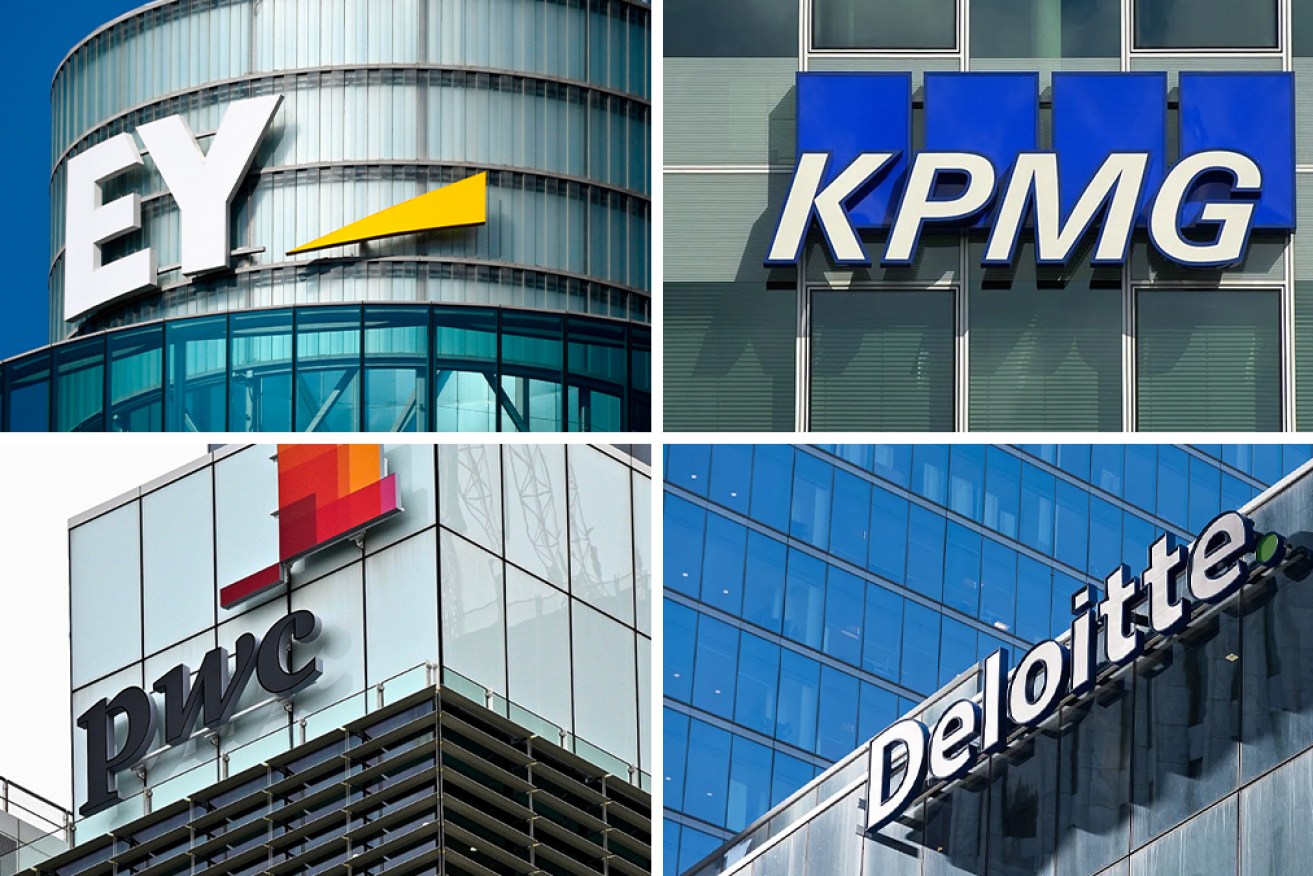
The so-called Big Four consulting firms have been undermining taxpayers in Australia Photo: TND
The scandal that has swamped KPMG in the past month has many moving parts, but it can all be summarised in one earthy Australian expression – “same s–t, different bucket”.
We have seen this show many times before, including in 2022 when it was revealed that PWC worked with the federal government on new business tax plans and then sold secret information about those plans to major corporations to help them avoid paying the new taxes.
Like PWC (PriceWaterhouseCooper), KPMG is a big business that obtains highly sensitive information from its work with major corporations and governments, meaning that conflicts of interest are impossible to avoid.
And like other big businesses, in the absence of an effective deterrent and robust regulation, the pursuit of profit maximisation will inevitably move the business towards doing harm – whether it be to clients, customers, employees, taxpayers, the environment or democracy.
The whistleblower who exposed this KPMG scandal attributed it to the “pursuit of revenue growth at all costs”.
When former High Court judge Kenneth Hayne presided over a royal commission into misconduct in the banking and financial services sector, he had to consider why major banks were engaged in illegal money laundering, charging fees for no service, selling useless insurance to unsuspecting customers and steering poor retirees into high risk dud investments.
The explanation wasn’t complicated. In Haynes words:
“Too often, the answer seems to be greed – the pursuit of short-term profit at the expense of basic standards of honesty …. How else is charging continuing advice fees to the dead to be explained?”
The greed that drove KPMG is the same greed that in recent years drove Qantas to sell non-existent flights, delay refunding customers for cancelled flights and to illegally sack 1800 ground staff.
The same greed fuelled Rio Tinto’s decision in 2020 to blow up an area of the Juukan Gorge, including a sacred area containing evidence of continuous human occupation for 46,000 years.
A parliamentary committee inquiry blamed Rio Tinto’s “corporate culture, which prioritised commercial gain”.
No need to mince words. It’s greed.
The so-called Big Four consulting firms have undermined taxpayers in Australia and other countries for decades.
Multinational corporations have relied on the Big Four to develop sophisticated schemes to avoid paying tax and thereby weaken government and shift the burden of tax onto ordinary taxpayers.
In 2015, the chair of the British parliament’s Public Accounts Committee, Margareth Hodge, reported that PWC’s “activities represent nothing short of the promotion of tax avoidance on an industrial scale”.
That Australian public servants have contracted KPMG to conduct its ethics training is both bizarre and unsurprising.
Bizarre because you need to be orbiting another planet to seriously consider that a poorly regulated big business should be educating public servants about ethics.
Unsurprising because in the past 40 years, governments of all persuasions have outsourced enormous amounts of public service work to the Big Four, while those firms have advised big business on how to weaken those governments by reducing their tax revenue.
Between 2013-2023, state and federal governments spending on the Big Four accounting firms increased by 400 per cent.
In doing so, our politicians have weakened the capacity of the public service and developed a multibillion-dollar addiction to highly expensive consultants.
It’s a vicious circle. The more governments outsource, the more they diminish the public service. The weaker the public service, the greater the need to outsource.
Successive governments have been loathe to bite the hand that they continue to fill with large swathes of cash. As a result, the Big Four operate in a regulatory netherworld because, although they operate big businesses, they are structured as partnerships and are not incorporated under the Corporations Act.
They slip between the regulatory cracks. Even Australia’s notoriously weak whistleblower laws don’t apply to them.
While there is widespread agreement that democracy is under threat in many parts of the world – with the ascension of authoritarian, nativist and fascist politics – the role of lax regulation of big business in fuelling disenchantment and loss of trust in critical institutions is often overlooked.
Lax regulation sends a blunt message to the community – if you’re rich and powerful you can get close to politicians and operate in a gated community in which elaborate tax minimisation, and corruption are normalised and often go unpunished.
In the case of KPMG, you can cheat and lie while earning big money teaching ethics and reap the benefits of government contracts worth over $650 million dollars.
If this is the system working, people are entitled to be very cynical about it.
Last Wednesday, Assistant Treasurer Daniel Mulino argued that the evidence for tougher regulation was “strong and compelling”, and brandished a new Treasury options paper.
Within hours, Australian Financial Review journalist James Thomson accused the government of running dead on regulation of the sector, noting that the federal government first asked Treasury to investigate the issue in 2023 and, after the latest scandal, an options paper finally appeared with no clear deadline for a government decision.
The answer to the problem has been evident for a very long time. The rampant conflicts of interest in the sector can be addressed by banning the Big Four from operating both audit and consultancy businesses.
They should also be regulated like corporations and trade unions, with strong penalties that deter corrupt conduct.
Their whistleblowers should be protected and rewarded, not punished.
And if the government can use its procurement power to award contracts to companies with enterprise agreements, it can also terminate its contracts with service providers that have engaged in corruption. A three-month ban won’t cut it.
As I write, the Big Four will be preparing to unleash immense lobbying and public relations campaigns to resist meaningful regulation.
There will be the inevitable predictions of Armageddon if meaningful change is made.
There may be tantrums within Treasury, an institution ideologically committed to lax regulation of big business.
On previous occasions, these tactics have worked. The challenge for the federal government is not to blink.
In the 21st century, trust in our institutions including the federal government has to be earned.
Josh Bornstein is an award-winning lawyer, author of Working for the Brand and director at the Australia Institute


Double standards from groceries to a 'shrug emoji'