 Subscribe

If you move overseas, can you still get the Age Pension?
As the cost of living continues to rise in Australia, many are considering leaving the workforce and moving overseas to a place where their dollar stretches further.

- Can you move overseas and still receive the Age Pension? Yes, but you still need to meet income and assets tests.
- One expert said many retirees should be careful if they sell the family home to fund retirement overseas.
- The amount you receive may depend on how long you’ve been a resident, and some other supplement payments will stop.
Retiring to a beach in Thailand or Bali sounds like the ultimate life hack: cheap living costs, good weather, and a schedule that revolves more around the sun than the bus timetable.
As the cost of living continues to rise in Australia, many are considering leaving the workforce and moving overseas to a place where their dollar stretches further.
The full Age Pension currently pays a single person $32,180 a year, or about $619 a week, leaving little room for unexpected expenses.
So can you move overseas and still receive the Age Pension?
The answer is yes—but there’s a trap you need to watch out for.
Community Information Officer at Services Australia Justin Bott told The Money Edition that before you dive into the logistics of how much you’ll receive, you need to make sure your income and assets still meet the required tests.
“For the majority of people, the Age Pension can be paid indefinitely for people who want to live overseas,” Bott said.
“The only little proviso I put on that one is that Services Australia is not just looking at the sort of residence requirements, but you’ve always got to remember in the background is the income and assets side of the story as well.”

As Bott explained, most pensioners’ main asset is the family home.
In Australia, the family home is an exempt asset and isn’t counted while you’re still living in it.
But if you sell up — and buy yourself a Balinese villa at a fraction of the price — your leftover cash could suddenly rule you ineligible.
If somebody sold their family home in Sydney, they could see themselves with a theoretical windfall of $2 million.
“Let’s imagine someone spent $500,000 of that $2 million to purchase a place to live overseas. Suddenly they’ve got $1.5 million in the bank,” Bott said.
“If I’m a single person and I own the home that I live in, that’s too much. I can’t get a pension with that much in the way of assets.
So, again, it’s not the fact that I’m living overseas that’s the problem.”
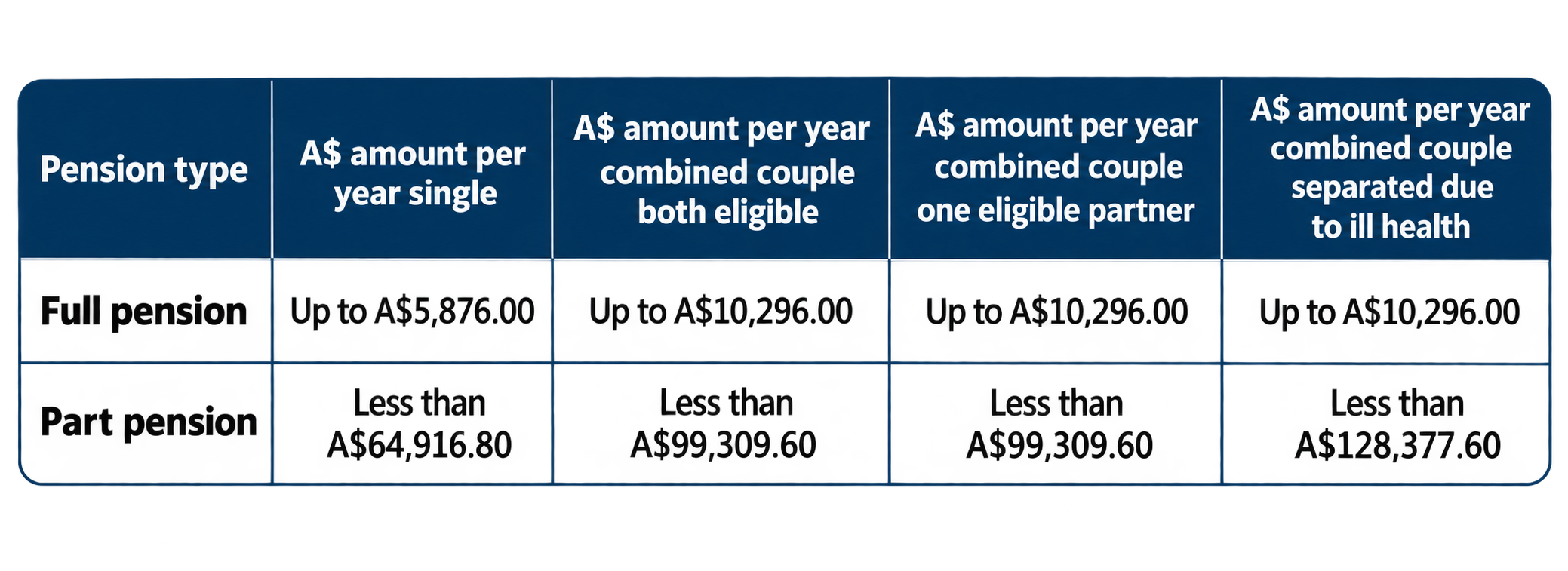
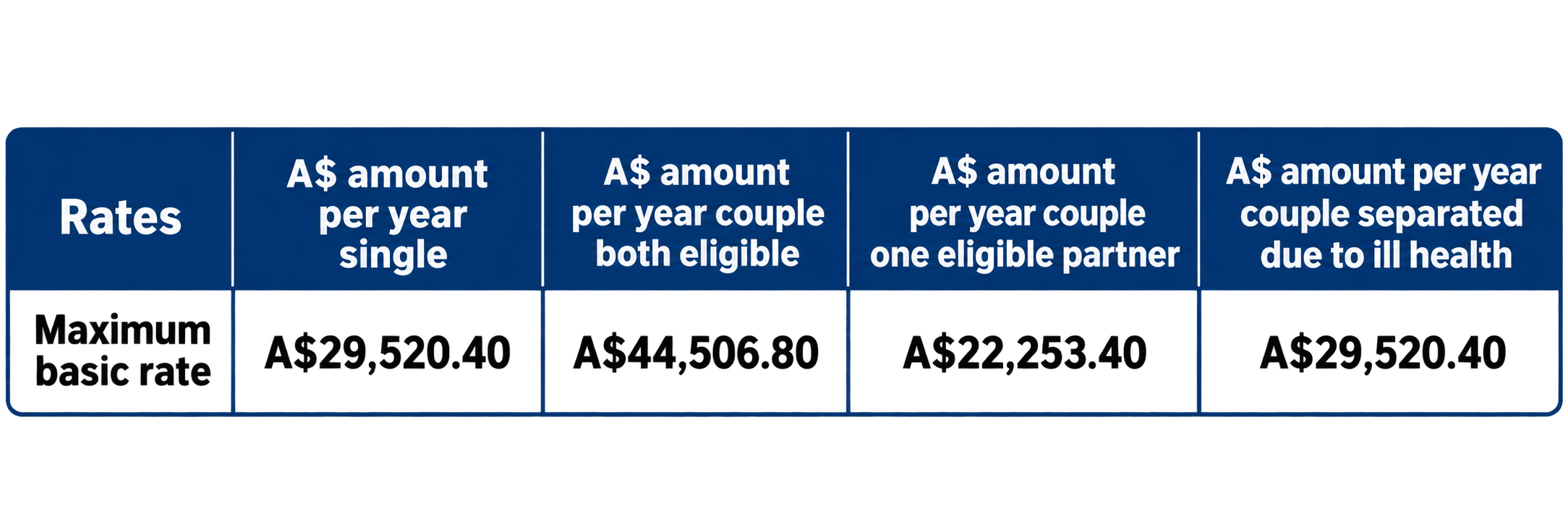
The pension rate changed on September 20 this year. Under current rules, the maximum basic rate available to people living outside Australia is $29,520.40 for singles.
If you’re on a full pension as a single, you can earn up to $5,876.00 a year overseas without it affecting your payments, and as a full pension non-homeowner, you can have assets up to $600,000 before it affects your payments.
You can find the new rules and eligibility windows here.
Payments will be different if you’re overseas indefinitely
Let’s say you meet the income and assets tests, and you’re still determined to go live overseas.
Maybe it’s a romantic apartment in Paris, or a carefree hideaway in the hills of Vietnam — the amount of Age Pension you receive will differ from that of those living full-time in Australia.
Bott said payments taper off depending on how long you plan to spend overseas.
“So, for an aged pensioner, if you’re going overseas temporarily, you can go overseas for six weeks and nothing happens,” he said.
“At six weeks, we take away some of your supplements. It’s called the energy supplement that stops.
“At 12 weeks, a bigger supplement called the senior supplement that stops.”
Bott stressed that these supplement changes apply only to the Age Pension and don’t apply to other payments that may involve disability, job-seeking, or parenting variables.
If you’re moving overseas for good, or for more than 26 weeks, the rate you receive depends on how long you were an Australian resident between ages 16 and the pension age of 67.
If you were an Australian resident for 35 years or more, your rate won’t change in most cases. If you were a resident for less than 35 years, you’ll get a lower rate in most cases.
For example, if you were a resident for 10 years, you’ll get 10/35ths of your usual rate.
As Bott explained, it doesn’t matter whether you were working during that time, only that you were a resident.
“Whether you’re working or not, you’re contributing to Australia, you’ve been involved and been contributing to the Australian economy during that period of time, and that’s a reflection of that,” he said.
“The more time you’ve been here, the more your payments will be able to continue.”
Topics: Age Pension, Australia, Retirement, Retirement income