 Subscribe

Your super is invested in SpaceX, but the bigger bet is on US tech
New analysis reveals how Australia's retirement savings are tied to the global technology boom, as concerns grow over soaring valuations and the risk of an AI bubble.

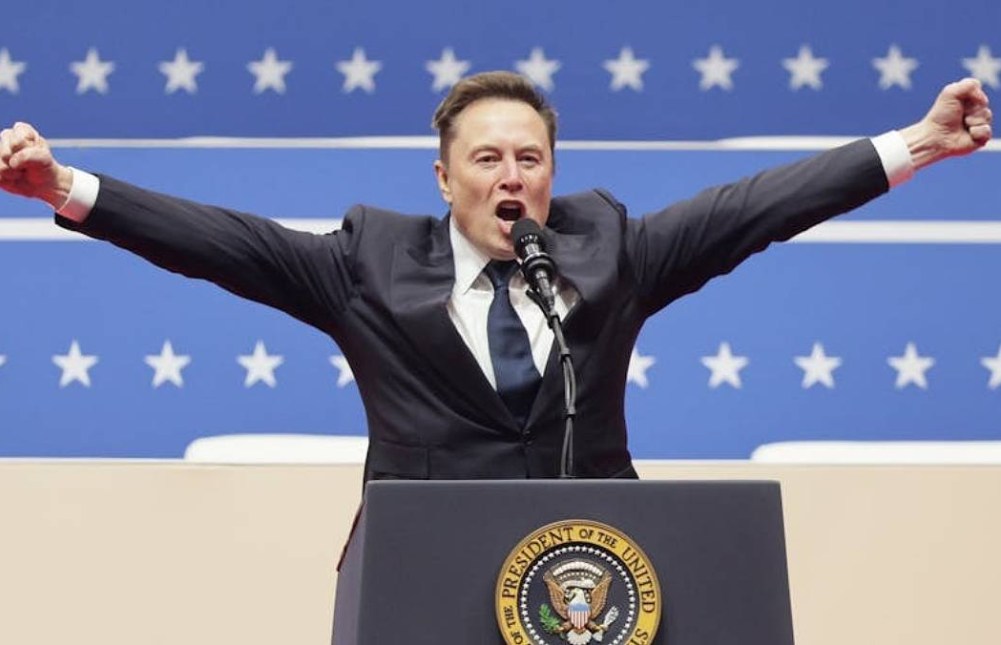
- The Association of Superannuation Funds of Australia (ASFA) estimates the average Australian super fund member has about $60 invested in SpaceX.
- Morningstar estimates that information technology stocks could account for roughly 10 per cent of an illustrative diversified super portfolio.
- The IMF has warned that disappointing AI investment returns could trigger a market correction, raising questions about the risks facing retirement savings.
You might not realise it, but your super could be invested in Elon Musk’s SpaceX and some of the world’s biggest technology companies.
And while the average Australian super fund member has an estimated $60 invested in SpaceX, their exposure to the wider technology sector could be considerably larger.
Analysis provided to The Money Edition by investment research firm Morningstar suggests that for every $10,000 in a diversified super portfolio, about $1,000 could be invested in technology stocks, compared with just $7 in SpaceX.
It’s worth noting that those figures are based on an illustrative portfolio rather than the average Aussie’s super balance.
But with US technology companies reaching extraordinary valuations, questions are growing about whether the AI boom can deliver the profits investors expect, as well as what that could mean for people’s retirement and investments should things go south.
The International Monetary Fund (IMF) warned in October that disappointing returns from AI investment could trigger a correction in technology-related asset prices, with potential repercussions for global financial markets.
The bigger technology bet
William Anglingdarma, principal of superannuation research at Morningstar, told The Money Edition that super funds were likely to have some exposure to SpaceX through their international share investments, particularly those tracking global sharemarket benchmarks.
One such benchmark, the MSCI All Country World Index excluding Australia, had approximately 34 per cent of its value invested in information technology companies as at September 30, 2026.
For a diversified super option with 30 per cent invested in international shares, that could translate to approximately 10 per cent of the overall portfolio.
By comparison, Morningstar estimates SpaceX could have an indicative weighting of 0.24 per cent in the MSCI benchmark, based on an estimated 11 per cent of its shares being available to public investors.
Morningstar’s figures are estimates rather than actual super fund holdings, and cannot be directly compared with ASFA’s $60 figure. Individual investments will vary depending on the fund and investment option.
Super funds can hold businesses involved in artificial intelligence, data centres and digital infrastructure through other asset classes, including property, infrastructure, credit and private equity.
This means a fund’s full exposure to the technology boom may not be immediately apparent from its international shareholdings alone.
Meanwhile, Claude developer Anthropic has filed for a Nasdaq listing expected sometime this month, with investors reportedly valuing the company at about US$1.5 trillion.
Its prospectus revealed a US$80.7 billion net loss in the first half of 2026, largely driven by changes in the valuation of debt convertible into shares.
SpaceX’s limited influence
SpaceX, Musk’s rocket and satellite communications company, has attracted renewed investor attention after its June Nasdaq debut and last month’s quarterly earnings.
The company’s shares surged almost 8 per cent on October 21 after reporting stronger-than-expected third-quarter results, briefly lifting its market valuation above US$2 trillion.
Despite its size, ASFA chief executive Mary Delahunty told The Money Edition that SpaceX’s performance was unlikely to have a significant direct impact on super balances, given Aussie’s relatively small exposure to the company.
What does that mean for your retirement?
The bigger issue is perhaps the growing influence of major technology companies on global sharemarkets.
As these businesses grow in value, they can account for a larger share of super fund investments, meaning their performance has a greater bearing on members’ balances.
That can benefit members when markets rise, but it also means a sharp downturn in the largest companies could hit retirement balances harder.
ASFA’s Delahunty said major technology companies had become a larger component of international sharemarkets, but super funds managed that concentration as part of their broader investment strategies.
“In assessing exposure to major technology companies, funds consider both company-specific and sector-wide risks alongside diversification, investment objectives and the overall risk and return profile of each investment option,” she said.
Morningstar’s Anglingdarma said it was difficult to determine whether Australians were more exposed to the AI investment boom than they realised, particularly because investments extended beyond international equities.
“The more important question is not simply the level of exposure to the AI investment boom, but how that exposure is being managed and whether the associated risks are being appropriately assessed,” he said.

How to check your exposure
Australians wanting to understand their technology investments can start by examining their super fund’s investment option and its allocation to international shares.
Most funds publish investment breakdowns and underlying holdings, although the level of detail varies.
Members can also check whether their fund uses a market index as a benchmark, how much it invests in international equities, and whether its largest holdings include major US technology companies.
It’s also worth examining whether investments in infrastructure, property or private markets provide additional exposure to AI-related businesses.
While SpaceX may grab the headlines, understanding how much of your super is invested in major technology companies, and how your fund manages that exposure, could matter far more for your retirement.
Topics: Investing, Shares, SpaceX, Super funds, Technology