 Subscribe

One in three mortgage holders at risk of stress. Here’s how to fight back
With mortgage repayments eating into household budgets, borrowers may be able to save thousands by reviewing their home loans and negotiating better terms.


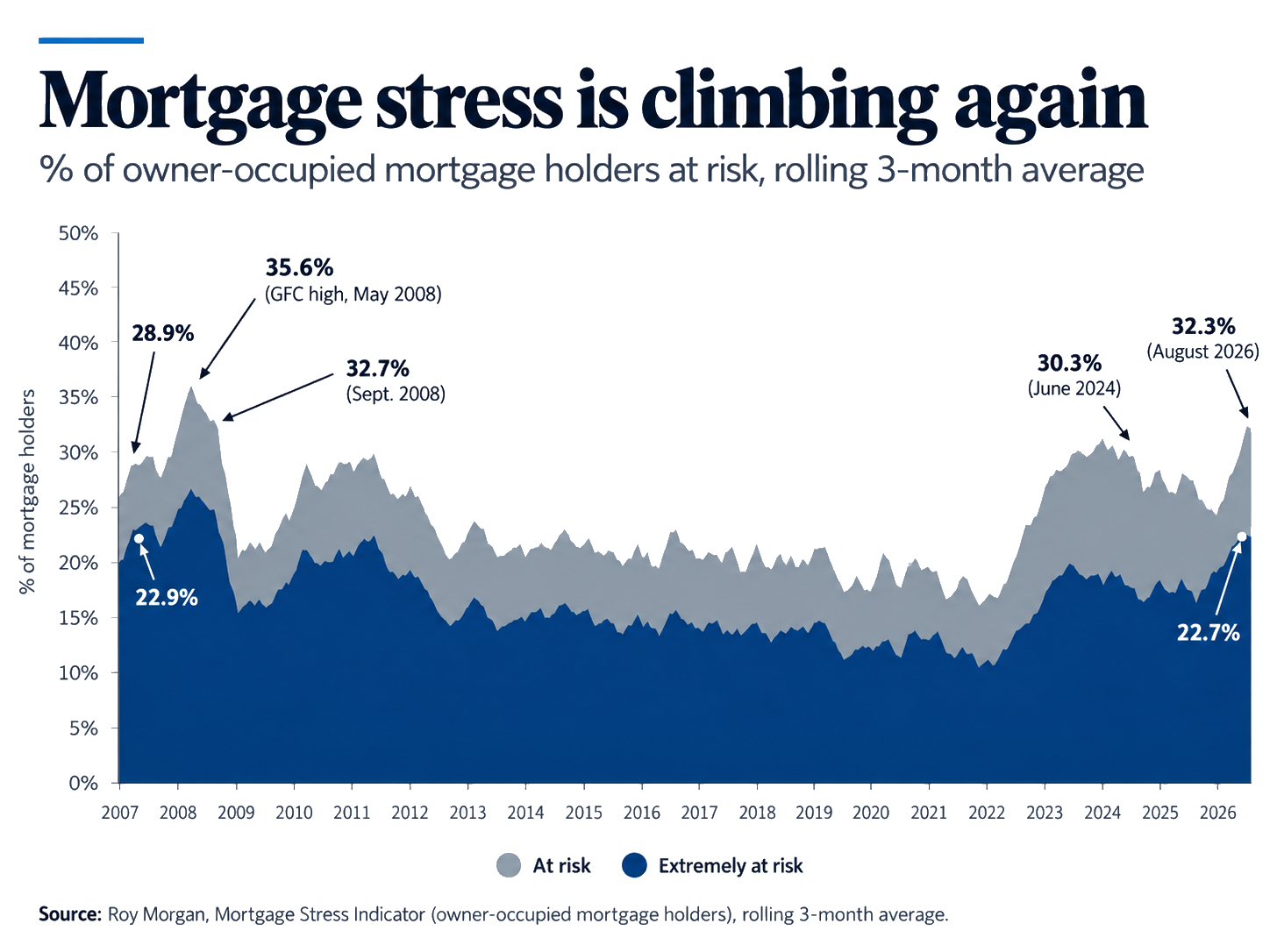
- Roy Morgan research shows 32.3 per cent of Australian mortgage holders are at risk of mortgage stress, up 8.4 percentage points since January.
- A borrower with a $500,000 mortgage could save about $3,670 a year by securing an interest rate one percentage point lower, with 25 years remaining.
- Experts recommend reviewing existing loan rates, considering refinancing and contacting lenders early if repayments become difficult.
Nearly one in three Australian mortgage holders are at risk of financial stress as higher interest rates put further pressure on household budgets.
New figures from Australian market research firm Roy Morgan show 32.3 per cent of owner-occupier mortgage holders were at risk in August, up 8.4 percentage points since January.
That’s approximately 295,000 more Australians than a year earlier, with the figures recorded before the Reserve Bank’s latest interest rate increase in September.
But borrowers have options. From negotiating a better interest rate to refinancing or seeking hardship assistance, there are ways to ease the pressure without selling the family home.
What does mortgage stress look like?
Roy Morgan considers borrowers at risk of mortgage stress when their estimated repayments exceed a certain share of after-tax household income, with thresholds ranging from 25 to 45 per cent depending on income and spending.
With the RBA’s official cash rate at its highest level in nearly 15 years, many Australians have seen their mortgage repayments rise significantly this year.
Typically, when the RBA increases the cash rate, banks and lenders pass on these hikes to borrowers.
For example, a borrower with a $500,000 variable mortgage and 25 years remaining would pay about $306 more each month if their interest rate increased from 5.50 per cent to 6.50 per cent, adding roughly $3,670 to their annual repayments.
This increase also comes alongside cost-of-living pressures in other areas like fuel, groceries and transportation.
However, you can combat these pressures with a few strategies.
Speak to your lender
One simple solution that many borrowers overlook is contacting your lender directly. Lenders have hardship teams dedicated to helping customers in difficult circumstances.
Depending on your situation, you may be able to change your loan terms or temporarily pause or reduce your repayments. This is called a hardship variation.
Under ASIC rules, lenders generally have 21 days to respond to a hardship request, but they can extend this period if they need more information from the borrower.
Luke Ashby, Mortgage Broker at Emerge Finance, told The Money Edition that one of the most common mistakes Australians make is not being transparent when they struggle to meet repayments.
“One of the biggest mistakes I see is people not keeping their lender informed when it gets really serious and a family emergency, relationship breakdown, or loss of job happens, and you can no longer make your loan repayments,” Ashby said.
“Missed payments and defaults can stay on your credit file for years and impact any future lending decisions you make,” he added.
Seeking hardship assistance does not automatically mean a borrower has defaulted on their loan. Information about financial hardship arrangements generally remains on credit reports for one year, compared with five years for a default.

Refinancing
Another option for those experiencing mortgage stress is refinancing, which involves replacing an existing mortgage with a new one.
Borrowers can switch to another product with their existing lender or move to a different lender altogether.
Ashby encouraged borrowers to start by reviewing their current interest rate.
“Unless they work with a broker who does consistent six-monthly reviews, they are most likely paying too much,” he said. “A simple rate review can save thousands in interest per year and make a dent in your repayments.”
He said borrowers could also consider extending their loan term or switching to interest-only repayments to improve their immediate cash flow.
“Another strategy can be to refinance your home loan and maybe look to extend back out to 30 years to lower the monthly repayment, or even look to get interest-only repayments to increase your cash flow so you can relieve the stress.”
However, extending a loan term or switching to interest-only repayments can increase the total interest paid over the life of the mortgage.
It’s worth noting that refinancing may not be available to borrowers whose financial circumstances have deteriorated, as lenders must assess their ability to meet repayments on a new loan.
Still, for a borrower with a $500,000 principal-and-interest mortgage at 6.50 per cent, even a modest reduction in their interest rate could deliver meaningful savings.
A 0.25 percentage point reduction would save a borrower between $76 and $82 a month, while a full percentage point cut could save between $306 and $321, depending on the remaining loan term.
What to consider
A lower interest rate can reduce mortgage repayments, but borrowers should consider the costs of switching lenders.
Application fees, discharge costs and other charges can eat into potential savings, while extending a loan term can mean paying more interest over time.
Loan features such as offset accounts, redraw facilities and the ability to make additional repayments can also help reduce interest costs.
For those already struggling with repayments, seeking hardship assistance early may offer a more immediate solution than refinancing.
Australians struggling with mortgage repayments can also contact the National Debt Helpline on 1800 007 007 for free, confidential financial counselling.
The information provided on this website is general in nature only and does not constitute personal financial advice. The information has been prepared without taking into account your personal objectives, financial situation or needs. Before acting on any information on this website, you should consider the appropriateness of the information having regard to your objectives, financial situation and needs.
Topics: Housing, Mortgage, Mortgage stress