 Subscribe

The Australian cities where living costs are rising fastest
Inflation figures reveal sharp differences between Australia's capital cities, with housing and transport costs driving the biggest increases.

- Hobart, Adelaide and Darwin recorded the fastest annual price increases in Australia, outpacing the national inflation rate of 4 per cent.
- Housing costs rose by as much as 7.9 per cent in the three cities, compared with the national average of 5.7 per cent.
- Melbourne recorded the lowest inflation rate of any capital at 3.5 per cent, while Sydney came in just below the national average at 3.9 per cent.
Australians living in Hobart, Adelaide and Darwin are experiencing the country’s fastest increases in living costs, with housing and transport prices rising well above the national average.
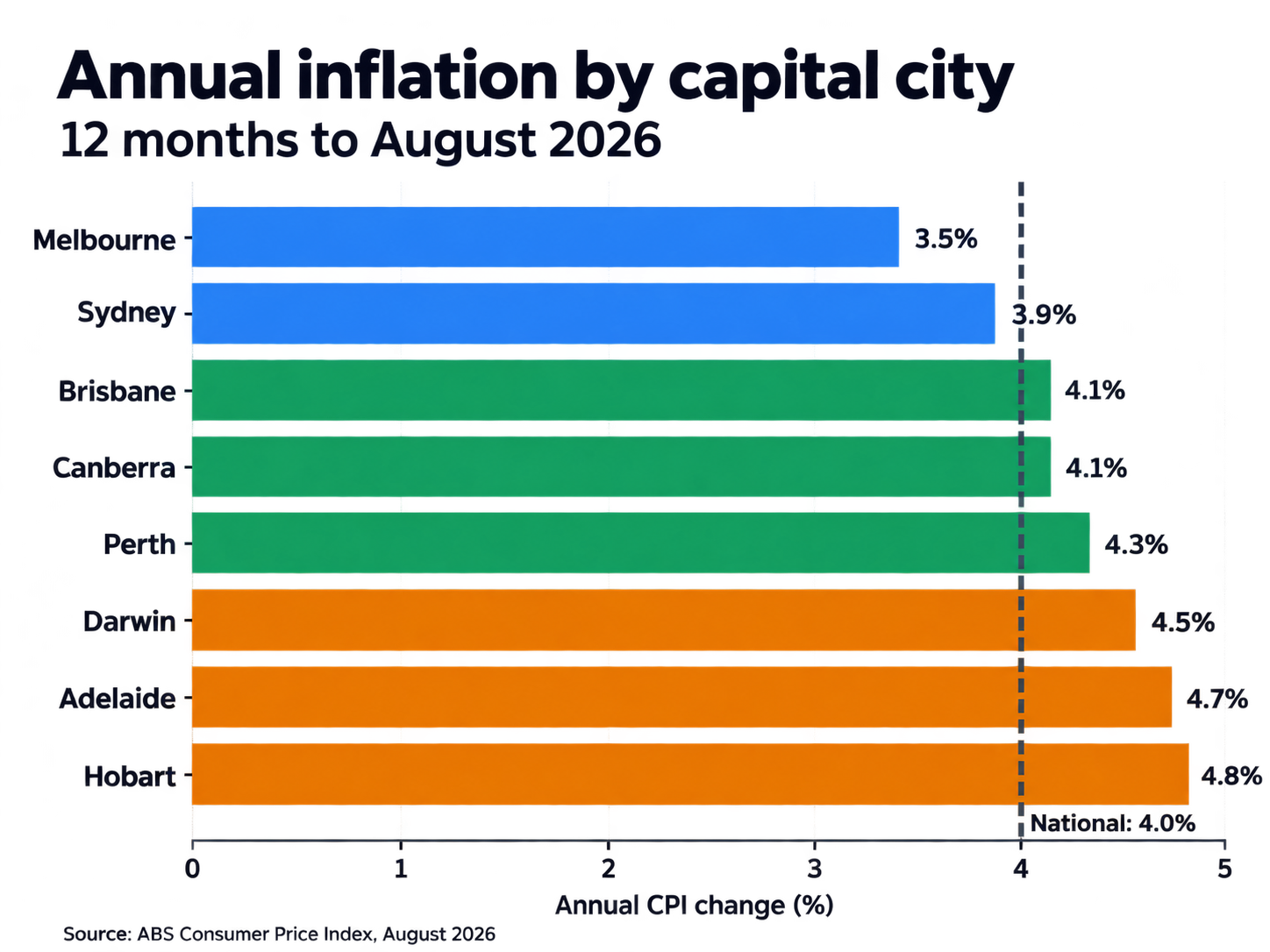
The latest consumer price index (CPI) data from the Australian Bureau of Statistics (ABS) shows Hobart recorded the sharpest annual increase at 4.8 per cent, followed by Adelaide at 4.7 per cent and Darwin at 4.5 per cent.
Across the country, inflation rose to 4 per cent in the 12 months to August 2026, up from 3.5 per cent in July, adding further pressure to household budgets.
Rachael McCririck, ABS head of price statistics, pointed to housing as the biggest contributor to annual inflation, with fuel and electricity prices also pushing up the headline figure.
How the capital cities stack up
At the lower end of the scale, Melbourne recorded annual inflation of 3.5 per cent, followed by Sydney at 3.9 per cent. Brisbane and Canberra both recorded 4.1 per cent, followed by Perth at 4.3 per cent.
It’s important to note that CPI measures how fast prices are changing, not how expensive a city is. Melbourne’s lower inflation rate doesn’t necessarily mean it’s cheaper than Hobart or Adelaide. It just means prices rose less over the past year.
Why is the cost of living rising in Adelaide, Hobart and Darwin?
ABS data shows several key costs are rising faster in these cities than the national average.
Housing is the biggest driver of the gap, including costs like new dwellings, electricity, and rents. The ABS listed these as the main contributors to the national rise.
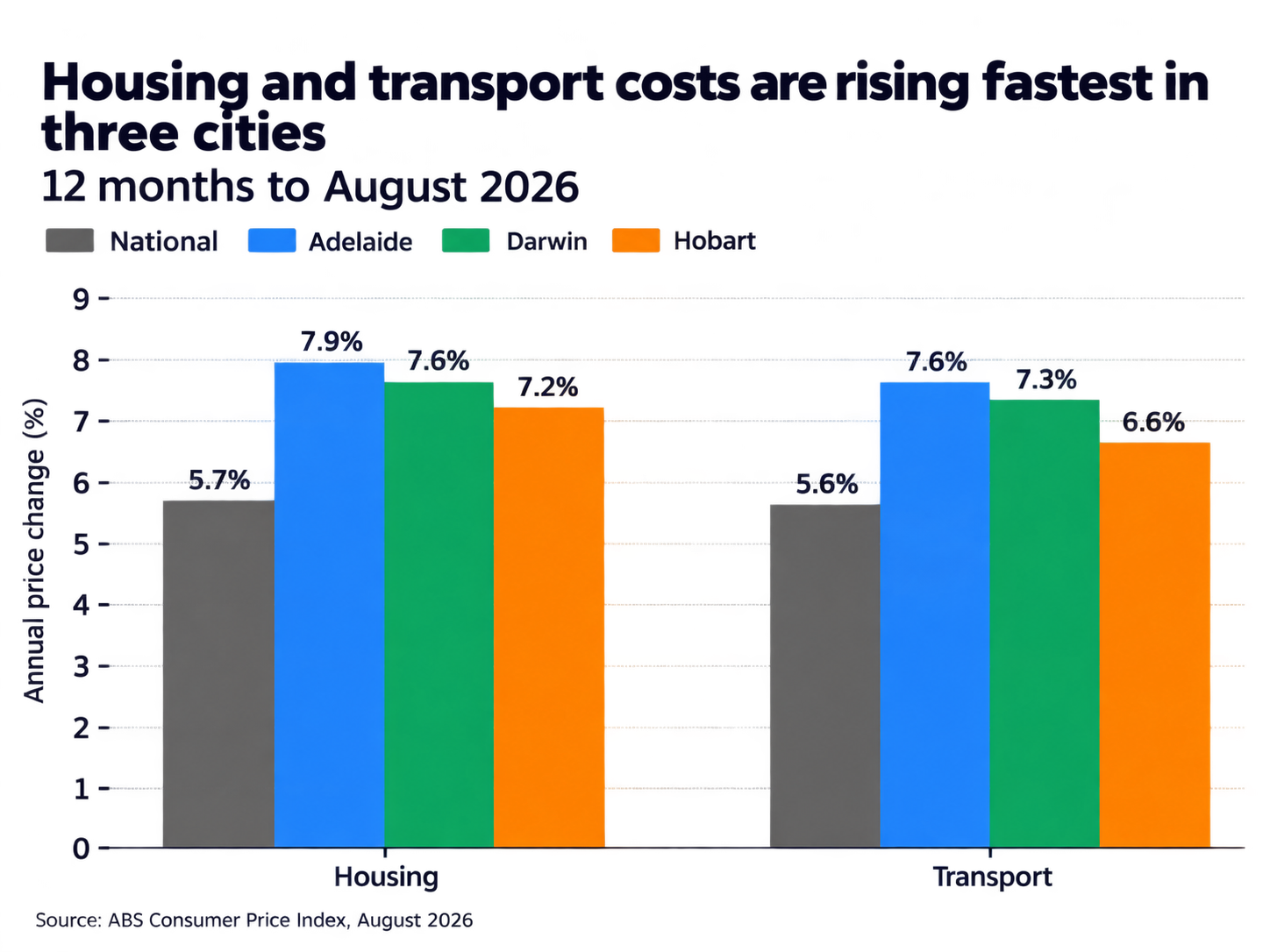
Nationally, housing costs rose 5.7 per cent, but Adelaide was at 7.9 per cent, Darwin 7.6 per cent and Hobart 7.2 per cent, while Melbourne’s housing figure was only 4.5 per cent.
Transport was another outlier for these cities, which includes costs like petrol and vehicle maintenance and repairs.
The national figure was 5.6 per cent, against 7.6 per cent in Adelaide, 7.3 per cent in Darwin and 6.6 per cent in Hobart.
Hobart and Darwin also have much higher alcohol and tobacco inflation, at 7 per cent and 6.4 per cent against 4.8 per cent nationally.
Adelaide and Hobart are above the national figure on insurance and financial services (4.2 per cent and 4.4 per cent against 3.5 per cent). Adelaide is also higher on health (4.5 per cent against 3.9 per cent).
What is CPI and what does it mean for consumers?
CPI measures changes in the prices Australian households pay for a fixed basket of goods and services, including groceries, rent, electricity, fuel, insurance and dining out.
A 4 per cent rise means that basket costs 4 per cent more than it did 12 months earlier. It is an average, so your own experience could be higher or lower depending on what you spend your money on.
Renters and households with big energy bills may feel price increases more than the headline suggests. Mortgage holders also face borrowing costs, which CPI doesn’t capture directly.
CPI and the trimmed mean also differ in an important way.
Headline CPI includes everything, so it can jump around when volatile items move, like petrol, fruit and vegetables, or when electricity rebates end.
The trimmed mean essentially removes the biggest increases and decreases to show the underlying trend.
According to the ABS, trimmed mean inflation was 3.6 per cent in August, unchanged from July.
How CPI impacts the broader economy
CPI is one of the key measures the Reserve Bank of Australia uses to inform its interest rate decisions, as it seeks to keep inflation within its 2–3 per cent target range.
When inflation runs above target, the RBA tends to raise rates to cool spending.
As The Money Edition has covered, the RBA has repeatedly raised the cash rate target in 2026 to cool inflation.
In simple terms, interest rates are likely to stay elevated as long as inflation sits above the RBA’s 2–3 per cent target range, although other economic conditions also influence the bank’s decisions.
The next key date to watch will be October 28, when the ABS releases its September CPI data.
Topics: Cost of Living, Housing, Inflation