 Subscribe

Australia’s inflation is among the highest in the world. Here’s why it matters to you
Feeling poor? You're not alone. Australia has one of the highest inflation rates among developed economies due to our strong labour market.

- Inflation feels high in Australia, and it is: The country has one of the highest rates among developed economies.
- High wages in Australia and relatively low unemployment fuel inflation as households still have money to spend.
- The RBA is attempting to reduce Australia’s inflation without adding too much pain to the economy.
The current cost of living in Australia feels overwhelming.
From housing costs to fuel and groceries, it feels like every step forward is followed by two steps back.
On Wednesday, new data revealed inflation had risen again, to 4.3 per cent, almost guaranteeing that households will see another interest rate hike before the year is out.
But are Australians suffering more than other developed economies, and how does our inflation compare?
Dr Isaac Gross, lecturer in economics at Monash University, told The Money Edition that Australia actually has one of the highest inflation rates among developed economies.
“Australia’s inflation is higher than the average across major advanced economies: 4.0 per cent in August, compared with 3.1 per cent for the G7,” Dr Gross said.
He said Australia is not alone in its battle against high inflation, but specific local variables may mean residents here pay more.
“Broadly, countries are facing similar pressures, particularly higher energy prices. These lift petrol prices and the cost of making and transporting goods,” Dr Gross said.
“But much of Australia’s inflation is home-grown, reflecting a strong labour market.
“Local demand, exchange rates and housing costs mean the size and timing of inflation differ between countries.”
So Australia’s inflation rate is among the higher end of developed nations. But what does that actually mean for you?
First, it helps to understand how inflation is measured.

What is the consumer price index, or CPI?
Currently, Australia’s headline inflation rate, technically measured by the consumer price index (CPI), sits at 4.3 per cent in the 12 months to September.
The CPI tracks a theoretical “basket” of goods and services that comprises a number of expenses that households need to pay.
According to the Australian Bureau of Statistics (ABS), which tracks the CPI, the basket covers the following 11 categories:
- Food and non-alcoholic beverages
- Alcohol and tobacco
- Clothing and footwear
- Housing
- Furnishings, household equipment and services
- Health
- Transport
- Communication
- Recreation and culture
- Education
- Insurance and financial services
By tracking the average cost of each category, the ABS determines whether prices are rising or falling over time.
Each category in the basket is weighted differently, and the CPI breaks down the categories in each reading.
But when taken as a whole, it provides a nice “average” of how household budgets are faring.
So inflation in Australia is currently at 4.3 per cent. That doesn’t sound like much?
No, it doesn’t, but compare Australia’s inflation rate with that of other G20 countries.
According to Trading Economics, which tracks the CPI of the G20 nations, Australia currently has the ninth-highest inflation rate.
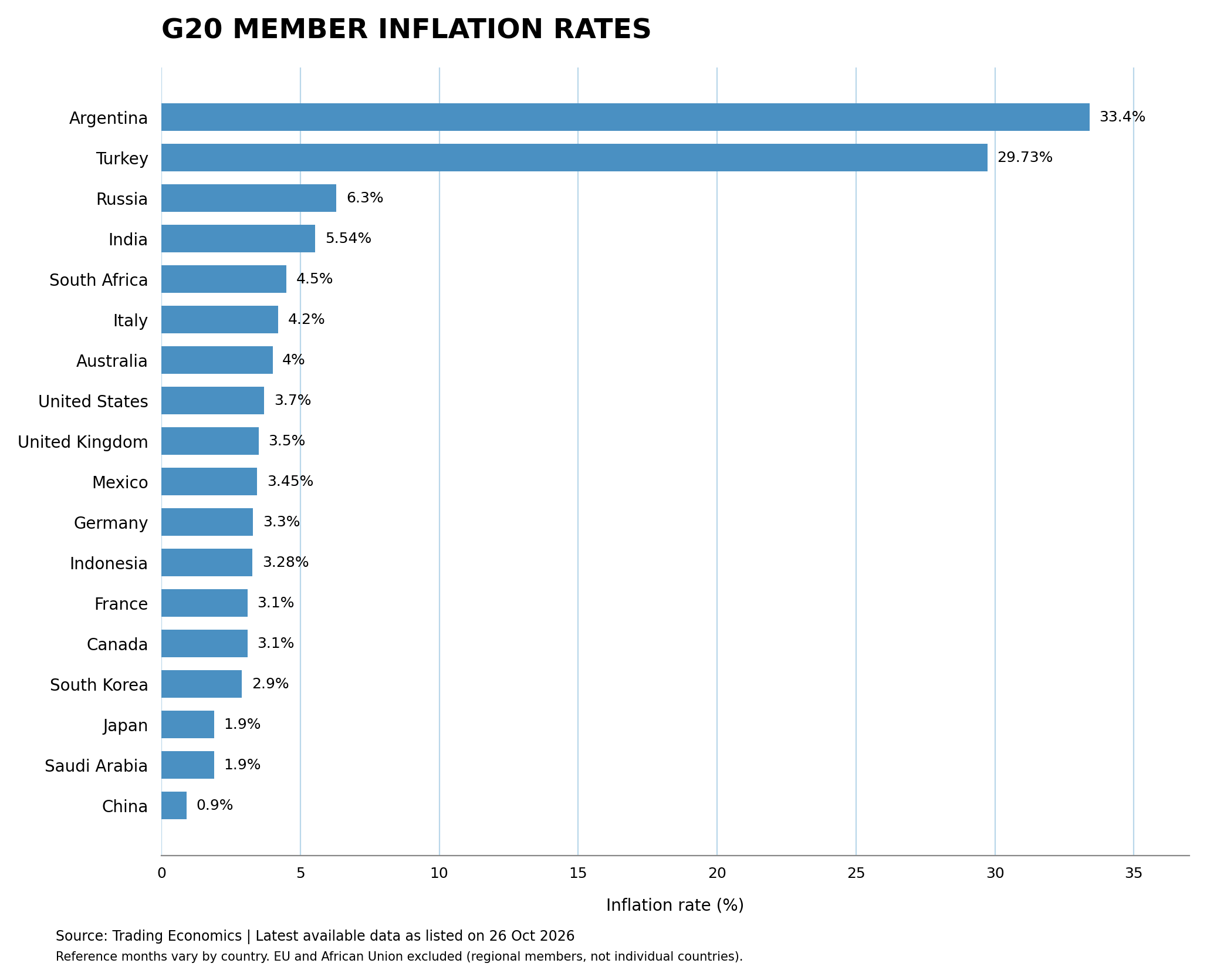
Argentina (33.4 per cent) and Turkey (29.73 per cent) rank first and second, both battling their own economic crises.
From there, it thins out. Russia is third at 6.3 per cent, followed by India (5.54 per cent), Spain (4.9 per cent) and Brazil (4.58 per cent).
Notable nations with lower inflation than Australia include the United States (3.7 per cent), the United Kingdom (3.5 per cent), and Indonesia (3.8 per cent).
It’s also important to note that comparing countries isn’t a perfect science.
How inflation is measured across nations can vary wildly, as can the government policies that contribute (or don’t) to a nation’s inflation rate.
So yes, 4.3 per cent does sound low. But globally, compared with similar countries, it’s not ideal.
If Indonesia has lower inflation than Australia, why is it so cheap to travel there?
Keep in mind that inflation is a percentage, not a total score of how expensive or cheap a place is to live.
It measures how prices change, not the prices themselves. The real hidden detail is in the wages. In Australia, wages are very high—but so are our average living costs.
It’s cheap to travel to Indonesia on an Australian wage, but it’s not cheap to live there on the local median wage.
Ok. So inflation in Australia is high, but not at a crisis level. Why do I feel poor even though I earn good money?
The feeling you’re referring to is your purchasing power.
That’s basically how much “stuff” you can get with your paycheque.
When inflation goes up, your purchasing power reduces. When you get a pay rise, your purchasing power increases.
But it’s not that simple. Enter the term “real wages”. Real wages are your income, adjusted for inflation.
So if the price of goods and services in Australia rises by 4 per cent, but your pay rise is only 3 per cent, your purchasing power has fallen.
Repeat that for 10 years, and even people on good money will feel as if they are scraping by, whatever lifestyle they’ve come to expect.
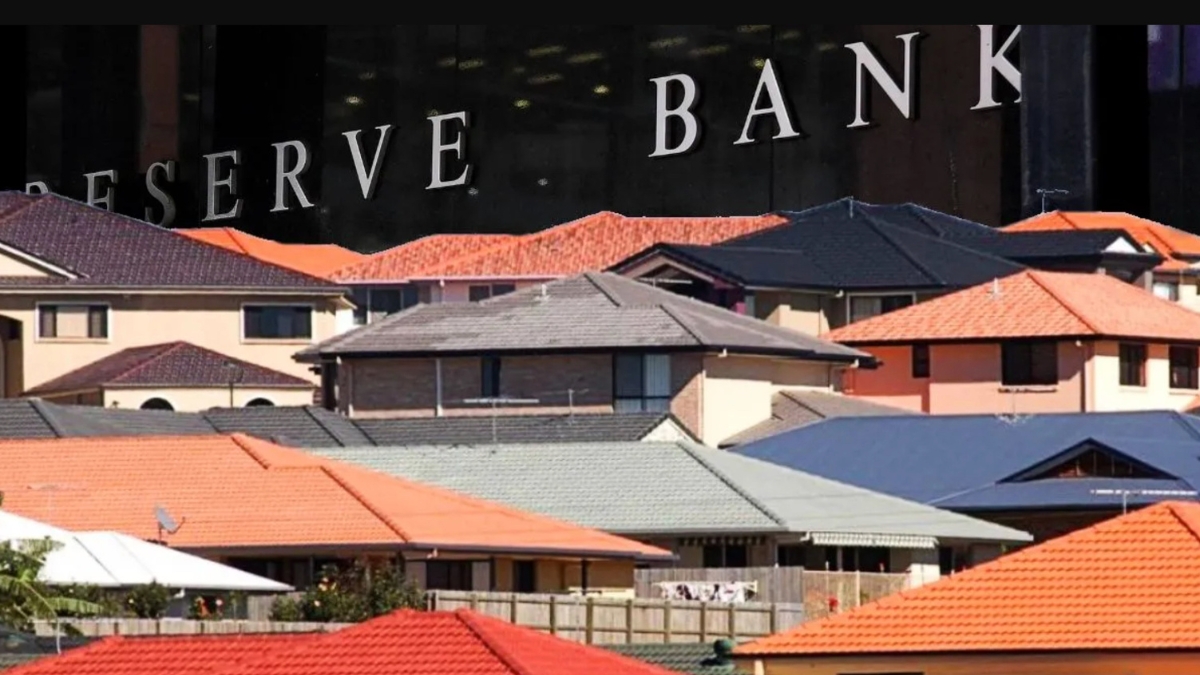
If inflation is high right now, what needs to happen? Where should inflation be?
Most economists agree that an inflation rate of between 2 and 3 per cent is healthy for a developed economy.
That is also the Reserve Bank of Australia’s (RBA) current target range.
“The Reserve Bank uses a flexible inflation target to help achieve its objectives of price stability and full employment, and its overarching goal of promoting the prosperity and welfare of the Australian people,” a spokesperson for the RBA said.
“This is because price stability – which means low and stable inflation – contributes to sustainable economic growth.
“Targeting inflation of 2 to 3 per cent avoids the many costs to the economy from inflation that is too high or too low.”
To reduce inflation, the RBA has a pretty blunt tool: monetary policy (or interest rates).
By raising interest rates, the RBA effectively tightens the purse strings of households and businesses by making borrowing money more expensive.
When borrowing money is more expensive, these same economic players are less likely to spend money in society, and so businesses are forced to reduce or slow down their prices in order to retain sales.
When that happens, inflation should fall.