 Subscribe

Harvey Norman’s profit nearly halves weeks out from Christmas
Retail giant Harvey Norman’s earnings have slumped ahead of its two biggest profit months, as sales drop at its Australian franchised stores.

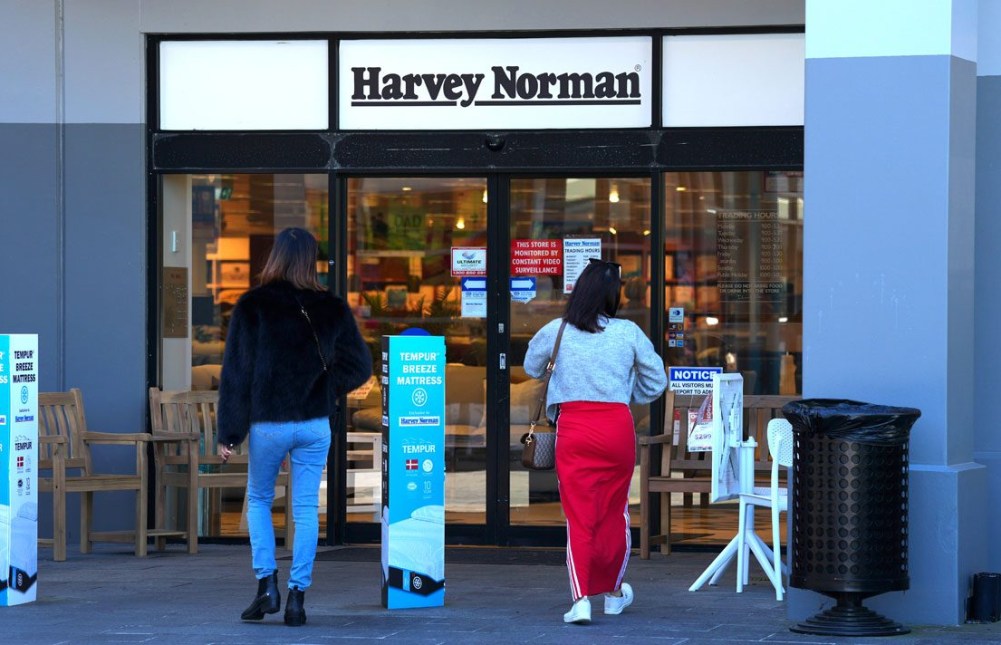
- Harvey Norman Holdings reported a 47 per cent fall in unaudited profit before tax for the four months to October 31 in a trading update to the Australian Securities Exchange (ASX).
- Sales at its Australian franchised stores fell 3.7 per cent over the four months and were still down 1.5 per cent in the first 20 days of November.
- David Jones and General Pants both collapsed into administration this month, putting thousands of jobs at risk.
Retail giant Harvey Norman’s earnings have slumped ahead of its two biggest profit months, as sales drop at its Australian franchised stores.
In a trading update to the Australian Securities Exchange (ASX) on Wednesday, Harvey Norman Holdings reported its unaudited preliminary profit before tax fell 47 per cent between July 1 and October 31 compared with a year earlier.
Aggregated sales across independent Harvey Norman, Domayne and Joyce Mayne franchised stores in Australia fell 3.7 per cent over the four months, and were down 1.5 per cent year on year in the first 20 days of November.
Harvey Norman shares fell as much as 6.6 per cent to $3.97 after the update, and were 2.4 per cent lower at $4.15 near the close.
The update adds to a bleak stretch for Australian retail, with consumer spending falling in October and two well-known retailers collapsing into administration this month.
Retailers have been squeezed this year by high operating costs, partly linked to the Iran war, along with higher interest rates and weaker household spending.
“Historically, the months of November and December have been the largest contributors to the consolidated entity’s first-half profit,” the company said.
The Money Edition has contacted Harvey Norman for comment.

Executive chairman Gerry Harvey, who co-founded the retailer in 1982, said in August that he could not see retail conditions improving any time soon.
“I don’t see how it’s going to get better,” Harvey said at the time.
Sales at the Australian franchised stores do not form part of Harvey Norman Holdings’ own financial results, as the stores are independently owned, unlike its company-operated stores overseas.
Across its overseas stores, sales fell 4.4 per cent in New Zealand and 0.6 per cent in Singapore, but rose 3.3 per cent in Slovenia and Croatia, 2.9 per cent in Ireland and 0.9 per cent in Malaysia.
In the United Kingdom, total sales jumped 20 per cent while comparable sales fell 19 per cent, though the announcement did not explain the gap.
The retailer opened a new store at Coalfields Retail Park in Selangor, Malaysia, on September 10, bringing its overseas company-operated network to 124 stores.
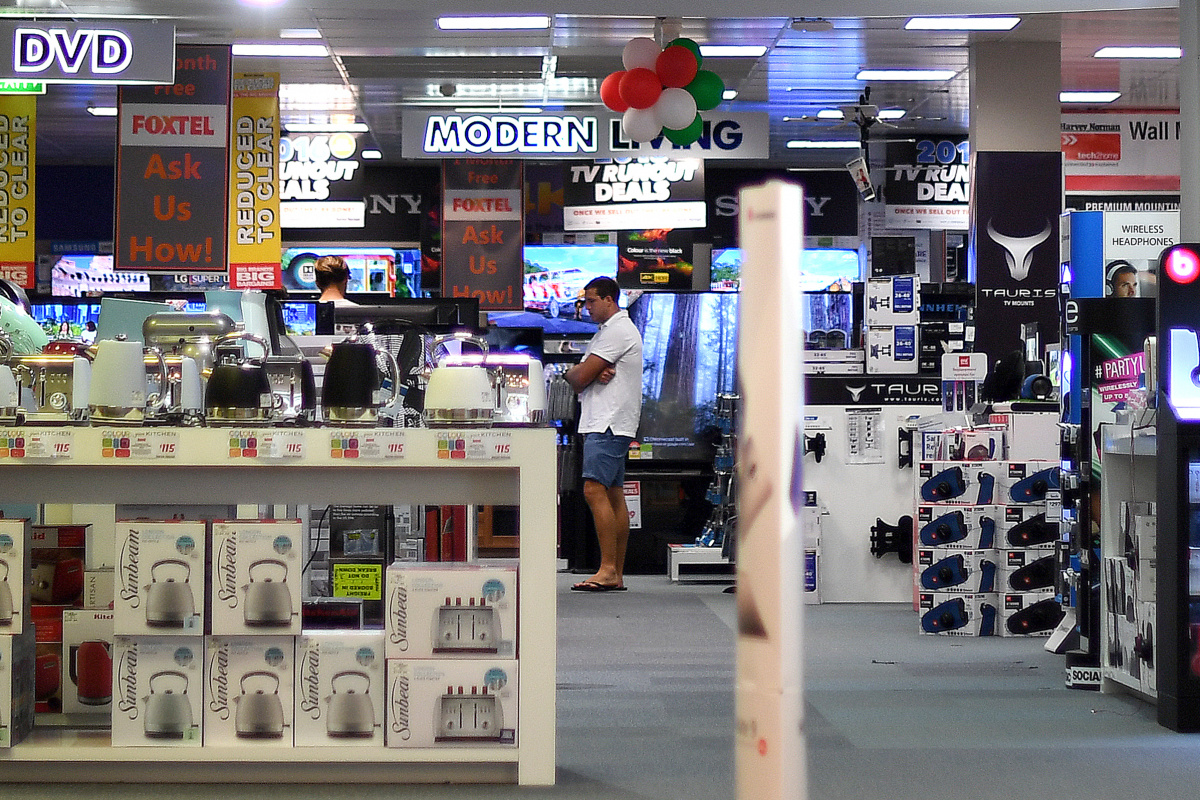
A tough run for retail
Retail expert Professor Gary Mortimer previously told The Money Edition that specialist retailers, or “category killers,” such as Harvey Norman, Bunnings and JB Hi-Fi, dealt the first blow to traditional department stores.
David Jones is expected to close 19 of its 38 stores by the end of the year, affecting more than 1500 jobs.
Streetwear retailer General Pants went into voluntary administration, putting about 35 stores and 500 jobs across Australia and New Zealand at risk, while hardware giant Bunnings has announced it will cut 350 roles from its local technology team.
Last week, National Australia Bank (NAB) economists reported consumer spending fell 0.2 per cent in October, the first monthly decline since April.
Personal goods spending fell 0.3 per cent, a decline the economists said was “driven by declines in spending at department stores, pharmaceuticals and other personal goods.”
Topics: Retail