 Subscribe

The recession indicator everyone is talking about — and why it doesn’t matter
A little-known rule in the US has suddenly placed Australia on a recession footing. But should we actually care about it?

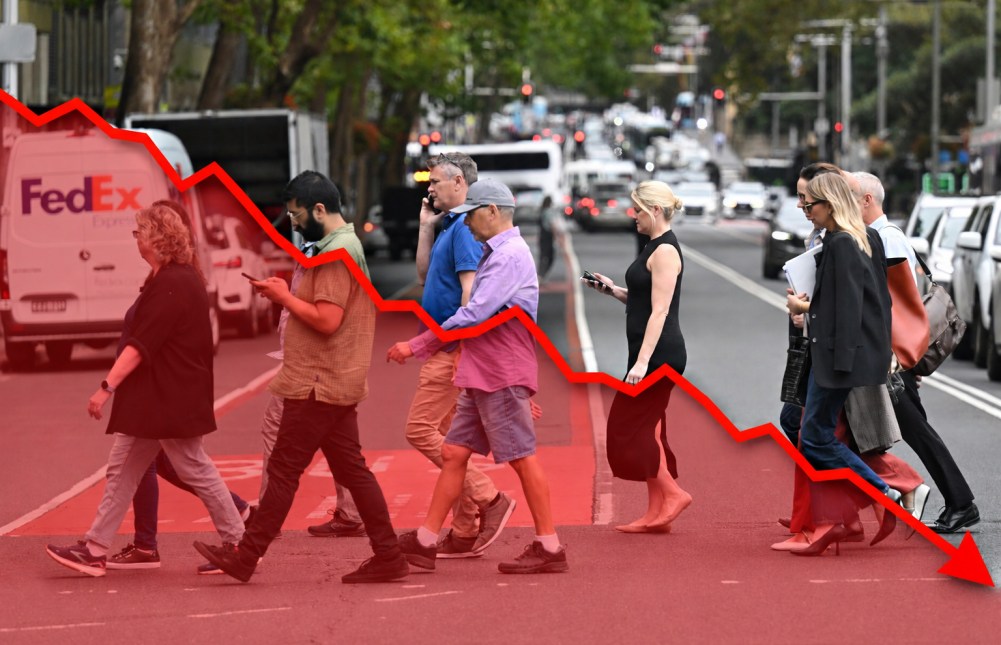
- A sharp jump in the unemployment rate has many around Australia whispering the “R” word because of a little-known indicator: The Sahm rule.
- The Sahm rule suggests that if unemployment rises too fast over time, it signals the early months of a recession.
- Experts say Australia should keep it in mind, but a true recession depends on a variety of variables beyond unemployment.
It’s the dreaded “R” word that politicians and economists like to avoid.
From crowded unemployment queues to failing businesses, a proper recession impacts every corner of society, with some suffering more than others.
Ten points if you guessed the word “recession.” So why have economists started talking about a recession in Australia?
Part of it comes from a well-known theory known as the “Sahm rule”.
Created by former US Federal Reserve economist Claudia Sahm in 2019, the Sahm rule is said to signal the early signs of recession when the three-month moving average of unemployment rises 0.50 percentage points or more above its lowest level.
Last Thursday, when the ABS reported a radical jump in the unemployment rate, Australia just broke the rule.

But should we care? And is Australia on the verge of recession?
No, says Dr Jason Tian, Senior Lecturer in Finance at Swinburne University of Technology — but we shouldn’t ignore it either.
“The rule is an alarm. It doesn’t settle the question on its own, and it isn’t perfect. It went off in the US in 2024, and no recession followed, partly because strong migration was adding to the number of people looking for work. Australia has had strong population growth too,” Dr Tian told The Money Edition.
“Still, I think it is increasingly alarming. Unemployment has gone up three months in a row, and 43,500 jobs disappeared in October alone. The full effect of this year’s five interest rate rises hasn’t hit yet either.
“Technically we’re not in a recession, but for a lot of households it already feels like one.”
As Dr Tian explained, the Sahm rule was built for the US, where free market economic policy means things can shift faster and harder.
Here in Australia, because of stronger employment laws, the unemployment rate is less volatile, and would need a higher threshold to trigger the rule.
“The rule was built for the US. When the Reserve Bank applied it to Australia in internal research later released under freedom of information, it used a higher bar of 0.75 percentage points,” he said.
“Other Australian economists use the same threshold. On that measure we’re not there yet, but we’re getting close.
“If unemployment keeps climbing at the pace of recent months, it could be triggered early next year.”
Dr Luke Hartigan, Senior Lecturer in Econometrics at the University of Sydney, says amid all the chatter of the Sahm rule, it’s important to keep a simple fact in mind: recessions are really, really bad — and we’re not quite there yet.
“Look, [the unemployment rate] is still under five, so we’re still in the low single digits,” Dr Hartigan told The Money Edition.
“Typically, recessions are associated with unemployment rates going to double digits.
“It could be a downturn, but I don’t think it is a recession because a recession is really bad, and they’re very infrequent. We don’t tend to see them a lot.
“In Australia, we hadn’t had one since the 1990s, and that was a very bad recession.”
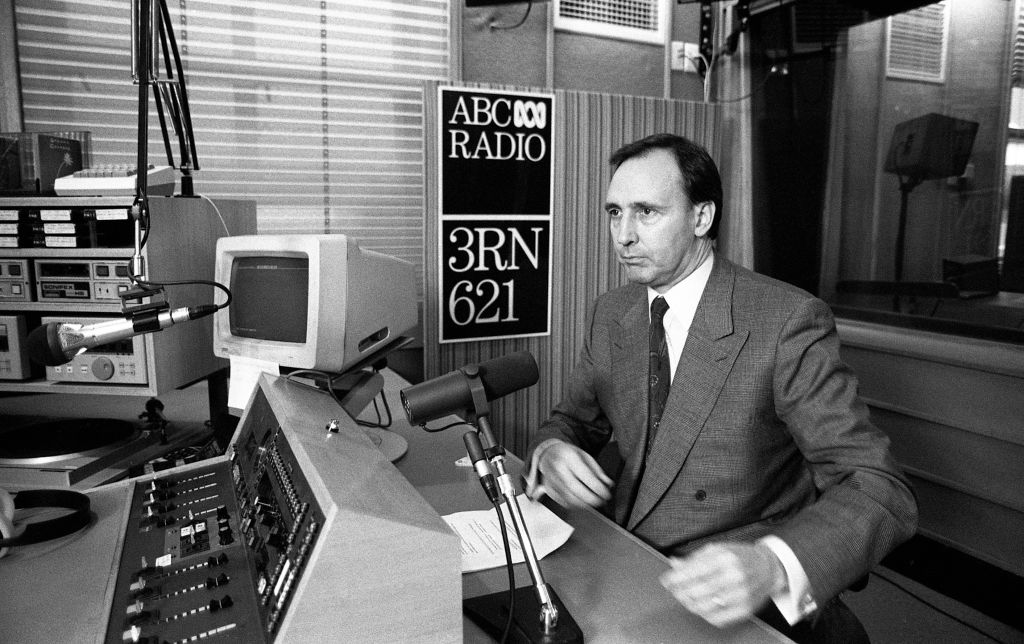
As Dr Hartigan argues, the Sahm rule has not been peer-reviewed, and Claudia Sahm created the rule to fit existing US recession data, not the other way around.
“It does provide guidance, but I don’t think it’s something that we should be putting all our faith into, because the work’s not being published,” he said.
“It hasn’t been peer-reviewed, and the way she’s been calculated, I don’t really think a lot of statistical vigour has been put into it.
“She wanted a result, and she tailored the rule to meet that result.”
Still, both experts agreed that the measure the Sahm rule is attempting to measure, the rate of growth in the unemployment rate, is one that needs a careful eye.
“The logic is that unemployment rarely rises gently,” Dr Tian said. “Once it starts going up, it tends to snowball.
“People who lose their jobs spend less, and that costs other people their jobs,” Tian added.
Topics: Australian economy, Interest Rates, Recession