 Subscribe

Cheaper beans, dearer coffee: Why flat white prices keep rising
Coffee bean prices are easing from record highs, but the cost of a flat white could keep climbing as Australian cafes grapple with rising overheads.

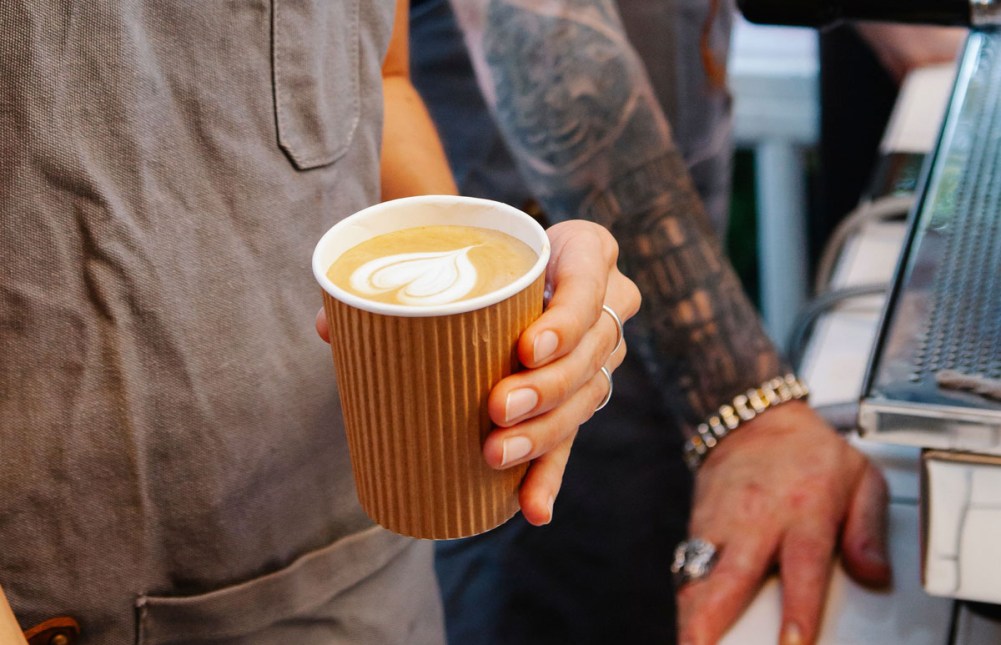
- The average Australian flat white reached $5.17 in October, up from $5.01 in April.
- Global coffee prices have fallen sharply from record highs as production recovers in Brazil and Vietnam.
- Cafe operators say rising wages, rents and other overheads are keeping prices high, with $7 flat whites potentially on the horizon.
It’s been a tough few years for Australia’s legion of coffee drinkers, as the price of their morning necessity has caused as much of a jolt as the beverage itself.
Before the pandemic, a takeaway coffee typically cost about $4. In October 2026, the average flat white cost $5.17, according to coffee tracking site SmallFlatWhite.com, which priced 10,031 cafes across Australia.
When the site started tracking the national average in April, it was $5.01.
As a globally traded agricultural commodity, coffee bears weather risk, which hasn’t favoured drinkers.
Brazil, the world’s largest producer, suffered a stretch of weather-hit harvests, as did Vietnam, the second-largest producer. Growers have also battled higher fertiliser costs, partly driven by the Russia-Ukraine war.
The International Coffee Organisation (ICO) reported the global coffee market posted four consecutive deficit seasons between 2021/22 and 2024/25.
The price responded. From less than US$1 a pound in mid-2019, the global arabica coffee price, known as the ‘C price’, more than quadrupled, reaching a record high of around US$4.41 in February 2025.
But the C price has since subsided to around US$2.76 a pound as production recovers in both Brazil, where arabica dominates, and Vietnam, which produces mostly the cheaper robusta variety.
The ICO’s latest estimates point to a surplus of approximately 3 million bags in 2025/26, the first in five years. Global production is estimated at 183.6 million bags, against consumption of 180.6 million.
Claudio Delposte, coffee analyst at Rabobank in São Paulo, told The Money Edition that successive crop shortfalls, particularly in Brazil, ran down inventories.
Rabobank estimates Brazil’s 2026/27 harvest at a record 73.3 million 60-kilogram bags, roughly two-thirds of which is arabica.
“The increase in Brazilian supply is allowing global inventories to gradually rebuild,” Delposte said.
“However, this process has been slower than the production potential would suggest, mainly due to delays in the Brazilian harvest and logistical constraints at Brazilian ports, which postponed the physical arrival of this coffee in consuming markets.”
Rabobank expects arabica to average US$2.70 to US$2.90 a pound through the end of 2026 and into early 2027.
A more comfortable balance of supply and demand should remove “part of the scarcity premium” of recent years, Delposte said.
Why cafes aren’t cutting prices
But if you’ve been waiting for falling global coffee prices to reach your local cafe, Dave Makin has some news: don’t hold your breath.
Makin, who founded Melbourne’s Axil Coffee Roasters 15 years ago, said the beans are the least of it. In a $6 flat white, the coffee itself accounts for perhaps 30 to 40 cents.
Instead, the real cost is behind the counter.
“Wages are by far the biggest component,” Makin said.
Award wages and superannuation have gone up every year, and with payroll tax added, Makin said most Axil shops now run labour at 35 to 40 per cent of overheads.
He doesn’t argue against the increases. These are award-based roles and “that needs to move”, but the costs have “compounded quite a lot”.
Rent is the other squeeze. Axil aims for 10 per cent of costs, but its CBD espresso bars are closer to 15 per cent because Melbourne city “never recovered from Covid.”
Mondays are still about 40 per cent below pre-pandemic trade, and Fridays 50 per cent, Makin said.
In any case, prices on the Intercontinental Exchange (ICE) in New York do not automatically flow through to the cafe counter.
When drought hit Brazil, and catastrophic floods struck Vietnam in September 2024, Makin said the coffee price “almost doubled in about three months.”
But Axil moved its prices up gradually rather than all at once. The flip side, he said, is that any fall in the commodity price will trickle through just as gently.
“Cafe owners tell us their costs keep rising: wages, super, rent, milk, beans, freight and cups,” Chris Drake, founder of SmallFlatWhite.com, told The Money Edition. “They absorb rising costs until they can’t, then raise prices once, usually by 50 cents.
“Losing the card surcharge on October 1 was the tipping point for some,” Drake added. “In October, one in five of the cafes we priced in both September and October put their flat white price up.”
Drake also said the coffee price in the headlines is for commodity beans traded in bulk, both arabica and robusta.
“The big chains and supermarket brands are probably more aligned to that market price, so you might see a fall there first. Specialty roasters buy higher grades at a premium on top.
“Instant coffee and a cafe flat white are not the same product, and they don’t follow the same price. So, I’d be surprised if much of any fall reached the price of a coffee at a specialty cafe.”
Makin’s real frustration is with how customers see the price.
People who happily pay $24 for an espresso martini baulk at $6 for a coffee, he said.
“I would argue that $6 is fair for something that’s handmade to order every single time.”
The rise of the home barista
What is changing is where coffee lovers make their second and third cups.
The industry calls it coffee’s “fourth wave”: the home barista, a product of cost-of-living pressure.
People buy one coffee out, which for many is part of their dog-walking or pre-work social routine, and make the rest at home.
As a result, Axil is selling more bags of beans to home users than ever before. And while coffee’s scarcity premium is fading, don’t bank on a cheap cup.
In fact, the pressures on Australia’s roasters and cafes could mean it won’t be unusual to see $7 or $7.50 for a flat white. But will the market wear it?
The industry believes coffee demand is relatively insensitive to price rises. Axil Coffee Roasters’ Makin said food sales have suffered, but coffee sales are holding.
At least, for now.