 Subscribe

General Pants becomes latest retailer to collapse, putting hundreds of jobs at risk
General Pants has become the latest victim of the retail crisis, appointing administrators to turn around its 35-store footprint.

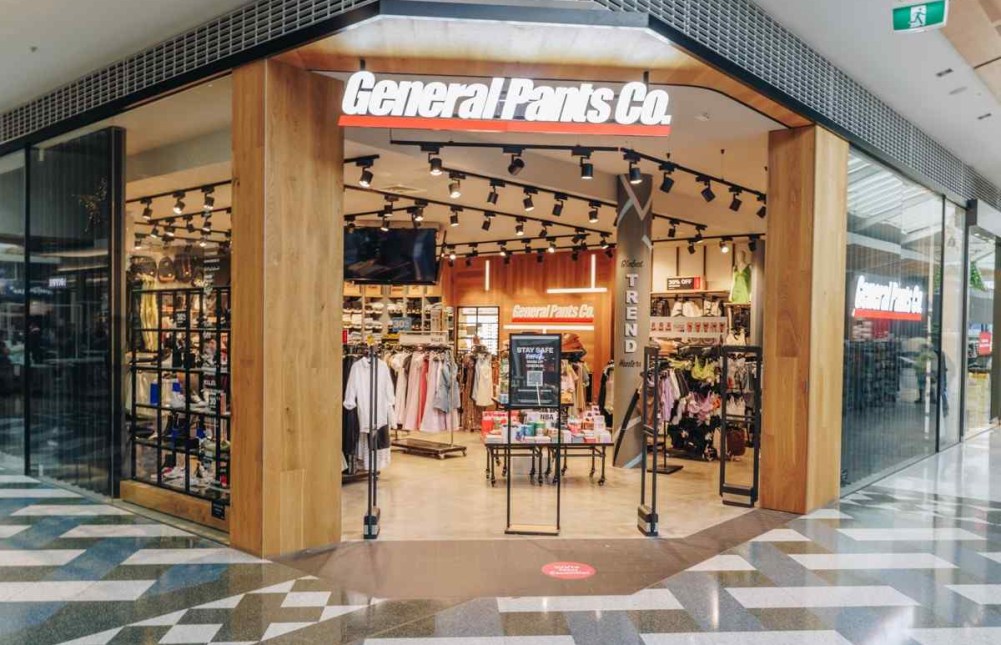
- Retailer General Pants has collapsed into administration as falling sales and reduced revenue impacted the streetwear business.
- Alvarez & Marsal have been appointed as voluntary administrators.
- The future of 35 stores across Australia and New Zealand and approximately 500 staff is now at risk.
Streetwear retailer General Pants has become the latest retailer to collapse, appointing voluntary administrators and putting hundreds of jobs at risk ahead of the Christmas rush.
General Pants owner Alquemie Group appointed Alvarez & Marsal as voluntary administrators of the business this morning, amid declining sales.
In a statement, Alquemie said it had tried a range of options to address falling sales and reduced foot traffic through its brick-and-mortar stores.
“The recent Australian retail trading environment, and rapid structural changes in the sector, including the growing dominance of offshore online-only retailers, has seen General Pants progressively reduce its physical store footprint,” Alquemie said.
“To address this, Alquemie Group actively focused on a range of options for General Pants, including a sale process or significant capital injection to help it better compete against large-scale competitors.
“None were ultimately viable.”
General Pants currently operates around 35 stores across Australia and New Zealand and employs around 500 people.
Stores will remain open and trading as usual during the initial period of administration.
Earlier this year, General Pants reduced its stores from 60 to 35 amid falling revenue.
Jason Tracy, one of the administrators at Alvarez & Marsal, said the first priority was maximising the retailer’s Black Friday period.
“General Pants Co is one of Australia’s best-known youth fashion brands, with a loyal customer base and a dedicated team,” he said.
“Our immediate priorities are to keep the stores trading, support employees and customers, and pursue a sale and/or recapitalisation of the business.
“With Black Friday next week, we are focused on maximising trading performance and expect strong demand over the period.
“We thank the team members, landlords and suppliers of General Pants Co for their support as we work through the administration.”
Retail hit hard as high costs and low customer spend collide
General Pants is the latest in a long list of retailers to appoint administrators this year as high operating costs — in part from the Iran war — collide with higher interest rates and less household spending.
Two weeks ago the nation’s oldest retailer, David Jones, brought in the administrators after it failed to pay rent to its major landlord, Scentre Group, for more than a month.
A week later, administrators announced they would close 19 stores, impacting more than 1500 jobs.
In September, long-time women’s clothing brands Cue Clothing and Veronika Maine brought in the administrators, citing high occupancy and operating costs.
In February, Barbeques Galore appointed administrators, who, after a few months, decided to liquidate the business by closing all 95 stores and ending the employment of 500 people.
This year’s Black Friday and Christmas trading period, traditionally a bumper time for retailers, might not prove fruitful enough to keep many brands afloat.
Two days ago NAB economists reported that consumer spending lost momentum in October, falling 0.2 per cent for the first monthly decline since April.
“Personal goods spending fell 0.3 per cent in October, following a 1.3 per cent rise in September,” Thao Nguyen and Brien McDonald wrote.
“The decline was driven by declines in spending at department stores, pharmaceuticals and other personal goods (such as antique & used goods, flowering and stationery).”