The Stats Guy: Australia has problems, but things could get worse. So much worse.

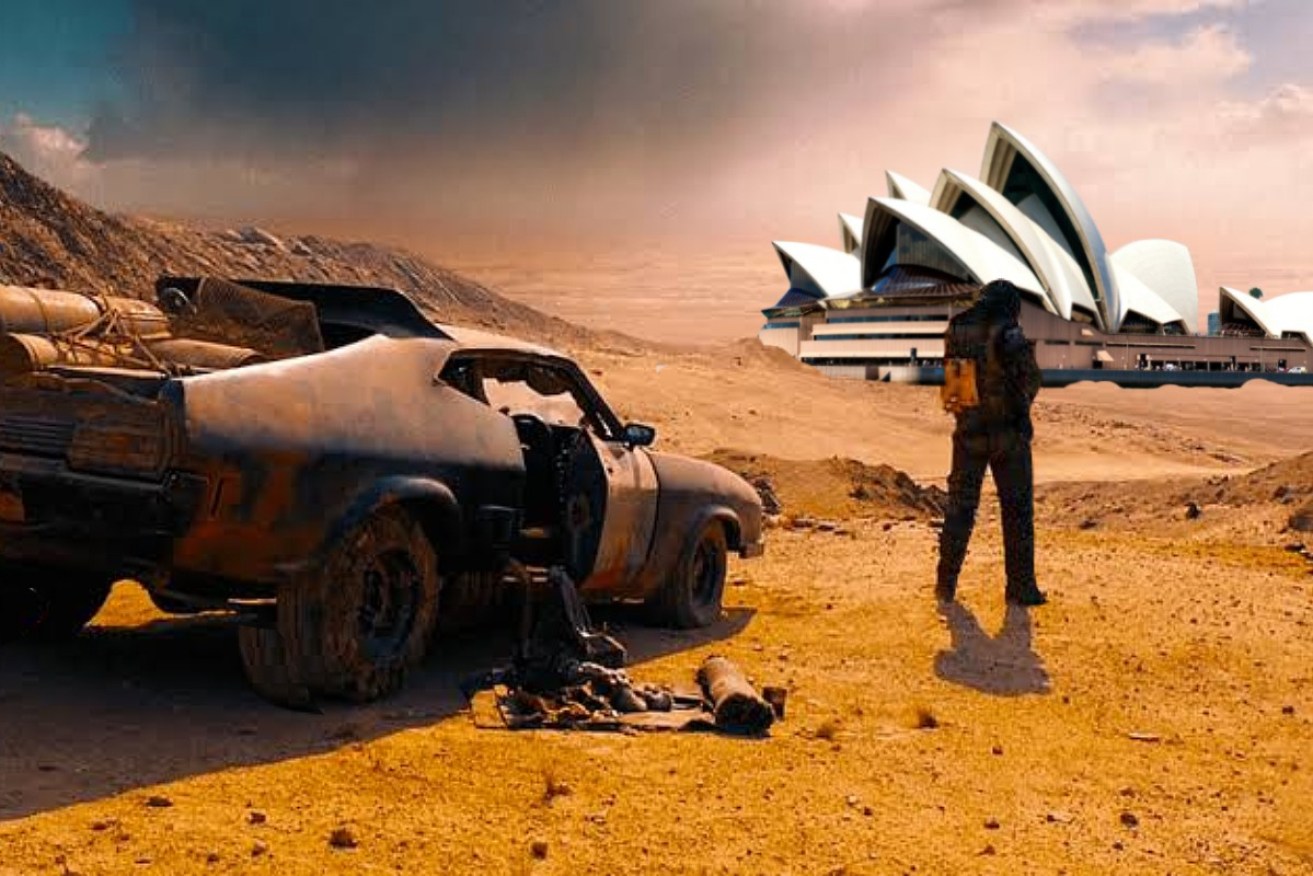
Welcome to a rare Mad Max edition of The Stats Guy. Photo: TND/Roadshow
While Australia has problems (housing, productivity, social cohesion, shrinking middle class, skills shortage), regular readers of this column will know me as an unapologetic optimist regarding the future of Australia.
But today we are doing something different – we ask how Australia could become much, much worse.
Welcome to a rare Mad Max edition of The Stats Guy.
In a country where so many people are disappointed in politics and feel they could or should be better off than they are, I often hear the sentiment that “things can’t possibly get any worse”.
That’s a spectacular misjudgement. Things could get so much worse. Let’s examine how.
Australia is one of the richest countries despite running a very simple economy. We’ve been dealt an extraordinarily good hand.
We rule over a continent-sized nation with a small population. We dig things out of the ground and sell them overseas. We grow things and sell them overseas. We educate foreigners. We invite foreigners to visit our country and spend money here.
That’s it! That’s our whole economy.
Australia’s standing in the Atlas of Economic Complexity (out of Harvard) has moved from 105th to 74th (out of 145 countries) not because we diversified our economy but because the folks at Harvard changed their methodology.
Our ranking peers are poor, resource-extracting nations.
The reason we enjoy the lifestyle of an advanced Western economy is the strength of our institutions. Our national wealth is distributed to more than just a corrupt ruling family.
There is nothing wrong with this model. In fact, it has worked brilliantly: Resources alone account for 58 per cent of Australian exports. Add other rural exports and the figure approaches 70 per cent. China buys around 29 per cent of all Australian exports.
While we enjoy our current riches, it’s easy to forget just how simple and vulnerable the model is.
Our complacency is mirrored in the latest Global Innovation Index rankings. Australia ranks a respectable 22nd overall and 16th for innovation inputs, but only 27th for innovation outputs.
Our weakest individual indicators include production and export complexity, where Australia ranks 100th – and labour productivity growth, where we rank 93rd.
In short, we are excellent at creating universities, educated people, stable institutions and research.
We aren’t turning our knowledge into things that the rest of the world wants to buy. So, what could possibly go wrong? Quite a lot.
Here is my nightmare list for Australia – you can surely think of a few more terrible dot points to add to this list. Pressed for time? Just read the bold bits:
- China buys fewer Aussie resources. China remains our largest customer and buys 29 per cent of our exports. Even more importantly, China has historically consumed vast quantities of Australian iron ore to feed its extraordinary construction and infrastructure boom. A permanently slower Chinese economy simply needs fewer Australian inputs.
- Simandou really works. Australia doesn’t own the world’s iron ore market. The giant Simandou project in Guinea contains one of the world’s largest deposits of high-grade iron ore. This isn’t some theoretical future threat either. The Reserve Bank recently noted that Simandou shipments were increasing significantly faster than expected. At the same time, Chinese steel demand weakened and iron ore prices fell 15 per cent from the RBA’s May Statement. More African iron ore means more competition for Australian iron ore.
- The developing world becomes more stable. Here is a wonderfully uncomfortable thought. Political stability in resource-rich African nations would be fantastic for humanity but potentially less fantastic for Australia. Part of our competitive advantage is that we are one of the world’s few politically stable, democratic mining superpowers. Better institutions, infrastructure and governance in Africa and Latin America could unlock enormous competing mineral deposits. Australia’s geopolitical scarcity premium shrinks.
- We badly mishandle China. We don’t need a war with China to suffer economically. A sufficiently clumsy Australian government could damage the relationship all by itself. China doesn’t just buy our rocks. It buys Australian agricultural products, sends us tourists and sends students to our universities. In 2025, Australian exports to China were worth $196 billion.
- We badly mishandle America. Australia performs a rather remarkable geopolitical balancing act. Economically we are deeply integrated with China while strategically we are deeply integrated with the United States. An incompetent, rash or ideological Australian government could damage either relationship. Alienating Washington could threaten defence cooperation, intelligence sharing, investment, access to technology and our position within Western supply chains.
- America and China force us to choose. Worse still, imagine a world where even excellent Australian diplomacy isn’t enough. A serious confrontation between China and the US (maybe around a Taiwan as Kevin Rudd suggested at his recent National Press Club address) could force Australia to choose between its most important strategic relationship and its largest export market. There might simply be no economically painless choice available.
- International education loses its magic. We have built one of the world’s great international education businesses. But there is no law saying Chinese and Indian families must continue sending their children here. Asian universities improve. American universities become more accessible. Online education gets much better. Student experiences deteriorate. Visa settings become unpredictable. Suddenly one of our great service exports starts shrinking.
- Talented migrants decide Australia isn’t worth it. We tend to discuss migration as though Australia holds all the cards. We decide who gets in. But skilled migration is ultimately a two-sided market. Australia must remain attractive enough that talented young Indians, Chinese, Filipinos, Europeans and others actually want to come here. If housing becomes even less affordable, taxes rise, infrastructure deteriorates and wages stagnate while other countries compete aggressively for talent, the best migrants might simply go elsewhere.
- We kill migration before fixing the things migration currently fixes. Australia could dramatically cut migration without first training enough nurses, engineers, doctors, construction workers and aged-care workers. Population growth would slow. Great. But the ageing population doesn’t magically disappear. We would simply have fewer working-age taxpayers supporting more retirees while existing skills shortages worsen.
- Climate change damages agriculture. Australian agricultural exports were worth almost $76 billion in 2024-25. Agriculture remains another pillar of our wonderfully simple economic model. More frequent drought, extreme heat and water shortages can reduce output while simultaneously increasing the cost of adaptation.
- Parts of Australia become effectively uninsurable. A suburb doesn’t need to disappear beneath the ocean to become economically problematic. It just needs insurance premiums to become unaffordable. Repeat floods, fires, cyclones and coastal damage often enough and insurers start pricing the risk accordingly. Property values suffer. Banks become more cautious. Governments inherit enormous liabilities. Eventually we face the politically explosive question of who pays to protect, insure or relocate communities built in increasingly risky places.
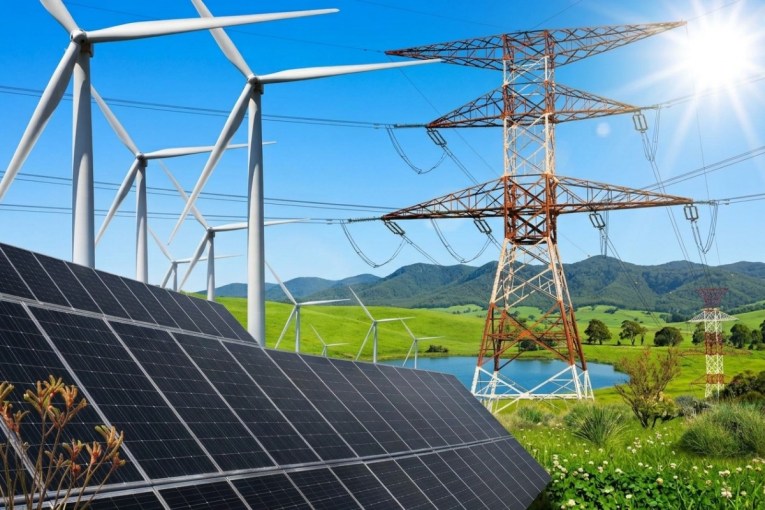
- The energy transition happens faster than our replacement industries arrive. Coal and eventually gas demand weaken, but Australia fails to build enough industries around critical minerals, green metals, batteries and advanced manufacturing. We proudly ship lithium, iron ore and other raw materials overseas and buy expensive finished products back. Australia’s green economy ends up looking suspiciously similar to its old economy. Different rocks, same business model.
- We miss the AI productivity revolution. America invents the technology. Asia manufactures it. Australia consumes it. Our universities produce brilliant researchers and graduates who leave to commercialise their ideas in Silicon Valley. Australia’s innovation problem isn’t that we lack clever people. The above-mentioned Global Innovation Index ranks us 8th for human capital and research. The problem is converting our advantages into commercially valuable outputs.
- Productivity growth effectively stops. This might be the least cinematic item on the list and ultimately the most dangerous. Nothing visibly collapses. Australia just stops becoming richer per worker. Governments must fund healthcare, aged care, defence, the NDIS and infrastructure from an economy that isn’t becoming much more productive. Politics increasingly becomes a fight over dividing the existing pie rather than enjoying a growing one.
- Housing eats the productive economy. Imagine another two decades in which Australians direct extraordinary amounts of income and capital towards bidding up existing land. Young Australians either take on enormous mortgages or remain renters. Businesses struggle to attract workers to expensive cities. Workers become reluctant to move because housing costs make relocation difficult. Capital that might have funded productive businesses instead disappears into increasingly expensive dirt.
- Inheritance replaces work as the route into the middle class. Two Australians can earn exactly the same salary and live completely different economic lives. One receives a million-dollar inheritance. The other receives nothing. As the great intergenerational wealth transfer accelerates, economic position increasingly depends not just on what you earn but on who your parents were. That’s a dangerous foundation for a meritocratic society.
- Social cohesion falls below a critical threshold. Low trust isn’t merely unpleasant. It makes governing harder. Citizens stop trusting institutions. Every reform is viewed through a tribal political lens. Compromise is interpreted as weakness and becomes functionally impossible. Difficult long-term reforms become no-starters because voters assume somebody else is secretly benefiting at their expense.
- We elect genuinely incompetent populists. This brings us back to “things can’t get any worse”. They absolutely can. Governments can politicise the public service, weaken independent institutions, introduce economically nonsensical protectionism, run reckless fiscal policies, undermine investment certainty, run destructive foreign policy, and pick unnecessary fights with allies and trading partners. Competent government is an economic asset. Incompetent government is a risk to our simple but usually reliable business model.
And finally, a reminder that even as things get worse, things could get worse.
- Several of these things happen at the same time. This is the genuine Mad Max scenario. Chinese growth slows. Simandou floods the market with iron ore. Coal prices fall. International student numbers collapse. Climate adaptation costs rise. Productivity remains miserable. The population ages. Social cohesion deteriorates. Amateurish foreign policy worsens our relations with regional trade partners.
Australia doesn’t suddenly become poor – at least that’s not how decline usually works. Instead, year after year we become slightly poorer relative to our benchmark nations.
Living standards stagnate. Taxes rise. Services deteriorate. Infrastructure falls behind. Housing remains expensive. Young people become more pessimistic. Politics becomes angrier. Life becomes less fun.
Then each of those developments continue to reinforce the others.
We mustn’t mistake our good hand for great skill.
None of these terrible developments are actually my forecast – I remain optimistic about Australia.
We possess almost every ingredient necessary to remain one of the world’s most prosperous nations.
We have resources, energy, land, food, excellent universities, talented people, strong institutions, proximity to growing Asian markets and the enormous advantage of being a stable liberal democracy.
But perhaps we have been dealt such an extraordinarily good hand that we occasionally mistake the hand for skill.
Many of the things that make Australia rich aren’t guaranteed.
Political stability isn’t guaranteed. Social trust isn’t guaranteed. Competent government isn’t guaranteed. Access to Chinese markets isn’t guaranteed. American friendship isn’t guaranteed.
High commodity prices aren’t guaranteed. The willingness of skilled migrants to move here isn’t guaranteed. The willingness of foreign parents to educate their children here isn’t guaranteed.
These are assets. Like any assets, they can be squandered.
So next time somebody tells you they are willing to roll the political dice because the current system has failed and “things can’t possibly get any worse”, remember that things can always get worse.
Since everyone is still queuing at the cinema to watch The Odyssey, let me finish this column with a Homer quote:

Simon Kuestenmacher is a co-founder of The Demographics Group. His columns, media commentary and public speaking focus on current socio-demographic trends and how these impact Australia. His podcast, Demographics Decoded, explores the world through the demographic lens. Follow Simon on Twitter (X), Facebook, or LinkedIn for daily data insights.
Want to see more stories from The New Daily in your Google search results?
- Click here to set The New Daily as a preferred source.
- Tick the box next to "The New Daily". That's it.

Voters want truth in political ads. Will pollies listen?