Australians want truth in political advertising. Will our politicians listen?

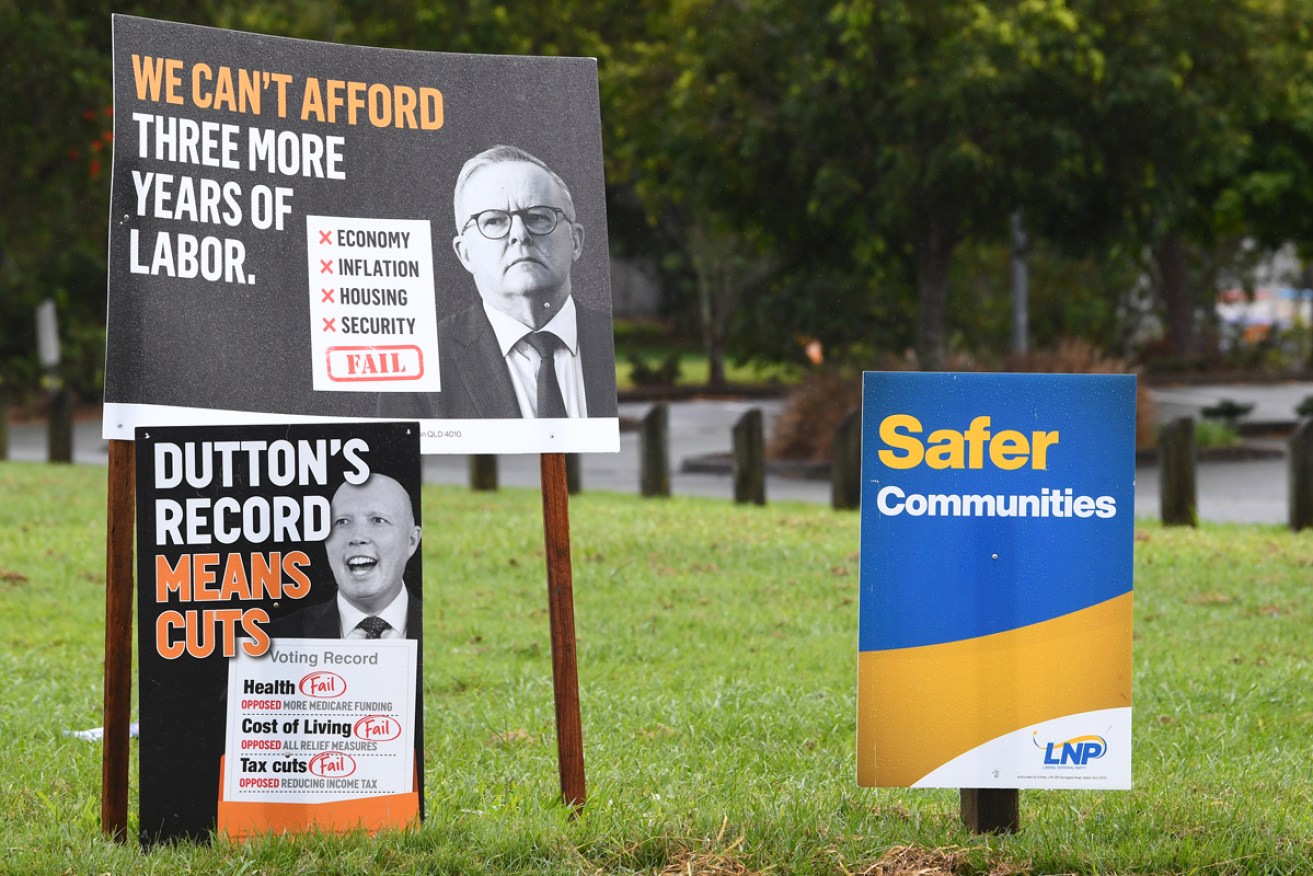
South Australia and the ACT already have effective laws against lying in political ads. Photo: AAP
It’s perfectly legal to lie in a political ad in NSW – but that could be about to change. More than 31,500 NSW residents have said that they want truth in political advertising laws before the state election next March.
The petition, which closed last week as the fourth-most popular electronic petition in NSW history, calls on state parliament to adopt laws against misleading political advertising in line with those already in place in South Australia and the ACT.
The petition was introduced by concerned citizen Michelle Millner and sponsored by independent MP Jacqui Scruby. It is backed by Australia Institute research that shows truth-in-politics laws are popular, proven to work elsewhere and improve the quality of debate.
It might come as a surprise that NSW does not already outlaw misleading political ads. Misleading and deceptive conduct in trade and commerce has been illegal for decades, but politicians have not extended to themselves the rules imposed on vendors and suppliers.
We know that truth in political advertising laws are viable because South Australia’s laws have operated for 40 years. They are proof that such laws can be drafted in a way that is fair, constitutional and effective.
In South Australian elections, misleading ads can be quickly withdrawn and corrected when they are spotted by the public. The regime has improved the quality of debate in the state, and means campaign heads think carefully before approving sensationalistic advertising.
In NSW, truth in political advertising laws have attracted broad support from the state’s large crossbench: From inner-city independents such as Alex Greenwich and Michael Regan to regional independents such as Dr Joe McGirr and Phil Donato. The Greens – whose votes could be key to passing truth laws in the upper house – have also lent their support.
The support of crossbenchers could be decisive. When the ACT adopted truth in political advertising laws in 2020, the vote was unanimous – Labor, Liberal and Greens united. But it came to a vote only thanks to the efforts of Greens crossbencher Caroline Le Couteur.
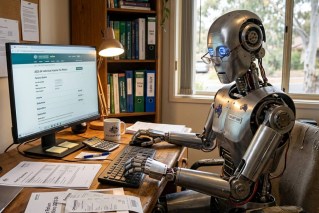
A clear concern from NSW parliamentarians is the role of artificial intelligence-generated deepfakes in distorting elections. NSW’s last election was only four years ago, but since 2023 deepfake technology has gotten much more powerful and available.
In last year’s federal election, a deepfake of Peter Dutton speaking Mandarin and proposing an Aboriginal flag ban circulated on Chinese social media app RedNote.
South Australia has already banned AI-generated deepfakes in electoral ads (without the subject’s permission) and it would make sense for any NSW truth in political advertising reforms to do the same.
There is still time for the NSW Parliament to ensure that next year’s election is fought truthfully and honestly. Victoria overhauled its entire voting system last month, and its election is in November.
Truth in political advertising laws are simpler – in South Australia they require only a handful of staff to administer – but would have a profound effect on the quality and reliability of the election debate.
Truth in political advertising laws in South Australia and the ACT are carefully balanced to protect Australians’ freedom of political communication. They are limited to statements claiming to be factual, so statements of opinion are never restricted. And while the state Electoral Commission can request action to address misleading ads, only the courts can enforce it – preserving the separation of powers.
NSW petitions have a special power not found in any other Australian jurisdiction. They can force a debate in Parliament if they attract 20,000 signatures. At more than 31,500 signatures, the truth in political advertising petition has not just cleared that hurdle but sailed over it. In fact, it is the fourth most popular petition in NSW history – showing the depths of support for truth in political advertising laws.
The debate is expected for November – meaning that truth in political advertising will be one of the last things considered before NSW goes to the election.
The state parliament has the opportunity this year to outlaw lies at next year’s election, and get ahead of the possible deepfakes and misinformation that could mar the election process.
South Australia has had these laws for over 40 years. The success of the truth in political advertising petition shows NSW residents want their state to catch up, and for NSW politicians and candidates to the held to the same standard that is already expected of business owners and merchants.
Bill Browne is director of the Australia Institute’s democracy and accountability program
Want to see more stories from The New Daily in your Google search results?
- Click here to set The New Daily as a preferred source.
- Tick the box next to "The New Daily". That's it.
Voters want truth in political ads. Will pollies listen?