In a world of AI, how can we tax the robots that replace humans?

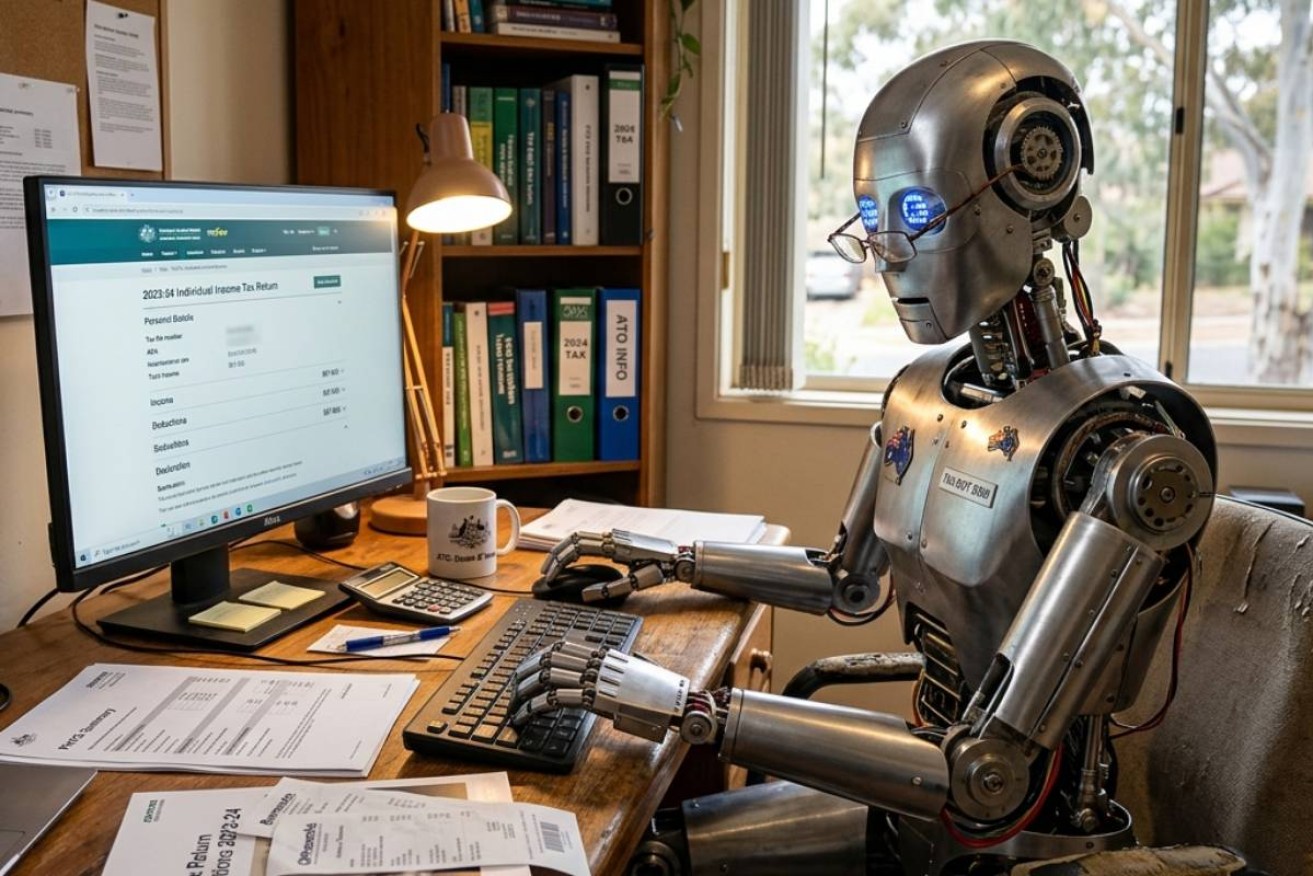
With every robot that replaces one of more humans, the personal income tax base will shrink. Photo: TND/Gemini
Collecting an appropriate amount of revenue from multinational corporations is challenging enough for the Australian Taxation Office, but how will it tax the value created by robots?
Speaking at the recent meeting of the Melbourne Economic Forum, ATO Assistant Commissioner Keir Cornish said the tax office seeks to determine how much of the value created by a multinational corporation is created in Australia, and how much is created in one or more foreign countries.
It is in the interests of the corporation to pursue this transfer pricing and claim as much as possible of the value creation in low-tax jurisdictions such as Singapore, leaving only residual income to be taxed in Australia.
Australia, and like-minded countries, look to apply rules that enable them to identify the full amount of income created in their jurisdictions.
But despite public perceptions that all multinationals engage in this egregious transfer pricing, Cornish maintains the proportion of multinationals using this strategy is fairly small.
However, he pointed out that since total income earned by these multinationals is huge, just a small proportion engaging in profit shifting can cost Australia billions of dollars in lost revenue.
Apart from a loss of government revenue, these practices can have a damaging effect on what’s known as “tax morality.”
This takes the form of everyday personal income taxpayers and small business owners reasoning that if the big multinationals can get away with not paying their fair share of tax, why should they, as ordinary taxpayers, not throw in a few deductions that never occurred or forget to declare some income.
This was a huge problem in the late 1970s and early 1980s, when companies could metaphorically throw their records to the bottom of the harbour and claim they earned no income at all.
Since that time, the laws have been changed and the ATO has been given staffing and digital systems that have enabled it to collect most of the tax due from multinationals.
How to tax robots?
But, as is evident all around us, we are entering a new era defined by AI.
In a world of AI, where is the taxable profit being created?
Take a data centre. What creates its value? Is it the infrastructure of the centre itself, or is it the centre’s access to domestic electricity and water? What about the intellectual property, most if not all of which emanates from abroad?
Taxing a data centre looks like a daunting task.
But that’s just the beginning of the task facing the ATO. We already know that in many occupations of the future, humans will be replaced by robots.
Humans who go to work are subject to personal income tax. But what about robots that go to work, or more accurately, that are working around the clock?
How does the ATO tax a robot? Its multinational corporation owner is likely to claim the robot was designed and quite likely built overseas.
With every robot that replaces one of more humans, the personal income tax base will shrink.
Presumably, the corporation’s income will rise proportionately. Otherwise, why shift to robots?
But the corporation’s owners will want to claim most of the income earned from the robot and from AI more generally as being generated in a low-tax jurisdiction such as Singapore or Switzerland.
While robots will replace humans in the world of AI, it is likely that, just as was the case with other revolutions such as automation, productivity will rise and more people will end up in jobs – but different jobs.
Regardless, the ATO will be grappling with the challenges of multinational profit shifting from the use of AI and robotics.
Craig Emerson is a former minister for trade. He co-founded the Melbourne Economic Forum with professors Ross Garnaut and Peter Dawkins
Want to see more stories from The New Daily in your Google search results?
- Click here to set The New Daily as a preferred source.
- Tick the box next to "The New Daily". That's it.
More millions as Whyalla Steelworks jobs slashed

Topping up super makes sense, but it has a cost

Bunnings targeted again in sad snag fake news



Why One Nation, Coalition want to unlock your super