House prices hit a blip and it’s all media panic. Please, let’s have some perspective

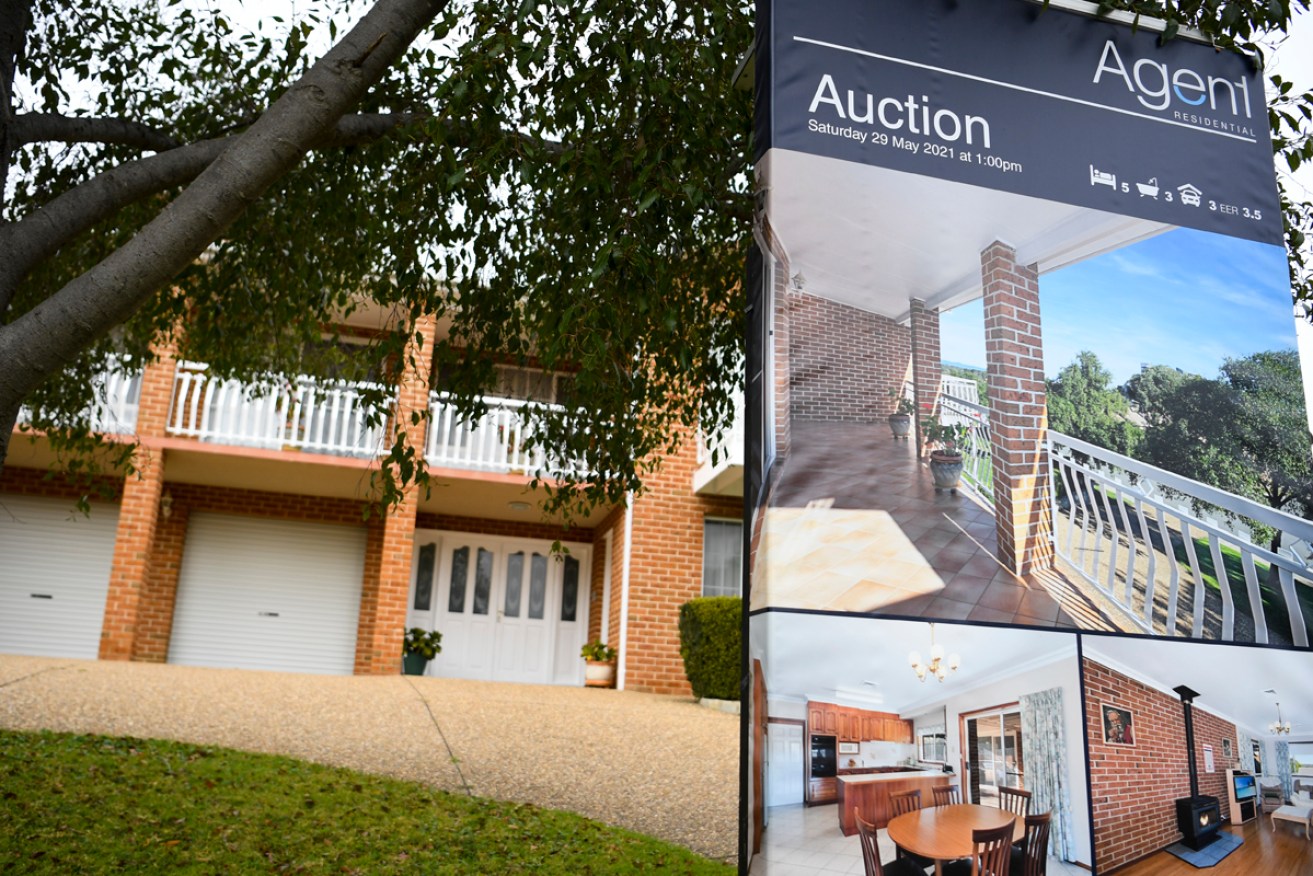
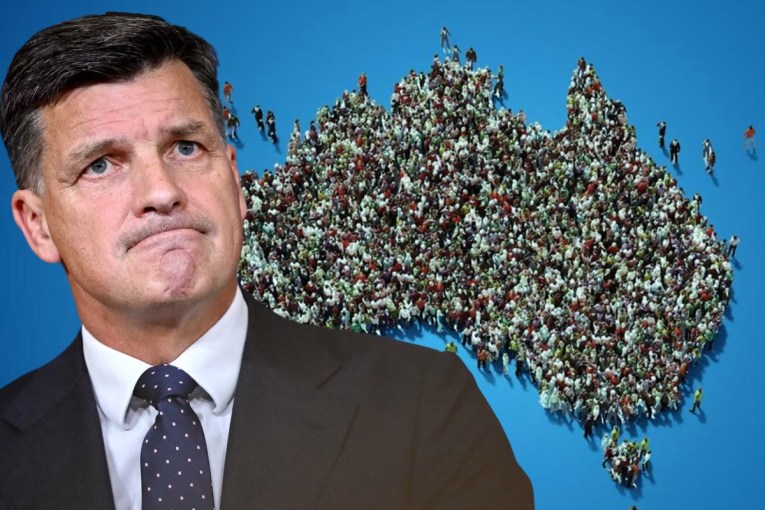
It's time for perspective about the prospect of a small fall in house prices after decades of big rises. Photo: AAP
Of all the stupidity Australians have accepted as “normal”, our relationship with house prices may be among the most ridiculous.
This nation is in the grips of a media panic over a small blip in house prices. This blip apparently deserves wall-to-wall coverage and dire warnings of impending doom.
Maybe – shock – the current 0.4 per cent decrease in national house prices (not a typo, it is less than 1 per cent) COULD reach 8 per cent. MAYBE 10 PER CENT. Get the army ready – society itself may be about to collapse.
It is very rare that we see these numbers put into context.
A fall usually follows a rapid rise in prices and Australia has seen more of a rapid rise than most.
Let’s go from 2000, a nice round number, which also happens to be when John Howard and Peter Costello’s ideological war against the capital gains tax kicked in. Since then, house prices have increased fivefold.
The average home has increased in value by about $70,000 a year over the past five years. Again, that is not a typo. That’s about $350,000 in five years.
The people who have benefited from this increase did nothing but have the luck and means to own a house. If their home was to decrease by even 10 per cent, they are still doing OK – their homes will go back to what they were worth at the end of 2024. Back when media was wringing its hands over what could be done about the unaffordable housing market.
Because there is the duality of this ridiculousness. When things communally used by all of us go down in price, we usually see that as a good thing. We expect our government to intervene when petrol prices increase. We expect the government to intervene when our supermarket monopoly makes groceries too expensive. We celebrate sales or bargains. Except when it comes to house prices.
The cries of “but that’s an investment” can already be heard, and that is an excellent point. It is a long-term investment. And one that most people will hold for decades, selling at a time when natural inflation, or changing fortunes of suburbs, mean they will have made their money back with a bit extra (unless you are someone who has only just managed to make it into the housing market in your mid to late 30s and older, in which case the bank will already have had you swear you’ll use your superannuation to make up the shortfall in your working life).
Also, you buy and sell in the same market – if houses are cheaper overall, you’ll be buying a cheaper dwelling yourself.
But putting that aside and focusing on the investment question, it just points to the wider issue of Australians having been convinced that they are owed a big payday for buying a house in the first place. This has been a masterstroke of successive governments – which know that home owners seeing house prices increase feel wealthier overall – and our superannuation and banking systems – which have built multibillion-dollar bottom lines on our aspirations.
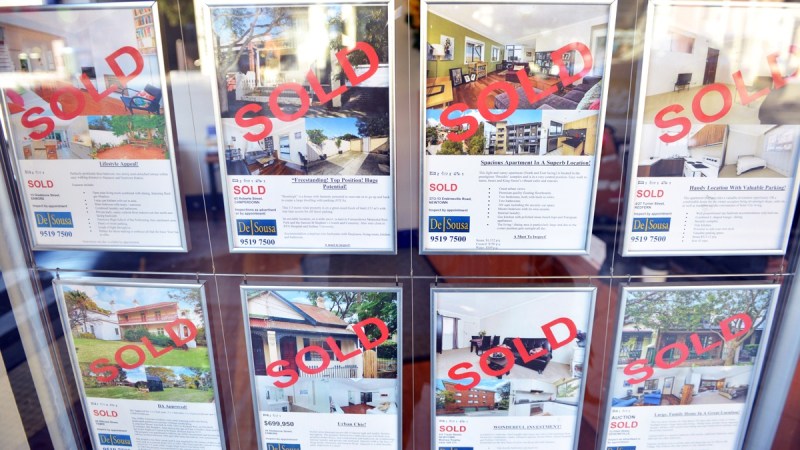
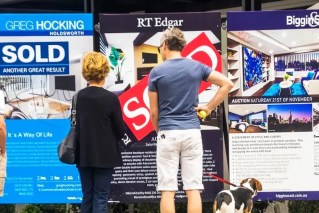
Home prices have risen much faster than incomes for more than two decades, locking many out of the market. Photo: Getty
But let’s take a look at the sharemarket. From March 2-23, the ASX200 dropped 9 per cent. Given most of us have shares, even if just through our superannuation funds, you would expect a comparable hair-pulling response to the market fall. But if you don’t remember it, it’s probably because it largely went unnoted, except by the financial pages.
But that’s because in the finance world, most drops of more than 10 per cent or so are considered a market correction, and something quite normal. The March drop came on top of a 7.5 per cent drop between October 21 and November 21 last year. About five or so months before that, it dropped closer to 10 per cent. Again, not unusual and not something to rouse most punters, let alone the podcasters or comedians.
But Howard taught us that housing was first and foremost an investment, and a way to reach our highest aspirations. Nevermind that that aspiration was realised by holding down future generations, or those not quite as lucky as us or financially stable. A house is supposed to make us rich, right? And if we don’t feel quite as rich, then that has to be a problem.
We don’t cover those who feel hopeful they may make it into the market in the same way – we don’t see wall-to-wall coverage of people who aren’t seeing their deposit savings fall short year-on-year, or those who feel they might be able to put down roots for the first time in years. Maybe ever. That doesn’t fit the narrative.
We don’t talk about how house prices have increased 2.3 times faster than incomes in just 26 years, and that the average house price is $1.1 million when, without Howard and Costello’s intervention, it would probably sit closer to $600,000.
We don’t talk about what those smaller mortgages and decreased housing income stress would look like. We don’t talk about what it would be like to set down where you have community, rather than where you can maybe just about afford. We don’t talk about the stress, the angst, the anger and the greed that has dominated our housing conversation for almost three decades.
We have heard almost nothing (Pearls and Irritations aside) about one of the most important housing papers Australia has seen handed down, which lays out what rentier capitalism has done. Which included this exceptionally pertinent analysis:
“In aggregate, secondary ownership extended to 3.2 million properties in 2022, a 43 per cent increase on the 2006 count. The secondary sector’s strong growth exceeds the percentage increase in the number of Australian households in this period (32 per cent). The primary sector’s growth has been sluggish by comparison, expanding 24 per cent over the same timeframe. This is partly due to the falling numbers of households occupying social housing. But even owner-occupied dwellings expanded at rates well below that of secondary properties.
“Back in 2006, there were 2.5 primary homes for every one secondary home, but by 2022 the ratio had fallen to 2.2. This is prima facie evidence that the primary sector is being squeezed by the mainly for-profit secondary sector and therefore suggestive of a crowding-out on those seeking housing in the primary sector”.
Or, in my dumb terms, we squeezed out people who wanted to buy their first home by prioritising those who wanted to own a second property (or more) for profit.
And we were so successful at convincing Australians that that was right and proper that we didn’t even notice that by 2022:
“The 400,178 secondary homes available as short-term lets (like AirBnB) had overtaken the 347,652 social housing properties available for long-term lease to eligible Australian households.”
So, sorry if a forecast 8 per cent drop in property prices – which have on average increased by $70,000 or so a year for the past five years, in a market where there are more AirBnB rentals than social housing properties available for long-term rent, and where people just wanting a home are made to feel like second-class citizens – makes you sad.
Perhaps a little perspective is needed here. But that’s never really been our strong suit.
Amy Remeikis is a contributing editor for The New Daily and chief political analyst for The Australia Institute