The Stats Guy: The myth of the downsizing baby boomers


There are many reasons baby boomers might downsize – and just as many for why they might not. Photo: Canva
The great wave of downsizing baby boomers has been predicted for years.
Yet longitudinal census data from 2016 to 2021 suggests that the wave looks more like a gentle ripple. Most boomers aren’t downsizing. They are happily staying put.
The mythical army of downsizers
The housing-crisis argument feels very familiar by now.
Australia has lots of young millennial families desperate for larger homes. At the same time, lots of older couples and singles live in homes with three or four bedrooms. The solution seems obvious: Boomers downsize, families move in, everybody wins.
Newspapers (including me in this column), property developers, and governments have all argued we should encourage boomers to downsize.
This is where we encounter a problem. Real people don’t behave like pieces on a planner’s chessboard. They have their own preferences, memories and free will. Survey after survey tells us that older Australians want to age in place.
Longitudinal census data lets us follow the same people over time and compare their housing in 2016 with their housing five years later.
There are many ways to define a downsizer. For today’s column, we use a definition that is easy to extract from census data: A downsizer is somebody who lived in a dwelling with fewer bedrooms in 2021 than in 2016.
Granted, this definition isn’t perfect. Imagine an older couple moving from a two-bedroom house on an acreage in rural Queensland to a compact two-bedroom apartment on the Sunshine Coast. Anyone with common sense would call that downsizing. Census data, however, sees the same number of bedrooms and declares that nothing happened.
Downsizing can also refer to reducing the value of one’s housing rather than its physical size. The Australian Housing and Urban Research Institute found that financial downsizing (moving into a cheaper home to release equity) is somewhat more common than physical downsizing, but neither is the usual pathway for older homeowners.
Even among older Australians, downsizers only slightly outnumber upsizers. Take the 75–84 age group: 14 per cent moved to a home with fewer bedrooms, while a surprisingly high 11 per cent moved to one with more bedrooms – this includes older people who moved in with their adult children.
The dominant experience of ageing in Australia is therefore not downsizing. It is one of ageing in place.
Who actually downsizes?
Downsizing isn’t triggered by age alone. People don’t wake up on their 65th birthday, glance at the spare bedroom and suddenly feel compelled to improve the efficiency of Australia’s housing market.
They move because life changes.
Retirement can make maintaining a large home feel less appealing. Adult children leave. A partner dies. Health deteriorates. Stairs become harder to manage. Gardens become less charming and more like unpaid employment.
Research from the AHURI shows that lifestyle and financial considerations were the two most common primary reasons for downsizing, each cited by 27 per cent of downsizers. Another 18 per cent moved because the garden or property demanded too much maintenance, while 15 per cent were effectively forced to move.
Household income matters too. Lower-income households were more likely to have downsized than higher-income households. This makes intuitive sense: Releasing housing equity and reducing running costs matter more when retirement income is tight.
Health becomes an increasingly powerful trigger with age. Among older Australians who had considered downsizing, a change in their own health or their partner’s health was the event most likely to prompt a move.
What happens inside the household appears to matter more than the number printed on the birthday cake. A couple becoming a one-person household suddenly has less need for space, less capacity to maintain it and, often, a greater reason to live closer to family or services.
Even then, a downsizer doesn’t necessarily become a minimalist. Two-thirds of surveyed downsizers moved to a dwelling with fewer bedrooms, but three bedrooms remained the preferred size. Older Australians still want room for visitors, grandchildren, hobbies and working from home.
Nor do downsizers always stay local. Only 22 per cent remained in their original neighbourhood. Forty-two per cent moved somewhere new, while 37 per cent chose a place they already knew through family, friends or holidays.
The typical downsizer, then, is not simply an old person occupying too many bedrooms. It is somebody experiencing a transition: Retirement, an empty nest, widowhood, declining health, financial pressure or maintenance fatigue.
We don’t downsize because we become old. We downsize because our lives change.
Why don’t more boomers downsize?
Before we accuse older Australians of selfishly hoarding spare bedrooms, let’s inspect what those rooms are actually used for.
A four-bedroom house can remain extremely useful to a two-person household. One bedroom is for the couple. One becomes an office. Another is kept for visiting children or grandchildren. The final room stores hobbies, provides space for caring responsibilities or accommodates the occasional guest.
Suddenly the supposedly empty McMansion doesn’t feel quite so empty.
More importantly, a home is never just a collection of bedrooms. It represents a neighbourhood, friends, memories, familiar shops, trusted doctors, a garden and decades of accumulated belongings.
Moving means sorting through a lifetime of stuff, paying agents and removalists, dealing with stamp duty and hoping you can find a suitable smaller home in the same community.
That last part is crucial. Many boomers would happily trade a large detached house for a low-maintenance townhouse or apartment – provided it is accessible, well-designed, reasonably priced and close to their existing social networks.
Such homes are often missing from the very suburbs where boomers already live (partly because these suburbs were bastions of NIMBYism).
AHURI found that moving costs were the most commonly cited barrier among older Australians who wanted to relocate but thought they were unlikely to do so. The research also shows that downsizing is generally associated with life events such as retirement, widowhood, deteriorating health or children leaving home, rather than simply reaching a particular birthday.
Stamp duty adds another absurdity. Economically, we tax people for moving from a house that no longer suits them into one that does. It’s a lazy, awful tax that we must kill.
If governments want more downsizing, they cannot simply lecture boomers about their spare bedrooms. They must make moving cheaper, easier and more attractive.
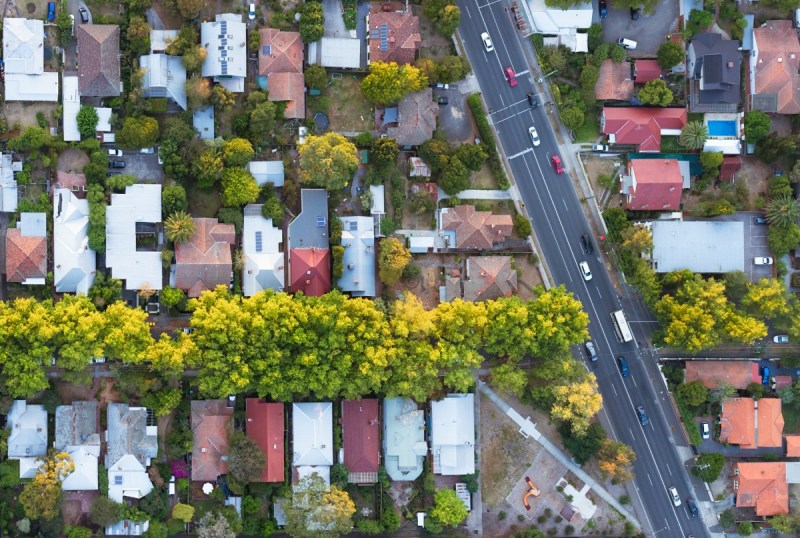
Empty-nesters who wish to downsize face significant financial barriers.
Are we missing out on the benefits of downsizing?
For the right household, a smaller home can release housing equity, reduce maintenance and household costs, improve accessibility and bring shops, health services, public transport and family closer.
It can also be an opportunity to spend accumulated wealth while you are still healthy enough to enjoy it. Travel, help the kids, finance a hobby or simply buy yourself freedom from gutters, lawns and rooms that nobody enters.
Eligible Australians aged 55 and over may contribute up to $300,000 from the proceeds of a qualifying home sale into superannuation. The contribution is subject to eligibility rules, including ownership and timing requirements, and can affect other entitlements.
There is also a housing-system benefit. When an older couple moves from a four-bedroom detached house to a two-bedroom townhouse, the existing stock becomes better matched to household needs. A family can move into the larger home without waiting years for a new one to be built. While that is true, you don’t owe it to society to sell your house once the kids moved out. It’s your house do with it as you please. The system can only offer you incentives to downsize.
Let’s be straight forward too: Downsizing doesn’t create another home. It reshuffles the existing housing stock. A reshuffle can improve how efficiently we use our bedrooms. It cannot replace the need to build more dwellings.
Stop waiting for the great boomer downsizing wave
Boomers will gradually move as retirement, widowhood, health problems and lifestyle changes reshape their households. Some will downsize enthusiastically. Others will move only when circumstances force the issue. Many will never move at all.
Australia should not base its housing strategy on waiting for baby boomers to vacate their spare bedrooms.
If we want more older Australians to downsize, we need to build homes they actually want to move into: Accessible apartments, townhouses and retirement housing in familiar, walkable neighbourhoods. The smaller property must deliver an obvious lifestyle upgrade. Otherwise, staying put remains the perfectly rational choice.
The popular downsizing narrative gets the sequence backwards. Boomers will not move first and patiently wait for suitable housing to appear later. The suitable housing must exist before they will move.
So, yes, encourage downsizing. Reduce the financial penalties. Build age-appropriate homes in established suburbs. Make it easy for people to remain close to friends, family, shops and doctors.
Just don’t mistake encouragement for a housing-supply strategy.
The great boomer downsizing wave isn’t coming to save Australia’s housing market. If we need more homes, we will still have to build them.
Simon Kuestenmacher is a co-founder of The Demographics Group. His columns, media commentary and public speaking focus on current socio-demographic trends and how these impact Australia. His podcast, Demographics Decoded, explores the world through the demographic lens. Follow Simon on Twitter (X), Facebook, or LinkedIn for daily data insights.




China and housing: Two things we may have missed