Cloudy with a chance of moths? Swarms bamboozle weather radars

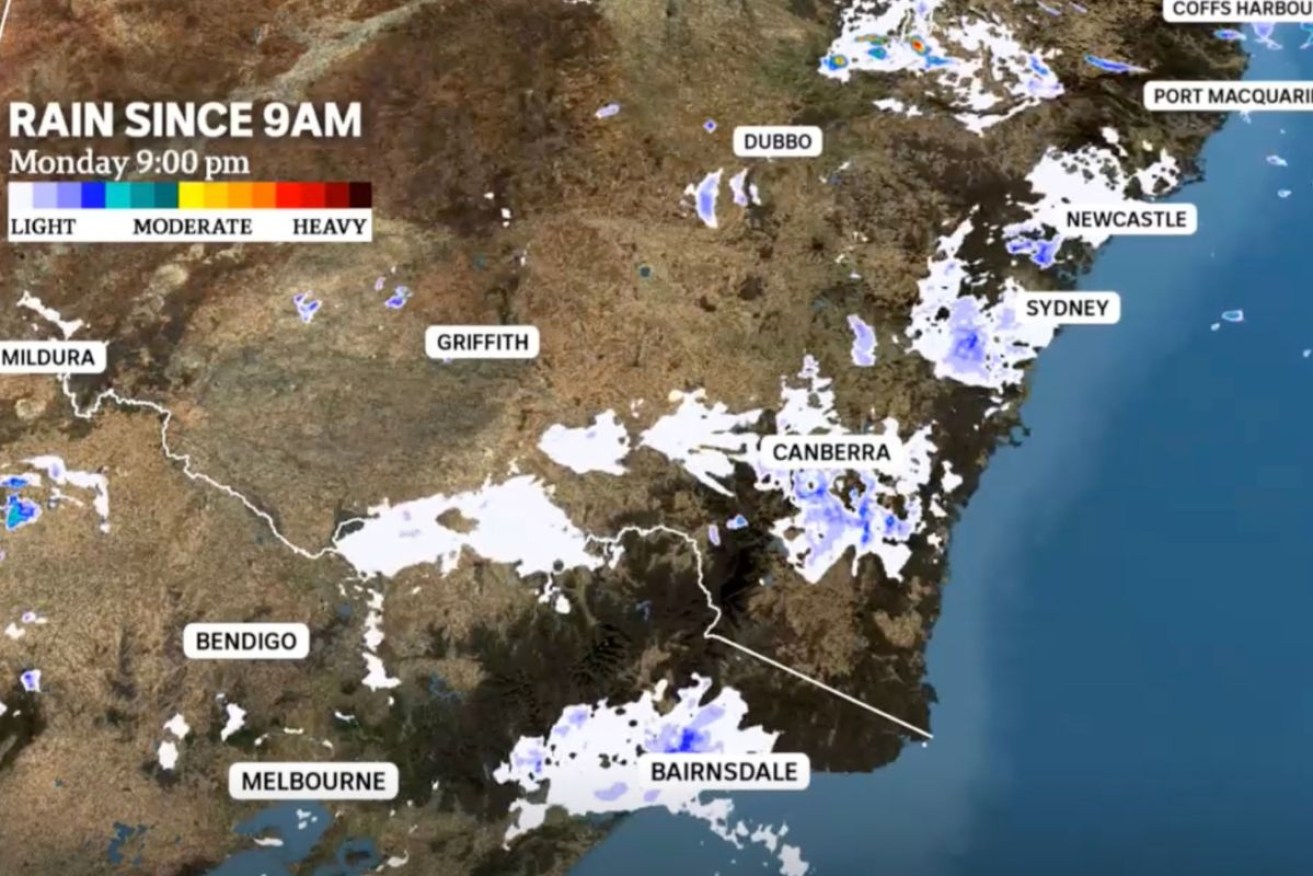
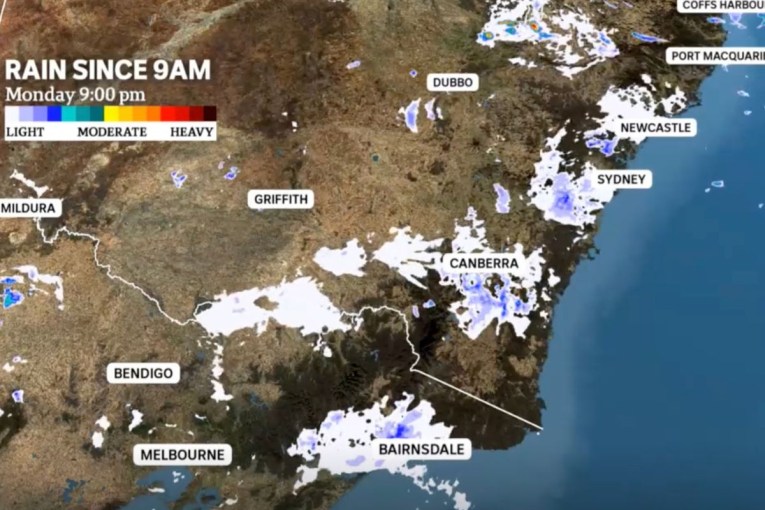
Bogong moth swarms appear as rain on the weather radar on Monday. Photo: ABC
BOM radars have detected an unusual weather pattern on Australia’s east coast this month — millions of moths.
Swarms of bogong moths migrating south have bamboozled weather detectors, appearing on the radar loop as rain.
ABC meteorologist Tom Saunders said the Bureau of Meteorology’s equipment had been picking up rain clouds at night when the moths become active.
“For the last month, the weather radars across south-eastern Australia have been lighting up with precipitation every night,” he wrote.
“The only problem is that on most nights, skies are not cloudy and it certainly has not been raining for a month straight.
“Instead, the radars are detecting the millions of bogong moths currently migrating south to the Australian Alps for summer, and the swarm appears on radar as widespread rain.”
The false clouds have been appearing at night when the moth swarms go on the move after resting during the day.
“Initially, most of the radar anomalies were concentrated in NSW, but recent nights have also seen the phenomenon across northern and eastern Victoria,” wrote Saunders.
Bogong moths make an annual spring migration to the Australian Alps, but this year strong north-westerly winds have reportedly blown them off course.
This has meant the swarms have been fluttering over coastal NSW cities and this week moved into northern and eastern Victoria.
“There has been increased ‘echoes’ displaying on radars across eastern New South Wales that aren’t precipitation,” said a spokesperson for the Bureau of Meteorology (BOM).
Bogong moths are listed as endangered and suffered a population crash in 2017 and 2019 because of drought.
They usually migrate in the billions, emerging from beneath the soil in the Darling river plains of Queensland, NSW and western Victoria.
They travel a distance of more than 1000 kilometres to the Alpine region to spend the summer in cool mountain caves before returning north to reproduce in winter, laying eggs under the soil.
‘Super pest’ detected in Sydney warehouse
Magnitude 4.8 quake shakes Victoria