‘Super pest’ detected in Sydney warehouse
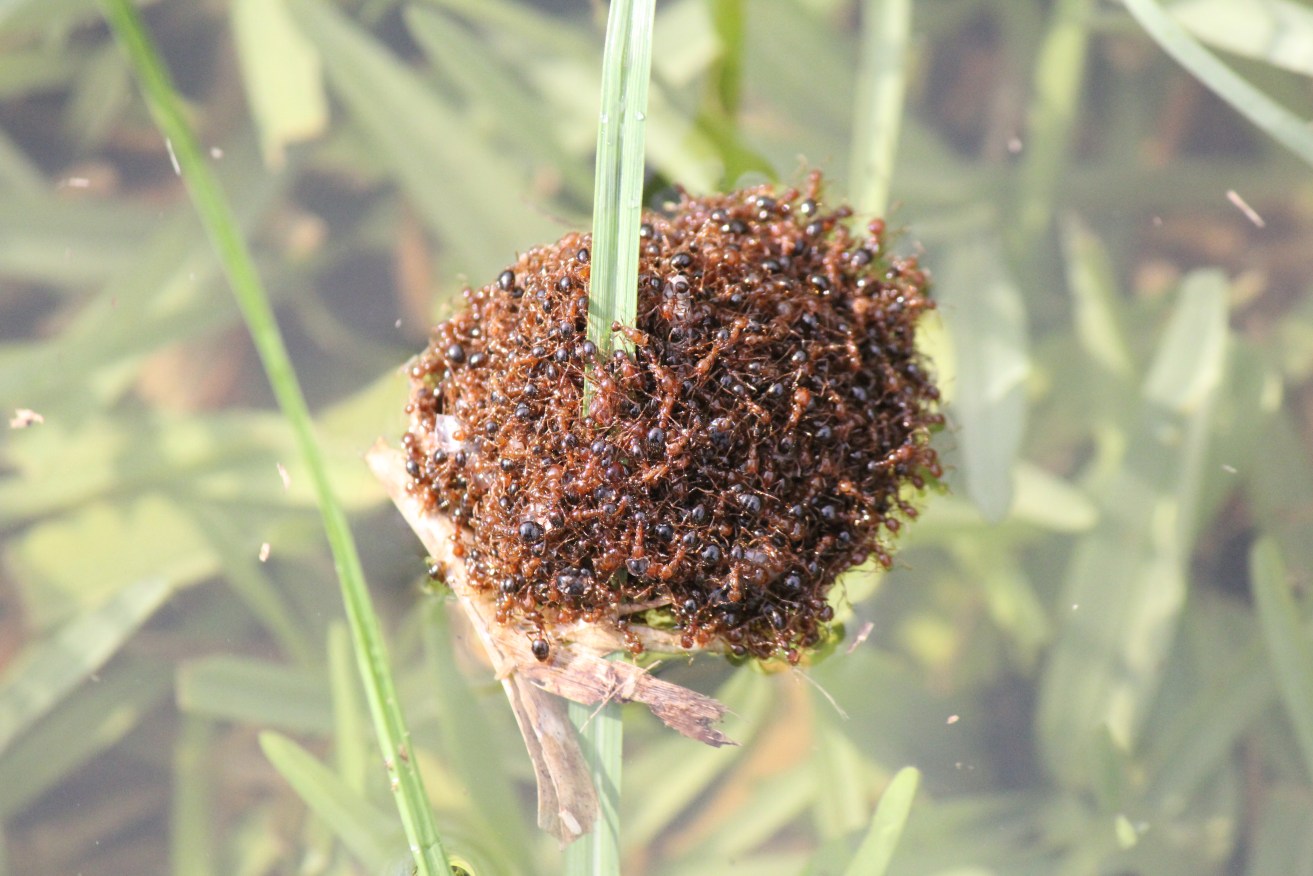
A fire ant nest. The destructive pests have been found in a Sydney warehouse. Photo: Invasive Species Council
A fire ant nest has been found in a warehouse in Sydney’s inner-west, sparking alarm about the spread of the destructive pest.
A biosecurity team from the federal Agriculture Department found the fire ant nest at the Enfield Intermodal Centre, a logistics hub for the freight industry.
It was quickly treated to prevent an infestation from taking hold.
Genetic analysis by the National Fire Ant Eradication Program confirmed the species as red imported fire ants (Solenopsis invicta). It is considered likely to have originated from overseas and entered Australia in a shipping container.
NSW Agriculture Minister Tara Moriarty said properties within a 500-metre radius of the freight facility would be inspected to assure the community that fire ants were being eradicated.
“It’s important to note that no further ants have been found, but we are focused on making sure any potential spread is identified and eradicated quickly,” she said on Tuesday.
“While fire ants are one of the world’s most invasive species, they can and have been successfully eradicated in NSW.”
The Invasive Species Council has warned the spread of the “super pest” could cost the Australian economy up to $2 billion a year.
The federal department’s entomologists confirmed the red and brown ants – which are 2-6 millimetres long – are not related to the only other fire ant-impacted site in the country in south-east Queensland.
Surveillance and treatment will be expanded to cover a two-kilometre radius of Sydney suburbs in the coming weeks.
Fire ants were also detected at Port Botany in 2014 and were successfully eradicated.
Council advocacy director Reece Pianta warned the risk of fire ants, which originate in South America, spreading beyond the Queensland borders remained alive.
”This detection is a reminder of why we need to keep investing in strong border biosecurity and surveillance,” he said.
“Fire ants are widespread among many of Australia’s trading partners, so finding new incursions quickly is critical to stopping them becoming established.”
The aggressive pests have also been intercepted on transported plant material in Victoria, Western Australia and Tasmania.
Earlier this year, research by the Australia Institute found the invasive pest could trigger an extra 2.3 million veterinary visits for pets and 624,000 medical visits for people each year if it was allowed to spread across the country.
International data suggests almost a third of people in fire ant-infested areas get stung each year, with risk of anaphylactic shock.
Almost all of Australia is considered suitable habitat for the species, with accidental transport by people, including through soil, mulch, machinery and other materials, the biggest risk to their spread.
The ants’ ability to survive floods and bushfires and spread with ease has also contributed to their reputation as “notorious hitchhikers”.
-with AAP
‘Super pest’ detected in Sydney warehouse
Magnitude 4.8 quake shakes Victoria