Mozzies are causing Buruli ulcers in more parts of Australia. Here’s what you need to know

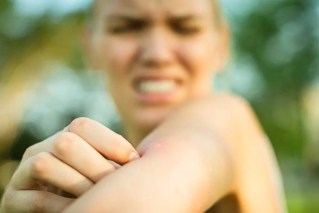
Cases of the Buruli ulcer are being detected in inner-suburban gardens. Photo: Canva
Warmer weather has arrived and mosquitoes will be buzzing about before you know it. As El Niño is expected to bring an early start to summer heat, it’s likely mosquitoes will make their presence felt earlier than usual.
The threat of mosquitoes depositing flesh-eating bacteria has been restricted to a few parts of the country. But while rare, research shows it is now showing up in more areas – including in backyards in Melbourne’s inner city.
So what exactly is Buruli ulcer, where is it now found, and how can you prevent it? Here’s what we know so far, and what researchers are currently developing to protect against the bacteria in future.
What are Buruli ulcers?
Buruli ulcer is a skin infection resulting from the bacterium Mycobacterium ulcerans.
It starts as small and often painless inflammation after a mosquito bite, which may not be seen until months after initial infection. It transforms into a disfiguring ulcer after many weeks.
If left untreated, it can continue increasing in size with a loss of skin and muscle.
A buruli ulcer is treated with an eight-week course of antibiotics. Recovery can be much slower than expected for other common skin infections, with healing time highly dependent on the condition of the ulcer when first treated. It may take more than four months for ulcers to heal.
How do people become infected?
Mycobacterium ulcerans can infect urban wildlife, such as possums, which suffer symptoms similar to those in humans.
Recent research has shown mosquitoes pass the bacterium to people.
The mosquito most closely associated with areas at risk of Mycobacterium ulcerans is Aedes notoscriptus. Commonly known as the Australian backyard mosquito, it is widespread in Australia and commonly found in water-holding containers in suburban areas.
There may be other pathways of infection but health authorities have strongly encouraged people to prevent mosquito bites as the best way to avoid Buruli ulcer.
Where is it found?
Buruli ulcer has been reported in more than 30 countries around the world, including in Africa, South America and the Western Pacific.
In Australia, it has been reported in several states, territories and regions, including Victoria, Far North Queensland, the Northern Territory and NSW.
Victoria has been hit hardest, with 426 cases reported in the state in 2025 alone.
Victorian cases have mostly been reported from coastal regions but Melbourne’s suburbs have also seen an increase in activity. Inner north-west suburbs such as Essendon, Brunswick West and Moonee Ponds are part of the new cluster.
With the potential for more cases, and in more locations, surveillance beyond known areas of activity is needed.
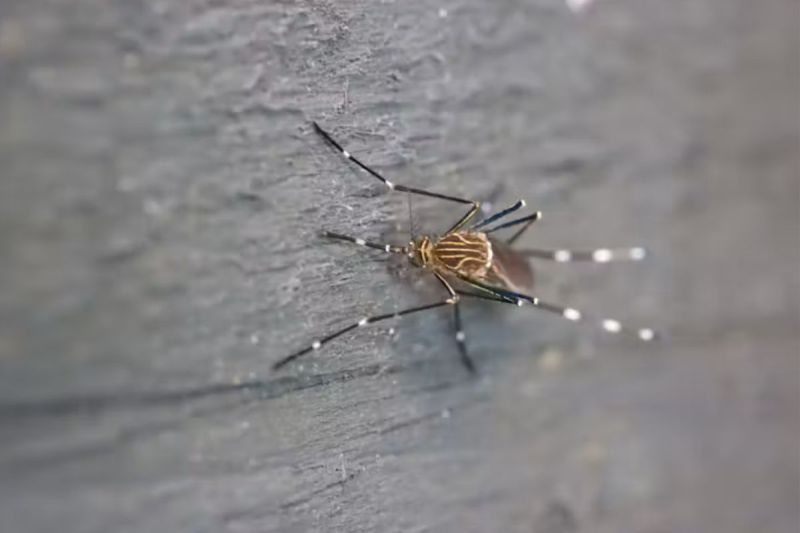
Aedes notoscriptus, commonly known as the Australian backyard mosquito, can spread the bacteria that causes Buruli ulcer. Photo: Cameron Webb
Since Buluri ulcer became a notifiable disease in NSW, there have been six cases reported from the NSW south coast.
There was concern this was because the Victorian outbreak had spread to the state and could also spread to new regions. But genomic analysis suggests the NSW cases are from a separate outbreak rather than spread from Victoria. This raises questions about how widespread this pathogen may be and what conditions are likely to give rise to human infections in new regions.
How best to stop the flesh-eating bacteria’s spread?
Australian health authorities have recommended insect repellents and reducing exposure to mosquitoes for decades to reduce the risks of mosquito-borne disease.
But while health authorities might ordinarily consider insecticides to control mosquito populations, they’re not likely to be an effective way to reduce numbers of mosquitoes buzzing about the local suburbs in the long term.
New research in Victoria led by two of us (Véronique Paris and Andrew Buultjens) tested a novel approach to mosquito control and found evidence that reducing mosquito numbers can also reduce a person’s risk of contracting Buruli ulcer.
Using mosquitoes as pest-controllers
Special devices, known as autodissemination stations, are designed to offer a breeding site to mosquitoes looking for somewhere to lay their eggs. A stinky mix of water and yeast draws them in.
Once inside, the mosquito is exposed to a gauze strip coated with the control agent pyriproxyfen (an insect growth regulator) and Beauveria bassiana (insect specific fungus).
When the mosquito leaves the station, its days are numbered due to the fungal infection. But before they die, they’ll transfer the mosquito control agent to other water-holding containers as they look for other places to lay their eggs.
The mosquitoes become accidental pest controllers themselves.
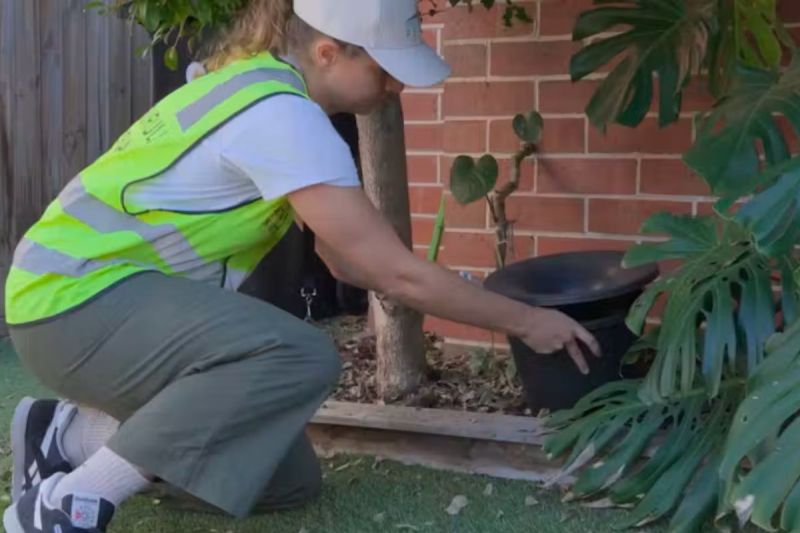
Author Véronique Paris (University of Melbourne) sets up a mosquito control station as part of the study.
How effective was it?
After eight-weeks of station deployment, mosquito egg counts (a measure of mosquito activity) were 70 per cent lower in treatment areas compared with control areas.
Buruli ulcer presents an unusual challenge when trying to measure whether an intervention had impact on human disease because symptoms typically develop almost five months after infection.
To account for this delay, we had to work backwards to estimate when infection likely occurred and use forensic genomic analysis to determine which cases were acquired locally.
At the predicted peak of the mosquito-control effect, Buruli ulcer incidence was estimated to be 83 per cent lower in the treatment areas than in the control areas.
The greater the reduction in mosquitoes, the greater the apparent protection from Buruli ulcer, providing further evidence that mosquito control can reduce disease risk.
The mosquito control stations used in the study are not yet available for purchase in Australia, but regulatory approval for their use is imminent and new products using similar approaches are also being tested.
However, in this study the control stations were deployed in high numbers, so it’s unclear what the impact of their use in a single household would be.
How to reduce your risk of Buruli ulcer this summer
Current predictions are for hot and relatively dry conditions this summer in eastern Australia.
While this may mean there are fewer mosquitoes emerging from wetlands and other bodies of water, the mosquitoes closely associated with Mycobacterium ulcerans spread are found in our backyards.
Water will still be available for mosquitoes around the home in bird baths, rainwater tanks, blocked drains, sump pits and roof gutters, and water left out for wildlife. To prevent mosquitoes breeding in them, make sure you refill bird baths weekly, clear your gutters, cover water tanks, and empty and refill water for wildlife at least once per week.
It’s also a good idea to keep using insect repellents. Mosquito control, whatever form it takes, will never get rid of all the mosquitoes. Covering up with long-sleeve shirts, long pants and enclosed shoes when outdoors will also help stop the bites.
Cameron Webb, Clinical Associate Professor, School of Medical Science & Sydney Infectious Diseases Institute; Principal Hospital Scientist, University of Sydney; Andrew Buultjens, Microbial Bioinformatician & Postdoctoral Research Fellow, The Peter Doherty Institute for Infection and Immunity, and Veronique Paris, Postdoctoral Research Fellow in Medical Entomology, The University of Melbourne
This article is republished from The Conversation under a Creative Commons licence. Read the original article.
Want to see more stories from The New Daily in your Google search results?
- Click here to set The New Daily as a preferred source.
- Tick the box next to "The New Daily". That's it.