Customers get salty as favourite brand’s tactics are revealed

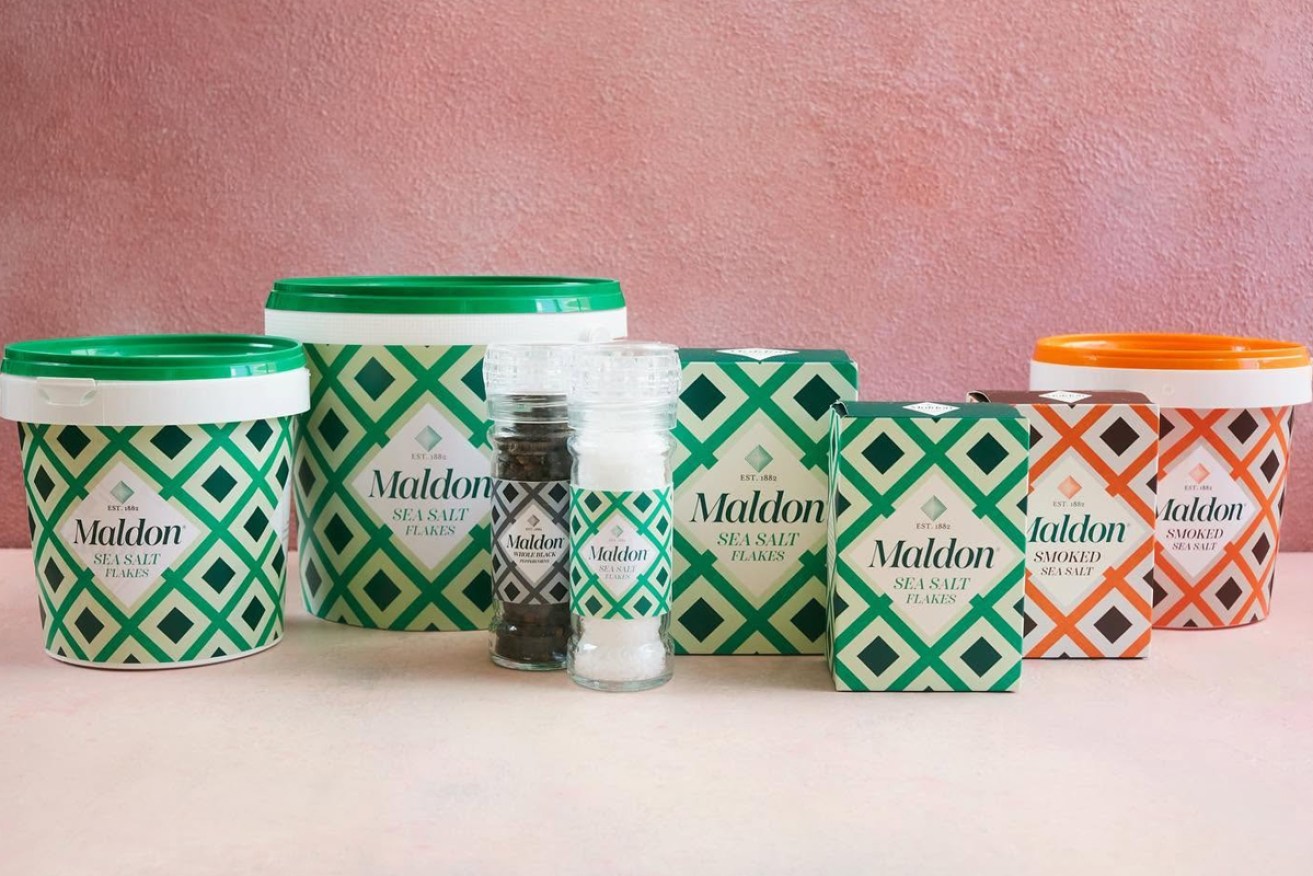
Maldon Salt is embroiled in a scandal about the origins of its sought-after salt flakes. Photo: Facebook
Customers are souring on one of the world’s best-known salt brands as it battles a scandal about the origins of its product.
Maldon Salt is one of the cooking world’s most recognisable brands and a favourite of professional chefs, celebrities and home cooks.
The British brand has sold its signature sea salt flakes from a base in Essex nearly a century and a half, with its website proudly declaring they have been “harvested naturally” using “traditional artisan methods” since 1882.
But the salt hit the fan a week ago when British newspaper The Observer reported that the company didn’t only use salt from the English coastal town of Maldon – instead turning German-mined rock salt in big quantities.
“The tale Maldon Salt tells of its history and craft is hard to resist: For more than 140 years this quintessential British brand has harvested salt on the Essex shoreline, which has been ‘alive with salt making for almost a thousand years’,” the newspaper wrote.
“Its website features bucolic images of that coastline and black-and-white photographs of artisan salt-makers harvesting the signature white pyramid-shaped crystals, which ‘release saltiness with sweet precision’.”
The Observer described Maldon Salt as “a mainstay of middle-class households and the Waitrose food aisle”. Its global reputation has propelled it to annual revenues of £40 million ($A79 million) – a 250-gram box of its signature sea salt flakes was selling for $11.50 at Coles and Woolworths on Friday.
“While its label and marketing materials tell consumers the product is ‘100 per cent sea salt flakes’ from Essex, our reporting has established that imported rock salt, mined in Germany, is used in the manufacture of Maldon Salt,” it wrote.
The paper’s investigation found that regulators have allowed the company to use the imported rock salt to filter and enrich the seawater it uses.
The imported salt is dissolved in seawater in what is called the “salt-on-salt” method, allowing Maldon to significantly boost volumes at its main production site near the village of Goldhanger in Essex.
The Observer spent two days investigating the company and its Essex production – including tracking trucks delivering large bags of the German salt salt.
Its report sparked an instant viral backlash, with customers sharing their disappointment.
“Maldon is cancelled,” wrote on X user.
“What in the Nigella Lawson is going on?” asked another.
A third said: “You can buy Maldon’s salt in most decent grocery stores here in Toronto, Canada. I’ve asked myself for the longest time how a small artisanal business from Essex could possibly deliver their product around the world.”
On Wednesday, Maldon finally released a statement.
“We understand why you may have questions after reading the recent coverage, particularly if you have been buying Maldon sea salt for many years,” the statement, published on Instagram, began.
The family business cited its long history and presence on the market since 1882, noting that it “take[s] great pride” in the product and “truly value the community of home cooks, chefs and food lovers who choose Maldon as their salt of choice”.
“We’ve heard your concerns that our process wasn’t clear enough and are committed to being clear about how and why we make our salt the way we do,” it said.
Maldon described the rock salt used in its products as “ancient sea salt” and said its products and labelling complied with applicable laws. It said its method produced the taste and texture cooks had known for generations.
The company added an infographic explaining its “traditional salt-on-salt process”.
It emphasised how Maldon saltwater was “drawn in at high tide” and filtered “through a bed of pure rock salt to create a brine”. The brine was then ““gently evaporated in open salt pans” before “master salt makers hand-harvest” the resulting salt flakes.
Maldon said the “traditional method” was how it created “the crunchy and delicate sea salt flakes that Maldon users have come to know and love”.
“We want to reassure you that our salt in your kitchen is the same as it’s always been,” its post read.
“We are immensely proud of the heritage, people and craftsmanship behind our salt, but also recognise that we haven’t done enough to explain it clearly.”
The final slide had a photo of salt makers from decades ago.
“We are committed to sharing more about our craft, place, people and our legacy,” the caption read.