Third of peanut allergies in baby study misdiagnosed
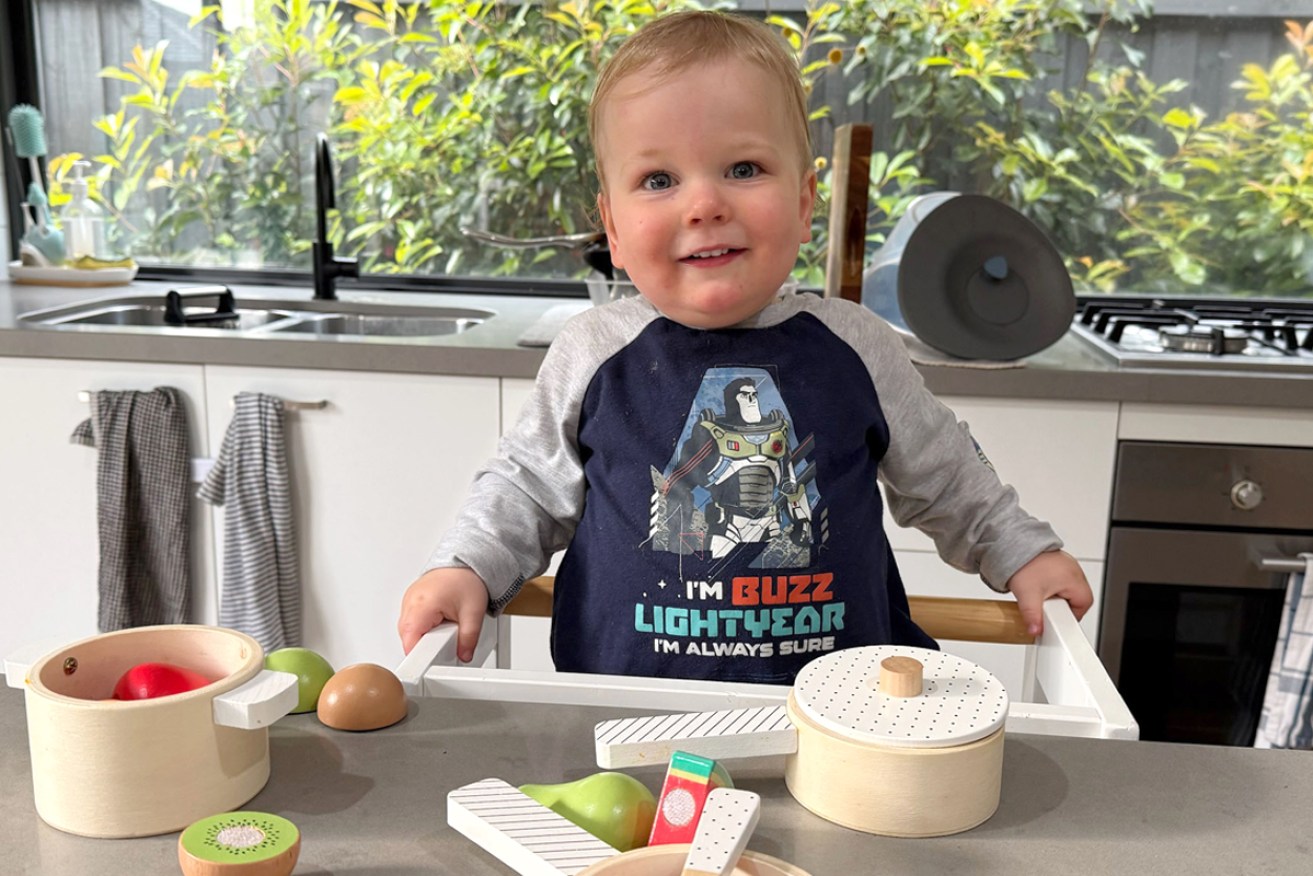
Arthur Cameron can safely tuck into foods with peanuts after being found not to be allergic after all. Photo: AAP
Families may be turning their lives and pantries upside down based on a wrongly suspected peanut allergy, a world-first Australian study has found.
The study has found that a third of babies who had previously reacted to peanuts and were classified as allergic had actually been misdiagnosed.
The results stemmed from a national program designed to improve tolerance, which began with an oral test to determine sensitivity.
When given the oral test, 35 per cent of 778 infants showed no reaction – much to the relief of parents.
Among them was one year-old Arthur Cameron, who had his suspected allergy diagnosis removed.
His mum Leah said she was relieved, not just to have satay chicken back on the menu, but that her son wouldn’t face a lifetime of potential serious complications.
“Being a first-time new mum there’s enough kind of stress and anxiety around having a child,” she said.
“Then finding out he had this peanut allergy, it certainly made us worry a bit how we’ll manage this through his life.
“We really had to think and change our behaviour, checking food labelling and stuff like that, which was quite an adjustment.”
Arthur had reacted at around five months to being given peanut butter, breaking out in hives and becoming red in the face.
After he had a skin and blood test, Leah and husband Jake were told their son had a high risk of reacting to peanut.
But, in the oral food challenge, and despite his earlier side effects and allergy test results, Arthur tolerated peanut without reacting. He is no longer considered allergic.
“We were very surprised, but very ecstatic,” Leah said.
Australia has some of the highest reported rates of childhood food allergies in the world, with peanut allergy affecting about one in 30 children.
The world-first study stemmed from the national ADAPT Peanut Oral Immunotherapy Program, which runs in conjunction with 10 paediatric hospitals across the country. Launched in 2024 by the National Allergy Centre of Excellence, it is hosted at the Murdoch Children’s Research Institute.
Without it, children like Arthur likely would have continued to avoid peanut in case they triggered an allergic reaction.
Senior clinician Tim Brettig said it wasn’t clear why some babies who had initially shown a sensitivity to peanuts no longer did.
“We expected some to tolerate peanut at a food challenge, but the rate’s much higher than we would have thought,” Brettig said.
“To get such a large number of infants not react and therefore not even need treatment because of an allergy was really exciting.”
The results suggest oral tests should potentially be considered in more cases than previously.
However, with the risks involved, the tests should still be conducted in controlled environments. In the initial oral testing, while a third of babies didn’t react, 12 per cent had an anaphylactic reaction that required treatment from medical staff.
“It needs to be done in a controlled and safe way,” Brettig said.
MCRI Population Allergy group leader and NACE director Professor Kirsten Perrett said the results had implications for how peanut allergies were managed in Australia.
“Oral food challenges are not currently used routinely for every infant with suspected peanut allergy,” she said.
“But our results show that clinical history and allergy testing alone were not enough to accurately diagnose peanut allergy in many cases. A supervised oral food challenge should be routinely considered to confirm the diagnosis before an infant starts oral immunotherapy.
-AAP