Recruitment turns to Snapchat applications, online games
Want a job in the future? Prepare yourself for Snapchat applications, computer game-style cognitive assessments, and video recruitment before you even get the chance to talk to a human.
Employers are increasingly using technology to find more efficient ways to select and screen out candidates but workplace advocates have warned short video applications could open the door to discrimination and unfair hiring practices.
Major companies that have experimented with using technological advances in the hiring process have said that so far it has proven worthwhile.
McDonalds has a filter in the popular app Snapchat, which allows applicants to superimpose the corporate behemoth’s uniform on themselves, and then record a 10-second video applying for the job.
McDonalds WA market manager Bradley McMullen said the firm still went through the normal interview process, but the Snapchat videos were a way for candidates to show a bit of their personality.
“We get the odd application that doesn’t work for us, but the overwhelming majority have actually been excellent applications and they proceed to an interview which they may or may not get through, but it’s just the first step in our application process,” he said.
Meanwhile automated, “volume-based” online application processes are being adopted by major firms such as NAB, which it said saved it 700 hours per month in reading traditional resumes and conducting job interviews.
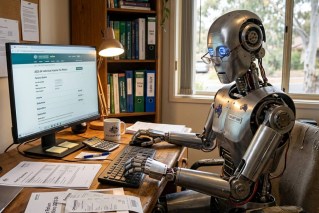
Global accounting firm KPMG have just started using a “robot recruiter” — a completely automated system — for initial screenings where applicants complete tests structured as anything from computer shooter-style games to balloons that pop up with math questions on screen.
The games test cognitive ability, speed, reaction time, and decision-making skills.
“Really it’s drilling down into the next level of ‘let’s not just check if economics or accounting students are able to do the math, it’s more about do they have the aptitude and skills to be able to perform the task,” KPMG head of talent and acquisition Phil Rutherford said.
“The expectation is they are going to be comfortable applying through those means.”
Mr Rutherford said staff viewing the videos were trained to remove unconscious bias, while hearing or speech-impaired candidates were able to access different application processes.
KPMG also offer “personality tests” candidates can take online to see what roles they may be best suited to.
Video may open door to early-stage discrimination
Recruitment agent and trainer Suzanne Bailey said the way employers searched for talent was changing, and job hunters needed to know what they were up against.
She said automated and video recruitment saved employers money and time.
“We get to see you, we get to see the sincerity in your face, we get to see whether or not you’re a happy smiling person, we get to see how well you’re going to present our brand in our uniform,” she said.
“We’re going to see that you can actually communicate.”
But she acknowledged it meant the process could be open to discrimination by employers.
“I believe there is a lot of discrimination that could happen because ‘your brand’ doesn’t suit the brand of what we’re looking for,” Ms Bailey said.
“It could be your age, you could have just put on too much makeup, your hair could be really scruffy, and we don’t need that.”
Unions WA secretary Meredith Hammat said young people should be aware of the potential pitfalls.
“Of course young people are always really keen to win their first job, I’m sure many of them engage in the employer’s recruitment processes without really questioning what it means,” she said.
“I think the risk is employers will make discriminatory judgments with this kind of recruitment process.
“When all they’re doing is having a quick look at someone, making some discriminatory judgements about whether they have the right look to fit in, without properly considering the sort of skills that person might bring to the job.”
Shelby, 17, got her latest job by submitting a short video application.
She said it was helpful to be able to have a few goes at recording her interview, to prepare for the real thing.
“I do find it a bit easier, I’m quite shy in that respect, so it is kind of good to put yourself out there how you want to be seen at first,” she said.
“I think it’s just different and it’s just something people may not be used to.
“If you’re not technologically advanced it could be very complicated … if you’re not familiar with computer software.”
– ABC