 Subscribe

‘Workers are at their limit’: Union says Australians can’t afford a fifth rate rise
The Australian union movement says ordinary workers cannot afford a fifth rate rise, urging the Reserve Bank of Australia (RBA) to keep rates steady when it delivers its decision tomorrow.

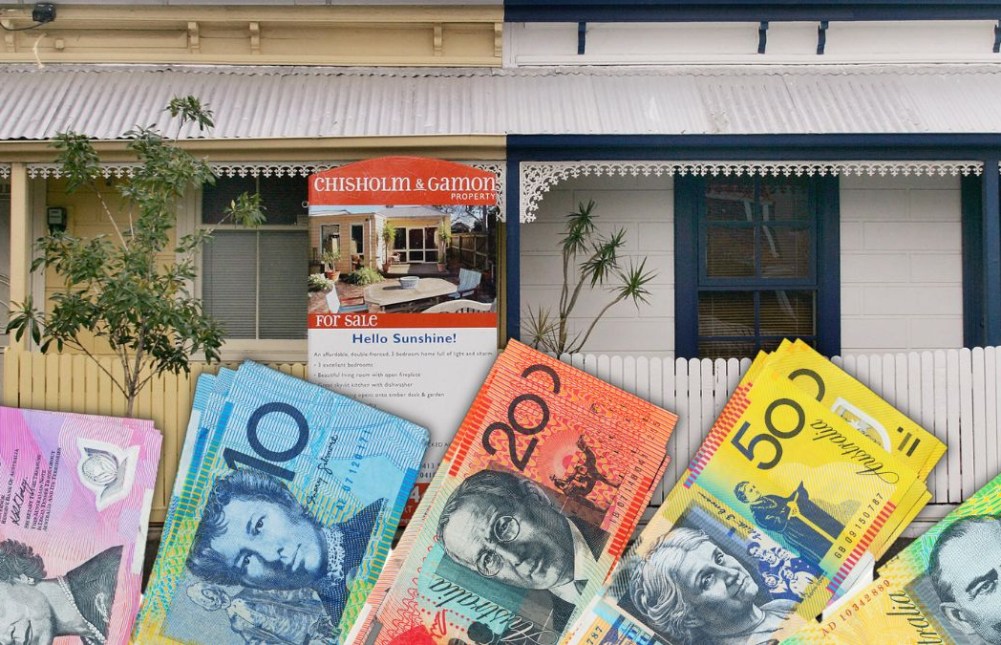
- Unions are urging the Reserve Bank to keep rates on hold, arguing that workers cannot afford a fifth hike this year.
- Led by the ACTU, the unions argue that households are being squeezed on all sides by the rising cost of living.
- Mortgage brokers agree, saying government changes have hit the housing market and the RBA has too few tools to deal iwht inflation.
The Australian union movement says ordinary workers cannot afford a fifth rate rise, urging the Reserve Bank of Australia (RBA) to keep rates steady when it delivers its decision tomorrow.
The Australian Council of Trade Unions (ACTU) today urged the central bank’s board to consider workers’ stretched household budgets.
“Workers are at the limit of their ability to absorb rate rises. Supermarket prices went up by 7 per cent for an average basket of items between March and June across all the major supermarkets,” ACTU Secretary Melissa Donnelly said.
“That’s well above CPI, and I don’t know what the Reserve Bank expects people to do about that: not buy milk and potatoes?
“They’re hardly luxury items.”

Donnelly compared Australia’s economy to that of New Zealand’s, where the Reserve Bank of New Zealand (RBNZ) aggressively fought inflation in 2024, only to push the country into a recession.
“The unemployment rate in New Zealand rose higher than ours, and working people in New Zealand saw the largest fall in real wages in the OECD and found it increasingly difficult to find a job,” she said.
“And yet now, New Zealand’s inflation rate is stubbornly stuck at broadly the same level as Australia’s.
“The Reserve Bank of New Zealand hiked the cash rate higher than our central bank has so far; and all it’s achieved is to cost New Zealanders jobs.”
Donnelly argued that a similar approach here in Australia would be disastrous for local workers.
“If the Reserve Bank of Australia had taken the New Zealand road, and our unemployment rate reached 5.6 per cent, there would be another 145,000 more Australians unemployed, with no obvious dent in inflation,” she said.
“Lifting official interest rates and ignoring the risk to jobs doesn’t fix global inflation.
“But it costs jobs and Australian workers don’t deserve to be forced down that path.”

Tony Bice, Founder and Director of First Choice Mortgage Brokers, told The Money Edition he thinks the RBA is “caught between a rock and a hard place.”
“When the ACTU says that a fifth rate increase is going to hurt first-home buyers, it’s going to hurt everybody, particularly mortgage holders,” he said.
“It’s just going to put more pain on them. It’s going to create more uncertainty.”
Bice said government policies have rapidly hit the housing market, and now the RBA has just one tool to fight inflation, and it will hurt those already stretched to the limit.
“Because of what’s happened with these legislative changes that slowed up our economy, first-home buyers have virtually disappeared,” he said.
“Investors no longer are investing because why would you? There are no incentives. Investment holders that have got property are not selling.
“So, the whole housing market has come to a grinding halt.”

How much a fifth interest rate hike will cost borrowers
Financial markets are currently expecting an 80 per cent chance of the RBA hiking interest rates for a fifth time when the board hands down its monetary policy decision at 2:30 pm AEDT tomorrow.
If the RBA lifts rates by 25 basis points to 4.85 per cent, how much it will cost you will depend on the size of your outstanding loan.
A borrower with $600,000 debt and 25 years remaining could face a $92-a-month increase as a result of the hike. Since the start of this year, that same borrower would be facing a cumulative $456 per month increase
If that mortgage rises to $800, they would need to find $123 a month ($607 since the start of 2026).
And if that mortgage were a round $1 million, these borrowers would need to find an extra $153 per month, or $759 extra since rate hikes began in February.
Topics: Inflation, Interest Rates, RBA