 Subscribe

Australia at the mercy of global fuel shocks as 97% is imported: Grattan report
Australia is at risk of future fuel shocks because 97 per cent of the nation's liquid fuel is imported, a new report has found.

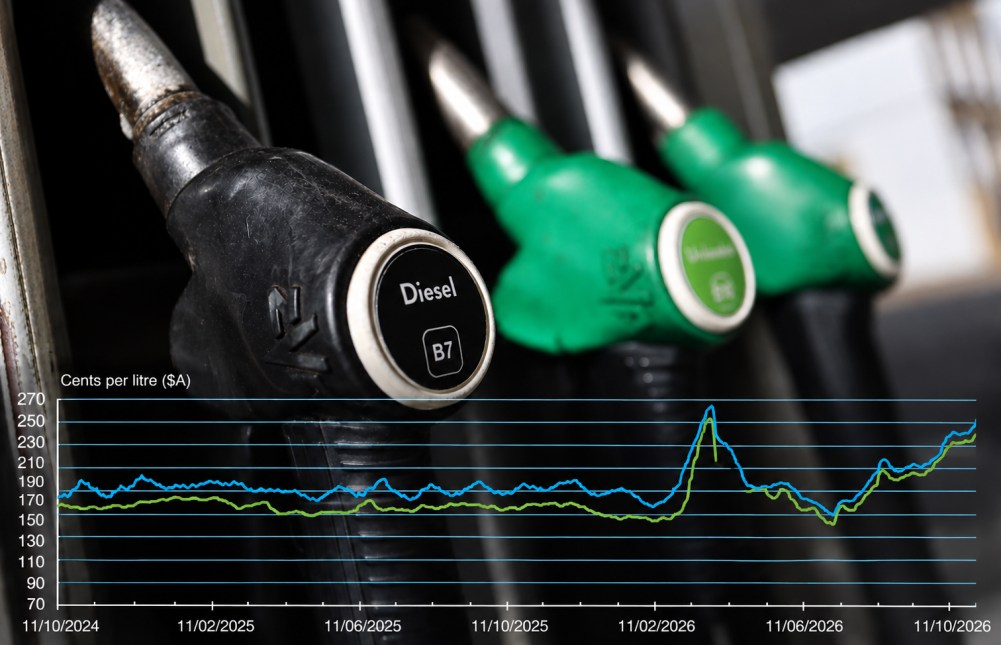
- A new Grattan Institute report finds Australia imports 97 per cent of its liquid fuel and calls for half of key sectors’ fuel to be made locally by 2050.
- The Iran War has cost Australians $18 billion, and a supply shock of that size would leave more than 55,000 Australians jobless, the report found.
- COP31 climate talks co-hosted by Australia collapsed overnight without agreement on fossil fuels, with an expert warning floods, heatwaves and fires are already damaging assets.
Australia is at risk of future fuel shocks because 97 per cent of the nation’s liquid fuel is imported, a new report has found.
Overnight, the COP31 climate summit in Turkey, which Australia co-hosted, ended without an agreement after countries split over whether the deal should even mention fossil fuels, the same fuels that power almost all of Australia’s planes, trucks and mines.
Grattan Institute, an independent Australian policy think tank, said in its Fuelling the Future report that Australia uses about 60 billion litres of liquid fuel a year, but makes only about 2 billion litres, or 3 per cent, from Australian crude.
Professor Frank Jotzo, an environmental and climate change economist at the Australian National University (ANU) Crawford School of Public Policy, told The Money Edition the summit’s collapse showed fossil fuel powers “will not agree to have their resource wealth devalued,” while rich countries “won’t provide enough climate finance to the developing world.”
What the talks were about
Turkish and Australian teams were working towards an overarching COP31 decision, with negotiations covering emissions cuts, climate finance, adaptation and the energy transition.
The sticking point was fossil fuels, with Pacific island nations pushing for a transition away from them, while Saudi Arabia argued against singling out any particular energy source or sector.
Australian Minister for Climate Change and Energy Chris Bowen, who led the negotiations, called the failure “very disappointing.”
Jotzo said the draft deal the Turkish and Australian presidencies put forward seemed acceptable to Saudi Arabia and other “traditional climate spoiler countries,” but “absolutely unacceptable” to the European Union (EU), the Pacific and other climate-vulnerable energy-importing countries.
Exposed to oil shocks
Of about 12 billion litres refined locally last year, 10 billion came from imported crude oil, Grattan found.
The Ukraine and Iran wars added more than $39 billion to Australia’s fuel import bill in six years, with the Iran War alone costing Australians $18 billion and the federal government at least $3 billion, the report said.
A supply shock of the Iran War’s size would leave more than 55,000 Australians jobless, it estimated.
Professor Martina Linnenluecke, Director of the Centre for Climate Risk and Resilience at the University of Technology Sydney (UTS) Business School, told The Money Edition the collapse was “deeply concerning,” as floods, heatwaves and fires are already “damaging assets, disrupting supply chains and putting pressure on insurance markets.”
Making fuel at home
Grattan wants a sovereign fuel target so that at least half the fuel used in road transport, mining and aviation is made in Australia by 2050.
The institute’s plan includes a sales target for 670,000 electric trucks and a $35 million cap per corporate group on mining’s diesel fuel tax credit, which it says would save $76 billion by 2050.
For aviation, it proposes a mandatory clean fuel target and $6 billion for the first clean fuel refineries, but rules out public money for a third oil refinery, as Australia’s crude oil supply is dwindling.
The think tank says its plan would deliver a net $55 billion to the federal budget by 2050, cut the typical household’s fuel bill by $3,344 that year and reduce emissions from fuel use by 58 per cent compared with staying reliant on imports.
Jotzo said the lack of an overall decision “may be less consequential than it feels right now,” as Australia and Brazil made headway on a pledge for 35 per cent electrification by 2035, which he said is “more broadly acceptable than goals that are technology specific.”
Linnenluecke said the breakdown does not undo existing international commitments or climate reporting obligations for Australian companies, warning governments and businesses not to “mistake political deadlock for a reason to delay action.”
“Without deep emissions cuts, the costs of adaptation will continue to rise and some impacts will become impossible to manage,” she said.
Topics: Fossil fuels, Fuel, Petrol Prices