 Subscribe

Australia has a 50-50 chance of recession, HSBC says
One of the world's largest international banks says Australia's economy has a 50-50 chance of entering a recession as its decline steepens.

- One of the world’s largest international banks says Australia’s economy has a 50-50 chance of entering a recession as its decline steepens.
- In a research note today, HSBC said it expects the RBA to hike rates at its November meeting and then pause as the “economy goes into a downswing.”
- HSBC’s chief economist expects interest rates to pause after November, with “some risk” of a hike in February 2027.
Australia has a “50-50” chance of entering into a recession as the economy’s decline steepens, one of the largest international banks has warned.
Paul Bloxham, Chief Economist at HSBC, said in a note sent to clients this afternoon that he now predicts the Reserve Bank of Australia (RBA) will become hyper-focused on doing what it must to lower inflation.
“The RBA’s reaction function appears to have shifted recently, as we expected it might,” Bloxham wrote.
“Where the RBA had, for a number of years, been prioritising keeping the economy at full employment, instead of focusing on achieving its inflation target, they now appear to have pivoted to prioritising getting inflation down faster.”
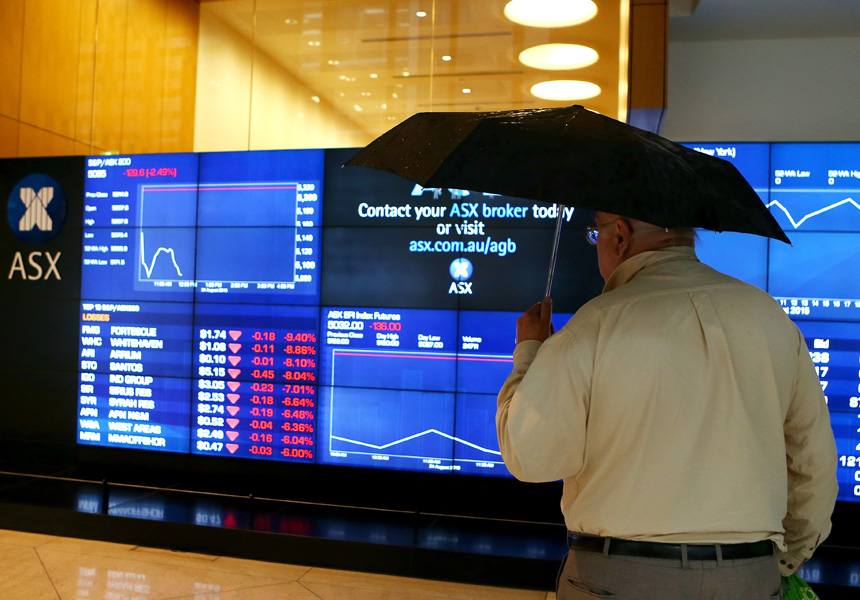
He predicts the RBA will hike interest rates when it delivers its decision on Tuesday afternoon, taking the cash rate to its highest level since November 2008.
“We expect the RBA to pause after this, as the economy goes into a downswing: we see a recession as a 50:50 chance,” Bloxham wrote.
“In part, this is because the longer inflation is above target, the more likely it is that inflation expectations become unanchored.
“Recent public commentary from senior RBA officials supports the idea that the RBA is more concerned about high inflation, is worried about its persistence, and seems to have a stronger proclivity to take policy action to deal with it.”
Bloxham said his team do not anticipate another rate hike in December, but concedes there “is some risk of a follow-up hike in February.”
“Although the jobs market is showing clearer signs of weakening, and falling housing prices are starting to feed through to stalling growth, we see the RBA prioritising the high inflation challenge and hiking in November,” he wrote.
“There is unlikely to be a ‘narrow pathway’ this time.
“We expect the hikes to see growth near stall-speed in 4Q26 and 1Q27, and to force the unemployment rate higher, to 5.1 per cent by early 2026.”
What does a recession actually mean?
In economic terms, a technical recession is when an economy has recorded two consecutive quarters of negative growth.
The last time Australia was in a technical recession was in early 2020, when the emergence of the COVID-19 pandemic drastically slashed the nation’s ability to do business.
Australia is currently not in a technical recession.
But a technical recession, while textbook, is often not the same as a sustained decline in the economy.
A standard recession, in colloquial terms, doesn’t have just one definition. It is often marked by the unemployment rate rising, businesses collapsing and property prices stalling or falling as people struggle to pay their mortgages.
As the RBA recognises, the last time Australia was in a recession, by all definitions, was in the 1990s.
It says most advanced economies “typically record a recession around every seven to ten years on average.”
“While there is no single definition of recession, it is generally agreed that a recession occurs when there is a period of reduced output and a significant increase in the unemployment rate,” the RBA explains.
“Views differ about how to best identify this. Recessions inflict great hardship on households and businesses, and they can have long-lasting effects on both society and the economy.
“Consequently, central banks and other policymakers try to reduce the frequency and severity of recessions.”
Topics: Australian economy, money, Recession