 Subscribe

Supermarket tactics: The tricks grocers use to get you to buy more
Have you only ever ducked in to the supermarket to pick up eggs and milk, and find you've suddenly spent $80? You're not alone.

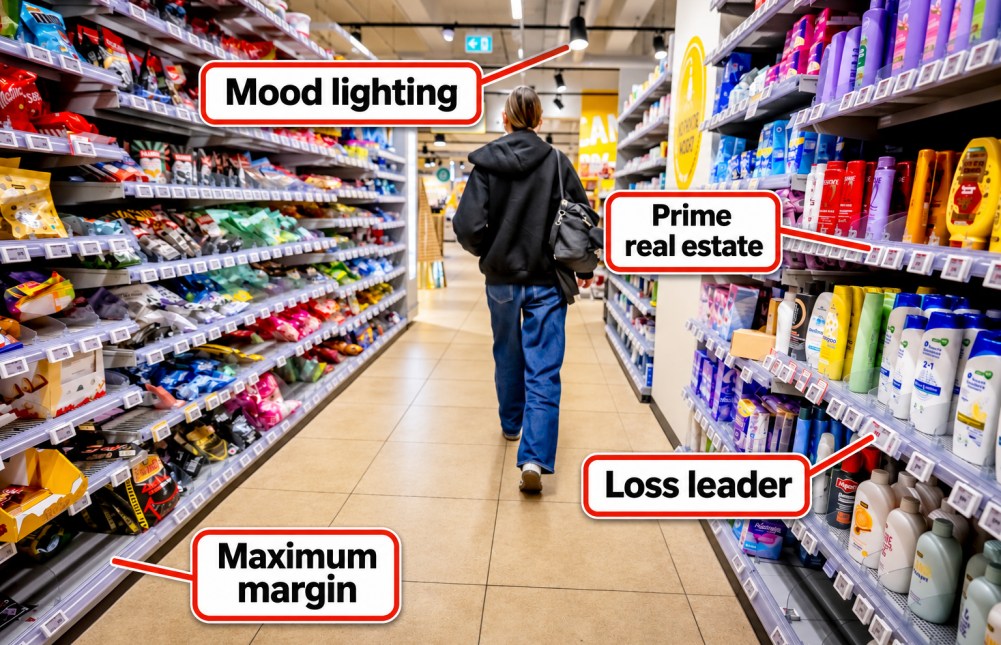
- Supermarkets are highly strategic retail environments where nearly every decision has a deliberate thought process behind it.
- From the store layout to the music, shelves, and discounts, every product is placed either to entice consumers or to maximise profit.
- Thanks to a huge amount of data, supermarkets can tailor their environments to the needs of different shoppers at different times of day.
Have you ever ducked into the supermarket to pick up eggs and milk, only to find you’ve suddenly spent $80?
Maybe it was a great deal on chips at the end of an aisle, some clearance meat you had to eat tonight, or a cheeky chocolate bar while you waited for the registers.
You’re not alone.
Somewhat unbeknownst to you, a myriad of psychological tricks were in play to bump up your spend from just eggs and milk to something worthy of a basket.
And it’s not just guesswork. Here in Australia, the major supermarkets have an overwhelming amount of data about who shops in their stores.
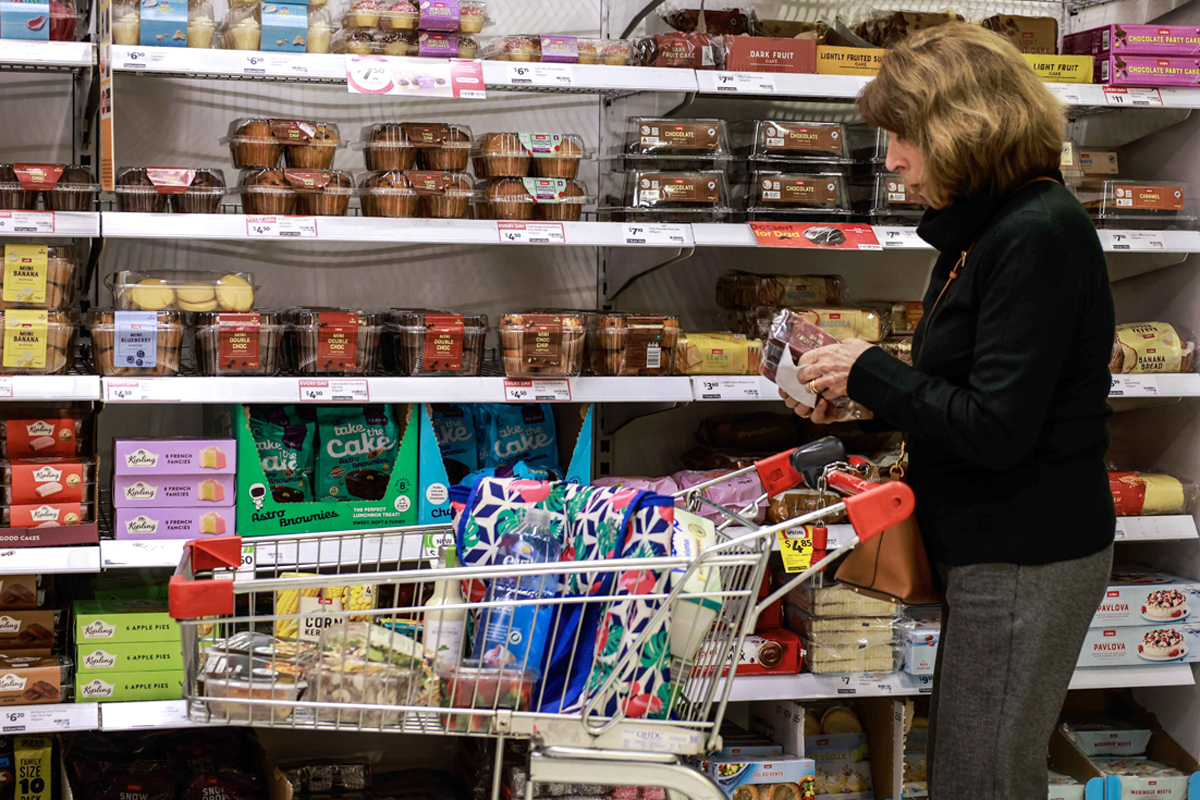
They know what products are bought and when. They know how long shoppers spend in store. They are keenly aware of what is essential purchasing, and what just tickled your fancy on the day.
On top of all that, they know the profit margin for each product.
This incredible tracking allows supermarkets to analyse and execute their overall strategy: to make as much money as possible.
Professor Nitika Garg, consumer behaviour researcher at UNSW, told The Money Edition that supermarkets, like all stores, aim to create an environment that encourages you to spend.
“This is what we call store atmospherics. From colours, to the store layout, to the music, to the lighting, all of it is strategically done,” Garg explained.
“It is designed to create a certain emotional response in consumers, whether it’s to make them feel good, make them feel more mellow and calm, and linger in the stores.”
Trick one: End-of-aisle bargains
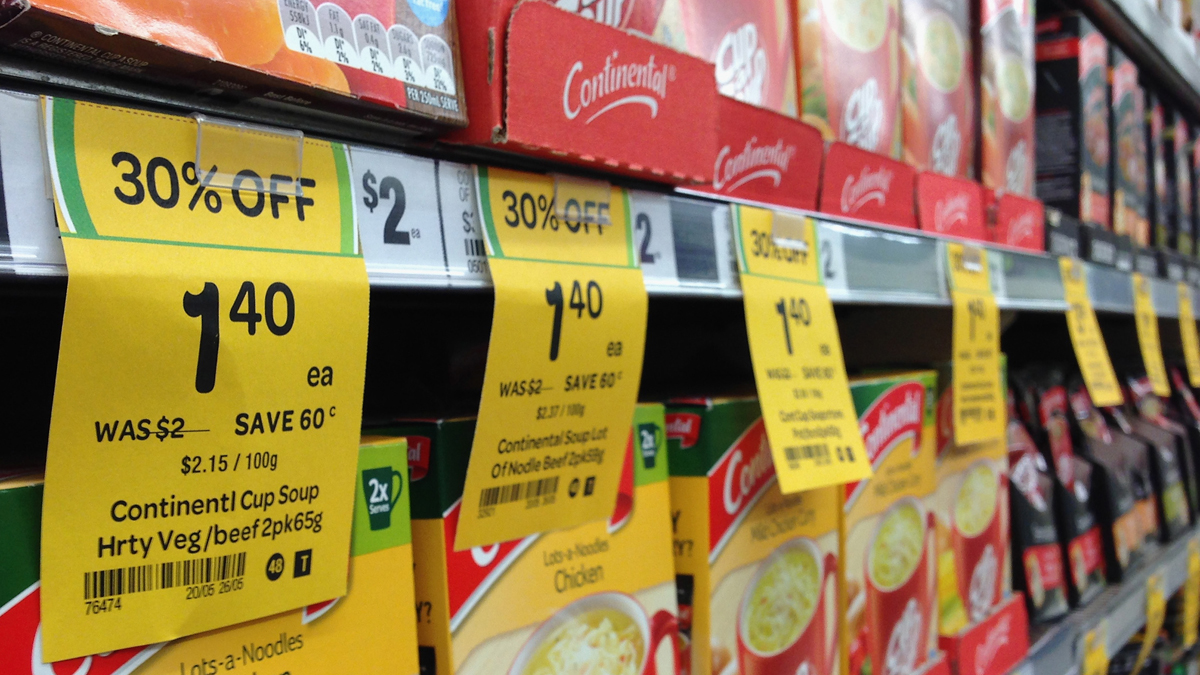
As Garg explained, supermarkets will use a tactic known as “end cap displays” to entice shoppers as they round the corner of each aisle.
“They put in deals on those end cap displays, so even if you’re just passing by the store, you might get tempted, or at least when you’re in the store, you’ll go to them, and they’ll get your attention,” she said.
“And most of the time, the things on those end cap displays are discretionary items like lollies, fizzy drinks, things we don’t really need, but if they get our attention and we think it’s a good deal, we might just pick up.”
Trick two: Store layout
Many of us head to the supermarket intending to get it all done as soon as possible.
But putting bread next to milk means our eyes — and our stomachs — miss out on seeing dozens of products we would have otherwise seen.
“By putting essentials like milk, eggs and bread at opposite sides of the store, retailers are exposing you to a much wider variety of their products as you traverse the length of the store,” Garg said.
“Supermarkets know that these are essentials households need to buy, and they will place them strategically.
“Because the longer we are in the store, the more we will buy.”

Trick three: Music and mood
That’s right — even the song over the radio can influence our decisions, and it’s much more scientific than choosing an earworm that some people might find annoying.
“During off-peak times, Coles, for example, has its own radio station. They curate that music very carefully with the idea that, during slow times, you want the music to be slower, more mellow, because you want people to spend more time in the store,” Garg said.
“And there is research which shows that with slow music, people actually move more slowly, and are willing to spend more time waiting.”
“Once you hit the Christmas time, you’ll see the music picks up. Not just because they want it to be peppy and the environment to reflect the holiday season, but they want people to move in and out more quickly,” Garg explained.
Trick four: Loss leaders
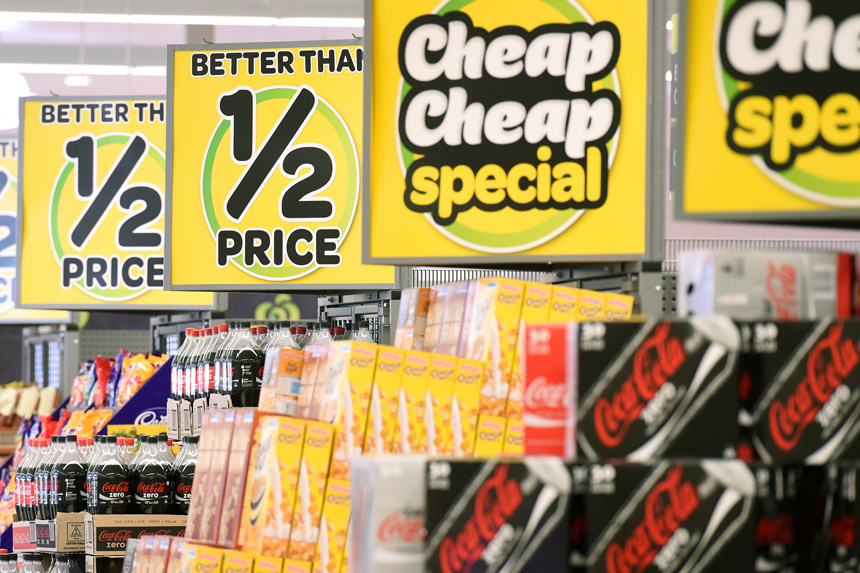
Ever looked at a product and thought, “How on Earth are they making money at that price?” They might not be, thanks to a concept known as a “loss leader”.
“A loss leader is essentially a product where the retailer might be making minimal profit or even a loss. It will be offered at a real discount where it will be an attractive proposition for consumers to come into the store to buy that bargain alone,” Garg said.
“Then, once you’re inside the store, you end up buying a lot more of the other things as well.
“You might have gone for that amazing coffee deal you saw, and as an impulse you see chocolate for sale too, and you buy that.
“Those are called spillover sales.”
Trick five: Maximising margins at eye-level
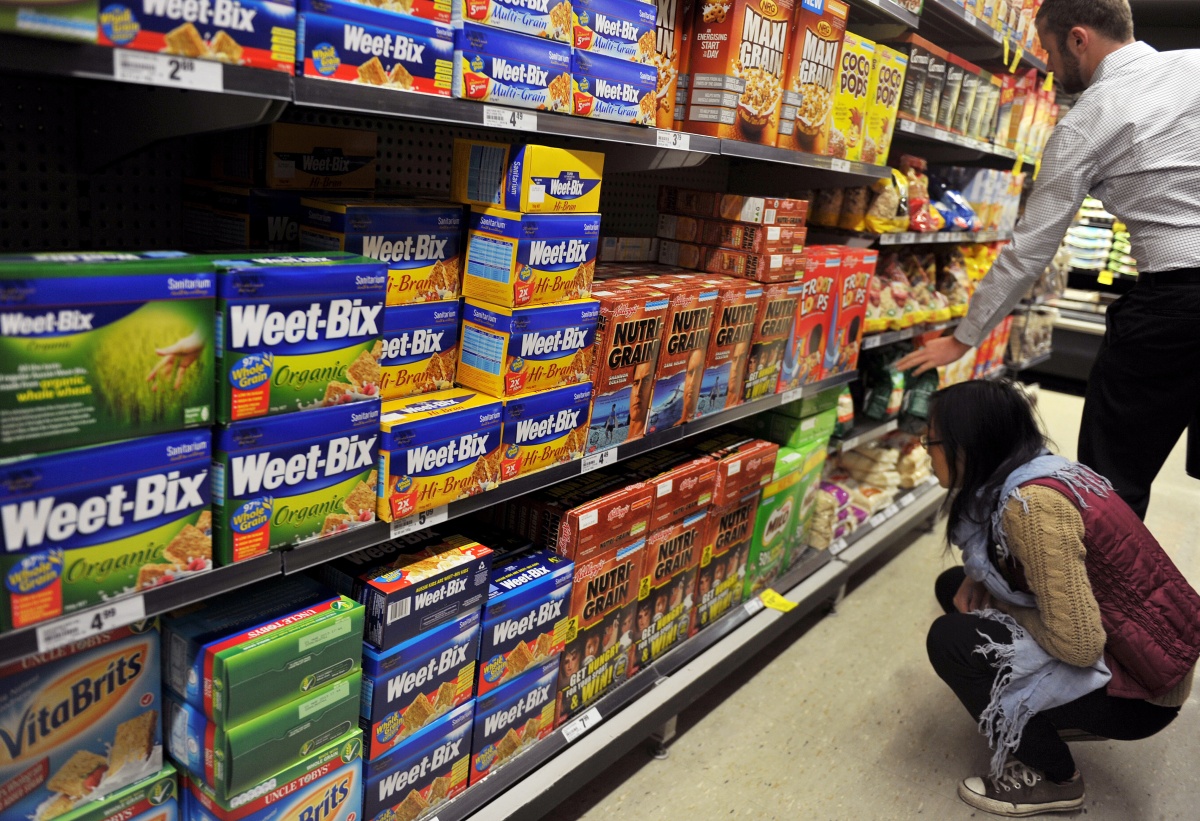
Even the way the shelves are stacked is strategically designed to maximise profit and overall spend.
The most exclusive row, Garg said, was at eye-level.
Here a supermarket might place products they know they have a great margin on, or will sell in great quantities.
“Eye-level shelving is very powerful for the reason that humans are cognitive minimisers. We don’t even want to spend the effort to look up or look down,” Garg said.
“Let’s say you look at cornflakes. It’s never just one box, right? It’s multiple boxes taking up a large proportion of shelf real estate. These are called facings.
“The more facings, the more exposure, the more theoretical sales.”
Topics: Retail, Supermarkets