 Subscribe

Aussies want the government to step in to fix rental crisis
With rents reaching record highs across Australia's capital cities, new polling shows growing public support for government intervention.

- Three in five Australians want governments to do more to help renters, including 30 per cent who want much stronger intervention.
- New polling shows support for rent freezes, limits on rent increases and greater investment in public housing.
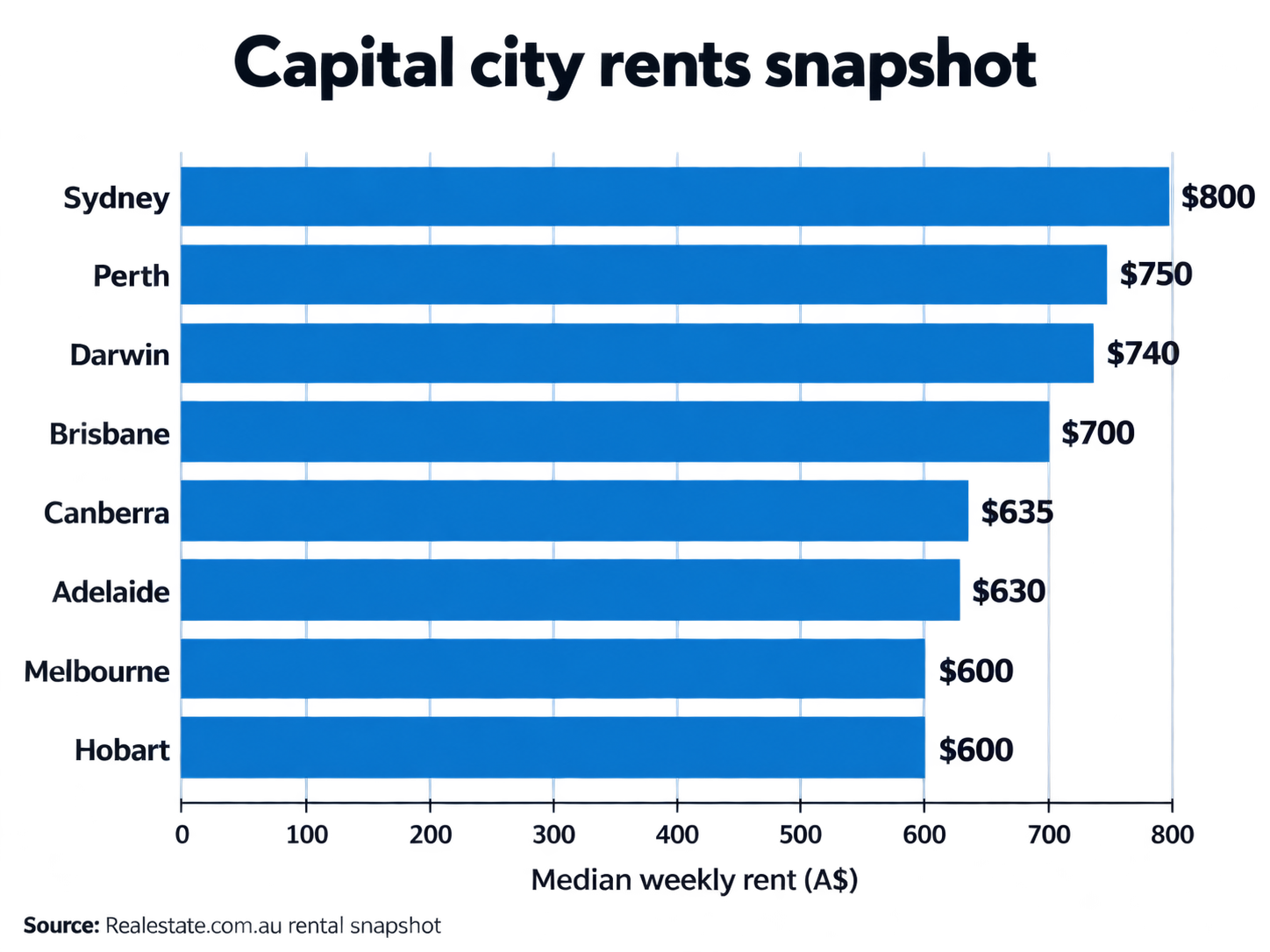
- Sydney rents have reached a record median of $800 a week, up 6.7 per cent over the past year, while the national median stands at $675.
Calls for government intervention to fix the rental crisis are mounting, as new polling shows widespread support for governments to do more to help renters.
Polling commissioned by The Australian Institute shows overwhelming public support for government intervention in the rental market, including regulating and freezing rent increases.
Voters also strongly back limits on rent increases and greater investment in public housing.
Three in five voters think governments should do more to help renters, including three in 10 who believe the government should do much more about the crisis.
Australians have been told that housing is best provided by the private market and governments should get out of the way, Jack Thrower, deputy research director at The Australian Institute, told The Money Edition.
He said the government has allowed public housing stock to deplete and allowed the housing crisis to worsen.
“This year the Albanese Government made bold changes to overhaul broken tax settings to help people trying to enter the housing market,” Thrower said. “But after years of surging rents, renters continue to suffer.”

‘Forever renters’
Keeping a roof over your head has never been more expensive for tenants.
According to the Australian Housing and Urban Research Institute (AHURI), 60 per cent of Australian renters now expect never to own a home.
Separate modelling published recently also suggests that by 2040, almost half of younger Australian households will still be renting privately past the age of 50, as renting becomes an increasingly acceptable way of life.
Australia ranks 15th among 39 OECD nations as the world’s most rent-entrenched country, alongside nations like Finland, Germany and Mexico.
These ‘forever renters’ are no longer a niche group; they’re shaping how an entire generation lives, decorates, and invests in their homes.
Nationally, the rental market remains extremely tight because population growth continues to outpace new housing supply, with KPMG research predicting affordability pressures will persist until enough new homes are built in key markets.
Paying more
A big part of the problem is that renters are struggling to break the cycle of rising housing costs.
As of July 2026, Melbourne’s median weekly rent for houses and units combined stood at $600.
But the problem extends well beyond Melbourne.
Anglicare Australia’s annual Rental Affordability Snapshot examined 48,776 rental listings nationwide in March and found that just 0.5 per cent were affordable for a single person earning the minimum wage.
For Australians relying on JobSeeker, the situation was even worse, with just one affordable property identified nationwide.
Meanwhile, national median weekly rents have climbed 5.5 per cent over the past year to $675, adding $1,820 to the annual rental bill.
Sydney tenants are paying an extra $2,600 a year on average, according to Realestate.com.au, with median weekly rents reaching a record $800.
Meanwhile, the National Rental Affordability Scheme, which provided financial incentives to landlords who rented properties to low- and moderate-income households at least 20 per cent below market rates, ended in June after a decade-long wind-down.
Its closure has prompted calls from housing advocates for a replacement scheme as renters face mounting cost pressures.