 Subscribe
Nearly 25% of Aussies delay bills to prioritise mortgage and rent payments, study finds
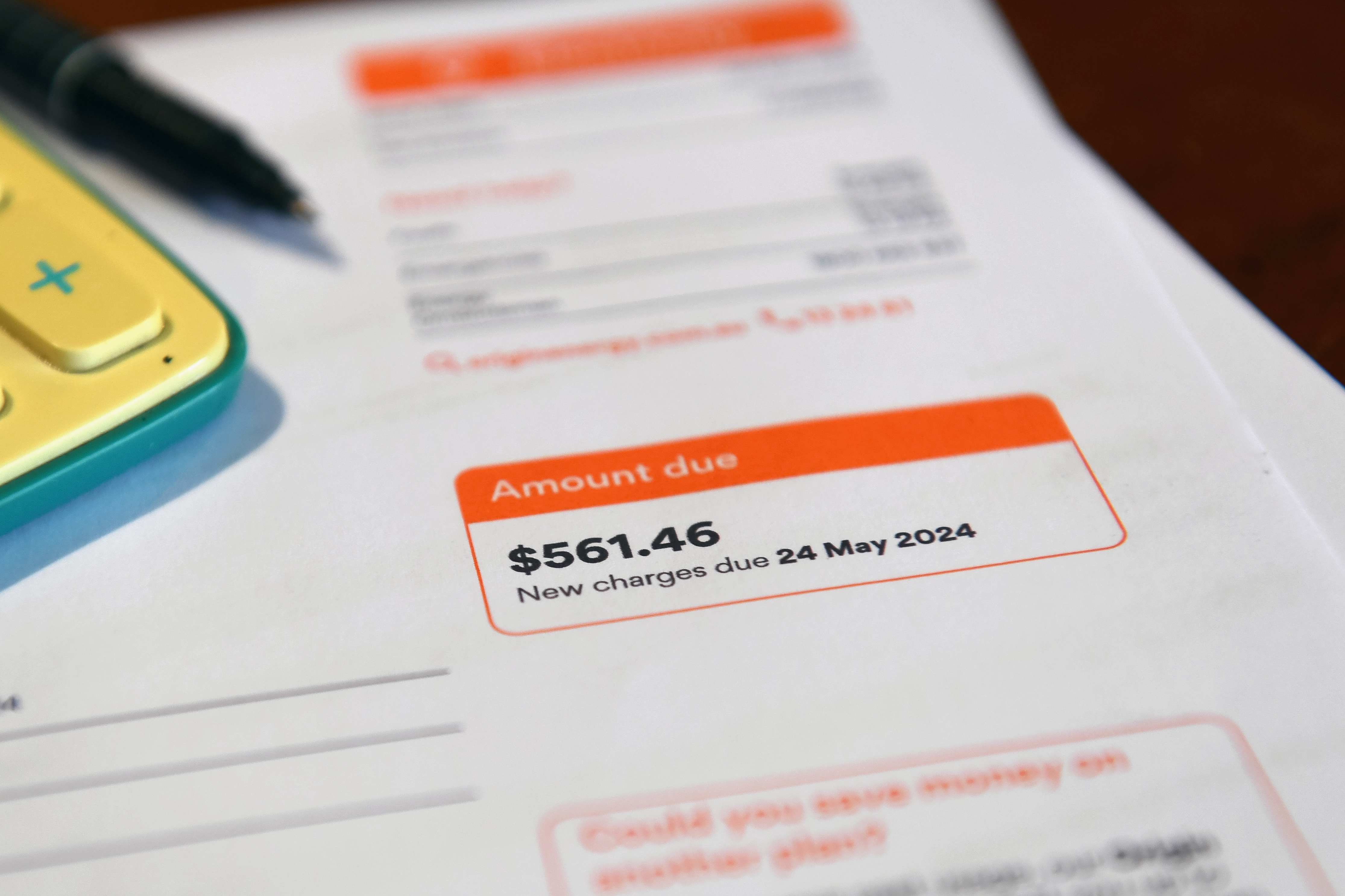
Millions of Australian households are delaying or missing paying key bills in order to prioritise their rent or mortgage repayments.


- One in four Australian households report missing or delaying bills to meet their rent or mortgage repayments, a new survey has found.
- People most often delay electricity and gas bills, followed by car insurance and home internet.
- As mortgage rates rise and the cost of living squeezes household budgets from all angles, mortgage stress is rising.
Almost a quarter of Australians, around 2.3 million households, say they are delaying or missing some bills to prioritise rent or mortgage payments.
A new survey of more than 1,000 Australians from comparison tracker Finder found that 23 per cent deliberately missed or delayed other commitments to cover the roof over their head.
Of the bills missed, people most commonly delayed electricity and gas notices, followed by car insurance, credit card repayments and home internet bills.
Finder money expert Richard Whitten said in a statement that housing costs in Australia left households with little “wiggle room” after making payments.
“When the mortgage or rent takes such a big chunk out of the budget, other bills can easily get pushed down the list,” he said.
“For some, that means holding off on the electricity bill, insurance renewal, or credit card repayment so they can make sure their biggest bill is paid.
“It’s concerning that so many households are in a position where they have to decide which expenses need to wait.”
A third of borrowers now at risk of ‘mortgage stress’
Hundreds of thousands of Australian borrowers now face “mortgage stress” compared to a year ago, after four RBA rate hikes this calendar year.
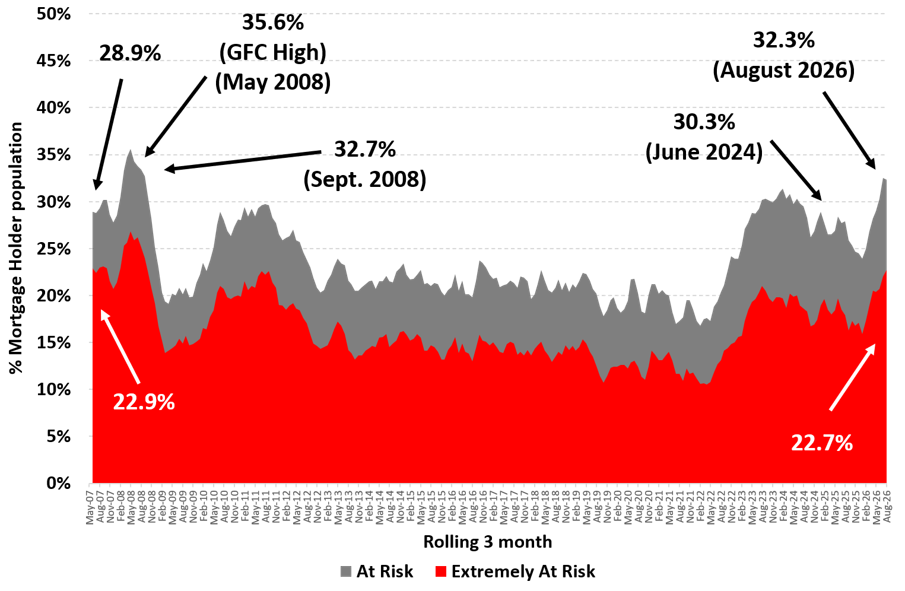
The latest data from Roy Morgan research shows that 32.3 per cent of mortgage holders are now at risk of spending a huge portion of their household income on repayments.
Roy Morgan estimates that 1,718,000 people are currently at risk of mortgage stress, up 295,000 people from the same period last year.
A household is considered “at risk” of mortgage stress when repayments exceed a certain percentage of household income, typically up to 45 per cent, depending on spending and dependents.
Michele Levine, CEO of Roy Morgan, said the biggest variable on housing stress was the relationship between interest rates and employment.
“Another factor contributing to rising mortgage stress in the last few months has been the changing composition of the workforce,” she said.
“Full-time employment has weakened considerably, and this has a direct, and negative, impact on household incomes.
“As household incomes come under pressure, this leads to an increase in mortgage stress.”
How does mortgage stress affect me?
If you are currently facing mortgage stress, you would be well aware of the pressure repayments are putting on borrowers.
But what if you live in a home that you own? Or are looking to enter the market?
Typically, a high amount of mortgage stress in a property market results in two factors: Some borrowers begin to default on their loans, and may be forced to sell their property as a distressed sale.
Borrowers who aren’t defaulting but are struggling to meet repayments typically cut back drastically on discretionary spending, such as eating out or buying new clothes.
If both occur on a widespread scale, more homes enter the market and property prices typically fall, depending on supply and demand.
A cutback in discretionary spending may lower inflation, depending on whether non-essential purchases contribute enough to affect the rate of inflation (compared with essential spending such as energy costs and fuel).
Topics: Cost of Living, housing affordability