 Subscribe
Why the bond market sell-off matters for Australian households

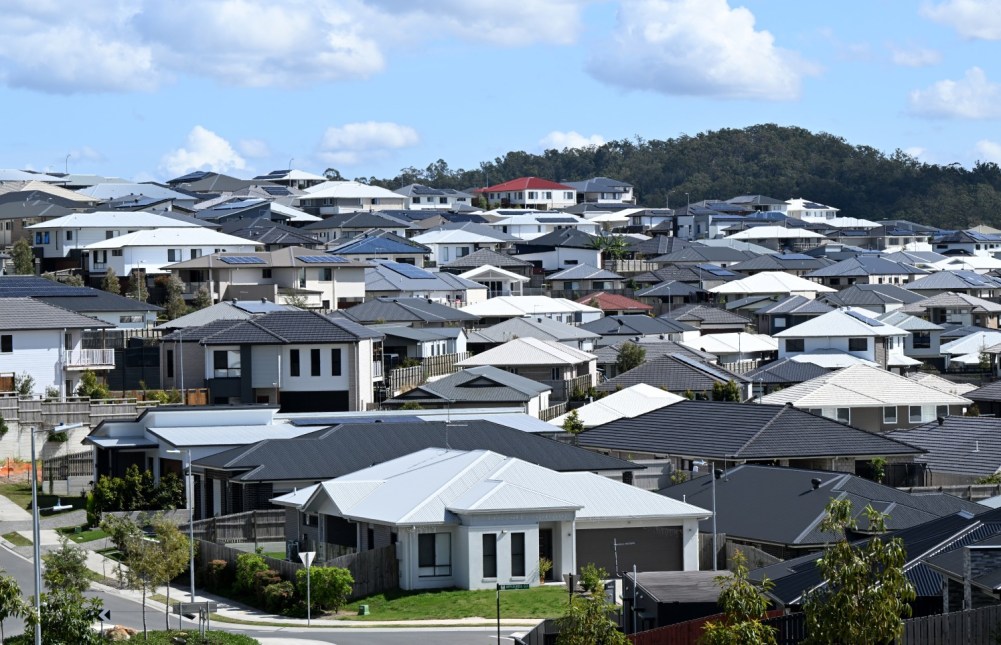
- Surging government bond yields have made government debt more competitive with other investments, but the recent volatility could have ramifications for everyday Aussies.
- The moves reflect expectations that inflation and interest rates could stay higher for longer.
- That could spell bad news for those with mortgages and good news for those relying on savings accounts.
It’s been a remarkable few weeks in global bond markets, and what was once the domain of high finance could soon have ramifications for every Australian.
Here in Australia, the 10-year government bond yield – that’s the return investors can earn from the bond at its current price – climbed above 5.4 per cent last week before easing to around 5.37 per cent.
Even with that modest retreat, the 10-year Aussie government bond yield remains at its highest level since 2011.
To put that in some perspective, the 10-year Australian government bond yield was around 4.4 per cent this time last year. Five years ago, in October 2021, it was 1.6 per cent.
And the sharp rise in long-term government borrowing costs isn’t isolated to our shores.
In the US, the 10-year US government bond yield is also on a tear, hitting 5.34 per cent last week. This marks the highest benchmark borrowing costs in the world’s biggest economy since 2002.
Now, you may have been hearing about the big “bond market sell-off” recently.
Investors are driving it by selling existing, lower-yielding bonds, pushing prices down amid today’s higher yields.
Why are Australian government bond yields at 15-year highs?
As the name implies, a 10-year Australian government bond pays a fixed coupon until maturity, while its market yield moves as the bond’s price rises and falls.
Both Australian and global investors are demanding higher yields on long-term government debt as concerns around persistent inflation, interest rates and government borrowing increase.
Major economies worldwide are struggling to bring inflation back within their target bands.
This has led leading central banks worldwide – including the Reserve Bank of Australia, the US Federal Reserve, the European Central Bank and the Bank of Japan – to raise interest rates in 2026.
The biggest inflationary driver this year has been the war in Iran, which has disrupted energy supplies and shipping in the oil-rich Middle East.
This has pushed Brent crude from $US70 per barrel before the conflict broke out at the end of February to above $US100 per barrel today. And those higher energy costs continue to work their way through the wider economy.
Bond investors also have longer-term concerns around surging national debt levels and the uncertainty this brings.
In August, the Australian government’s gross debt topped $1 trillion for the first time. That debt is dwarfed by the US, where the public debt recently exceeded $US40 trillion (approximately AU$57.7 trillion).
Then there’s the nascent artificial intelligence revolution.
The AI investment boom is adding another source of demand for capital, with technology companies borrowing heavily to fund data centres and other infrastructure. That could add to upward pressure on borrowing costs as companies compete with governments and other borrowers for funding.
How does all of this affect everyday Australians?
Soaring 10-year Australian government bond yields indicate growing expectations that inflation and interest rates will stay higher for longer than most economists expected heading into 2026.
For mortgage holders, that raises the risk that borrowing costs remain elevated for longer, particularly if the RBA is forced to keep rates high or raise them further.
Mortgage holders would do well to set aside a little extra for that contingency, or make some prepayments when they can.
Higher borrowing costs could also keep pressure on Australian house prices.
On the other hand, the same higher-for-longer interest-rate environment is generally better news for savers, with banks more likely to offer higher rates on savings accounts and term deposits.
It’s worth looking around to see which institutions are offering the best rates.
Fast-rising government bond yields can also weigh on the stock market, which in turn can affect many Australians’ superannuation savings.
After a near six-year bull run, the ASX 200 has slipped 3.2 per cent over the past 12 months.
Higher-risk growth stocks have had a much harder time, with the ASX All Technology Index down a sharp 33.8 per cent over the full year.
That’s because many of these companies are valued on profits expected years into the future. As bond yields and interest rates rise, those future earnings become less valuable in today’s dollars.
The share market fall has been driven by several factors. But Aussie institutional investors can earn around 5.4 per cent from fairly low-risk government debt, which increases the relative appeal of bonds over stocks.
For Australian retail investors looking for relatively simple exposure to today’s high bond yields, a wide range of corporate and government bond exchange-traded funds (ETFs) are available on the ASX.
You can buy shares in these ETFs just as you would any other ASX stock. Just be aware that if bond yields and interest rates climb even higher from here, the capital value of those ETFs could fall.
The information provided on this website is general in nature only and does not constitute personal financial advice. The information has been prepared without taking into account your personal objectives, financial situation or needs. Before acting on any information on this website you should consider the appropriateness of the information having regard to your objectives, financial situation and needs.
Topics: Investing, Investment, Mortgage, Mortgage stress