 Subscribe
Shein profits plummet as newly-listed fast-fashion retailer takes a hit


Online fast-fashion retailer Shein’s profits have plunged in its first results since listing as a public company on September 1.
Adjusted net profit was $US228 million ($325 million) for the second quarter, down 67 per cent from a year ago.
While the company blamed the result on higher logistics costs due to the war in the Middle East, it comes as Europe and the US have institute measures designed to curb its model.
Conflict in the Middle East pushed up jet fuel and freight costs for Shein, which air freights cheap clothes to shoppers around the world.
The lower than expected result is feeding investor worries over margin pressure and slowing growth.
Its margin was squeezed to just 2.1 per cent from 6.2 per cent last year.
Sales in Europe dropped sharply too in the quarter to end-June as Shein hiked prices and cut online advertising in anticipation of €3 ($5) fees the European Union imposed on low-value e-commerce parcels starting July 1.
Shein reported $US11.08 billion in sales for the second quarter, with Europe revenue down 13.9 per cent to $US3.77 billion and US revenue falling 6.0 per cent to $US2.5 billion.
Overall sales were up 0.9 per cent from a year ago as growth in Latin America offset declines in Shein’s biggest markets.
Since its September 1 debut in Hong Kong, Shein’s shares have dropped 27.3 per cent from the offer price of $HK48.56 ($8.82) apiece, and the continued profit squeeze gave little to encourage investors.
“We estimate earnings landed more than 10 per cent below the low end of the range implied by the prospectus,” Jefferies analysts wrote.
Shein’s 18.1 per cent jump in fulfilment costs was well above Jefferies’ expectations and was concerning, they said, given this was already before the EU fees kicked in.
In a statement, Shein chief executive and chair Yangtian Xu said the company planned to push into higher-priced clothes that will boost its profitability, and hinted at a strategy of expanding its family of brands, including through acquisitions.
“As the product mix shifts towards brands at higher price points, the platform’s overall average selling price will rise accordingly,” he said.
“Our vision is to become a richly diversified brand collection that meets consumers’ varied needs across multiple price points and occasions.”
Shein was already forced to raise prices in the United States last year when the US administration ended duty-free de minimis access for low-value ecommerce parcels. This year it faces the same challenge in the EU.
Shein has said the European fees could have a bigger effect than the end of de minimis in the US.
The €3 fees apply per product category, adding up to €15 if a shopper buys five different types of item in one order.
The EU is also planning an additional €2 handling fee on low-value ecommerce parcels, to be implemented from November 1, adding to the pressure on Shein’s business model.
France in September started imposing penalties on fast fashion retailers to try to curb a surge in sales of cheap clothing sold by online sites.
The so-called “Temu tax” comes as Australia remains one of the world’s largest consumers of fast fashion per capita.
The new French penalties – part of a fast-fashion law passed in June that aims to address environmental concerns from overproduction – range from €0.25 (42 cents) for a pair of boxer shorts or socks to €12 ($20) for a coat, with the amount capped at 50 per cent of the product’s pre-tax sales price.
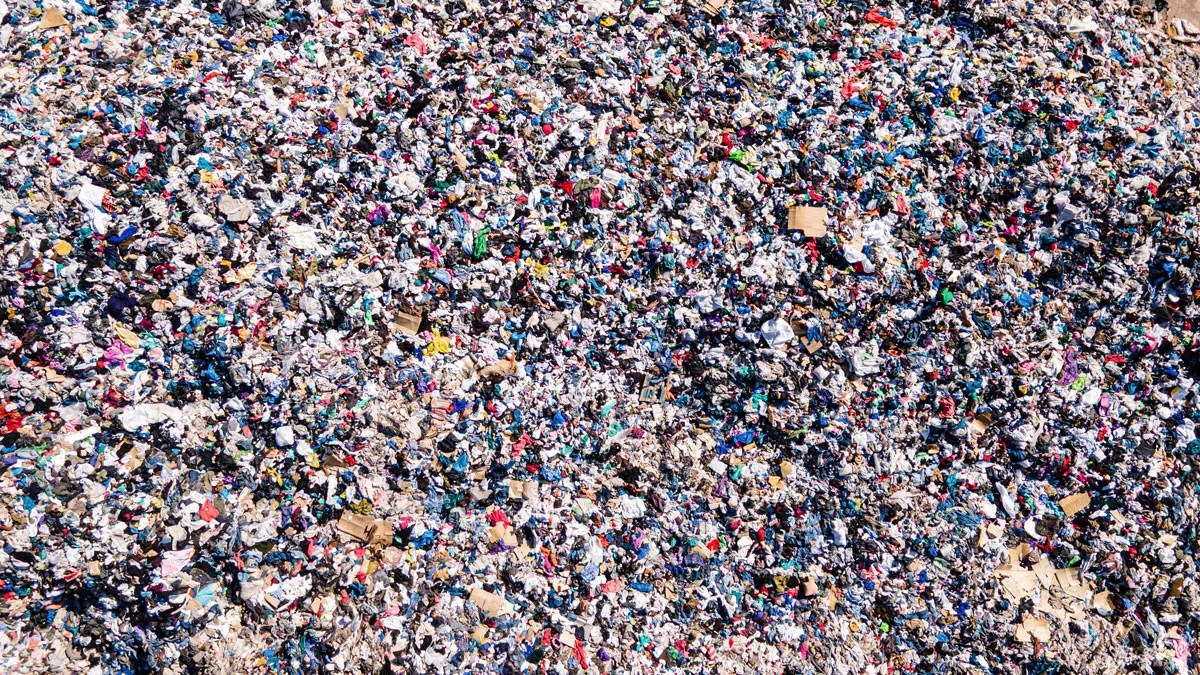
Australia is a major consumer of fast fashion, with a 2024 Australia Institute report estimating the average local consumer buys 56 new items of clothing per year.
The report said more than 1.4 billion units of new clothing entered the Australian market each year, and over 200,000 tonnes of clothing end up in landfills around Australia every year.
“A further 105,000 tonnes of used textiles are exported from Australia every year, most of which ends up as waste in developing nations in a practice that has been dubbed ‘waste colonisation’,” it said.
Those figures could be much bigger in 2026 as both Temu and Shein report major annual sales growth in Australia.
-with AAP