The Stats Guy: Ever wondered which historical kingdom your state compares to?

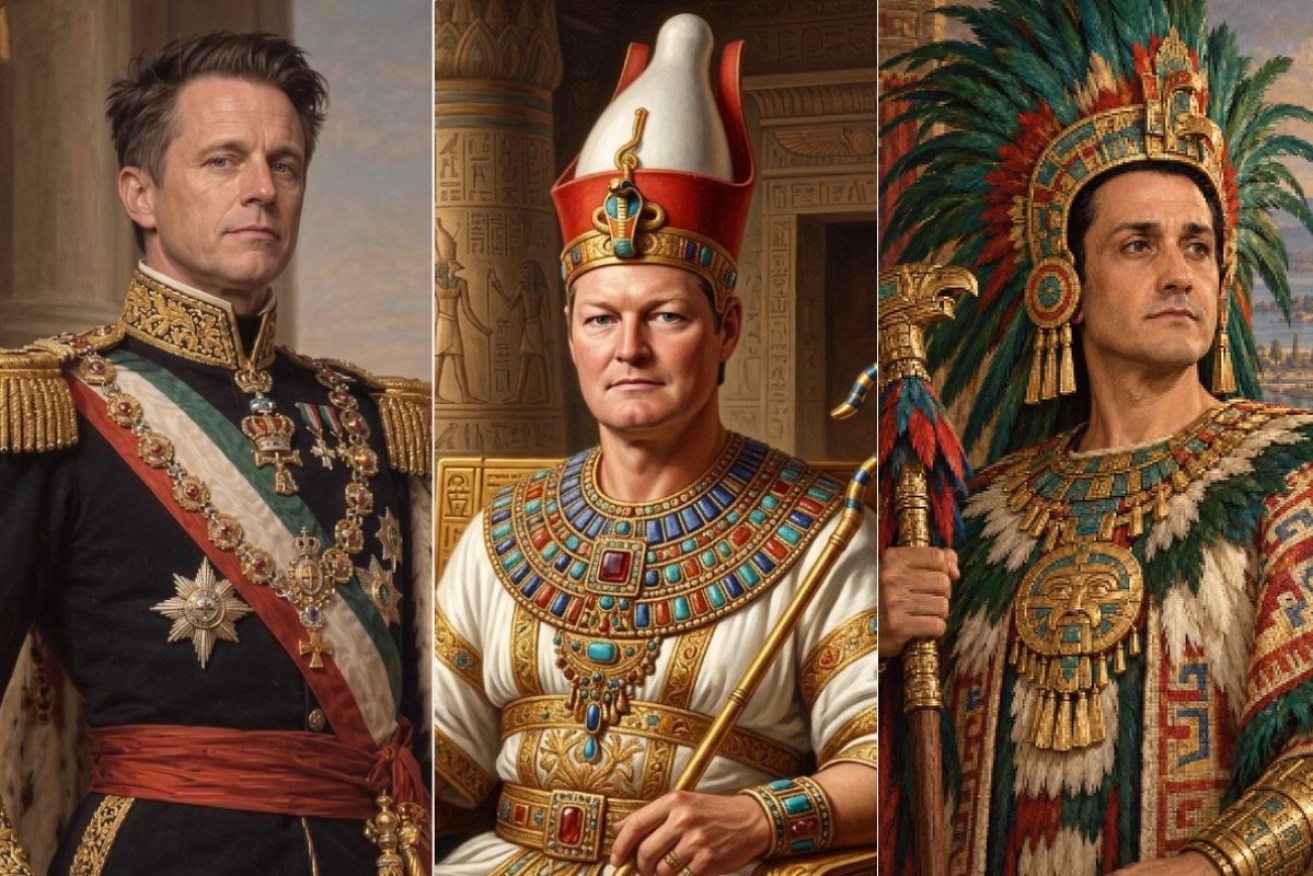
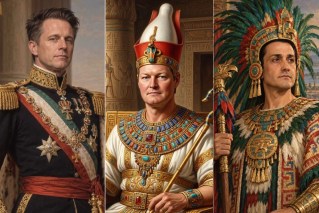
A thoroughly unscientific tour around the Australian 'Empires'. Photo: Simon Kuestenmacher/AI
Recently, I presented at the South Australian Business Index, an event hosted, coincidentally, by the publisher of this very publication.
During a conversation with Premier Peter Malinauskas, someone described South Australia as a small state. That comment didn’t sit well with my demographic mind.
South Australia is home to almost two million people – that’s the size of an entire historical empire. But which one?
What about the other Australian states and territories?
Whenever a silly thought like this overcomes me, I write a column about it and call it work. So here is a thoroughly unscientific tour around the Australian “empires”.
Australia. You mean the Ottoman Empire?
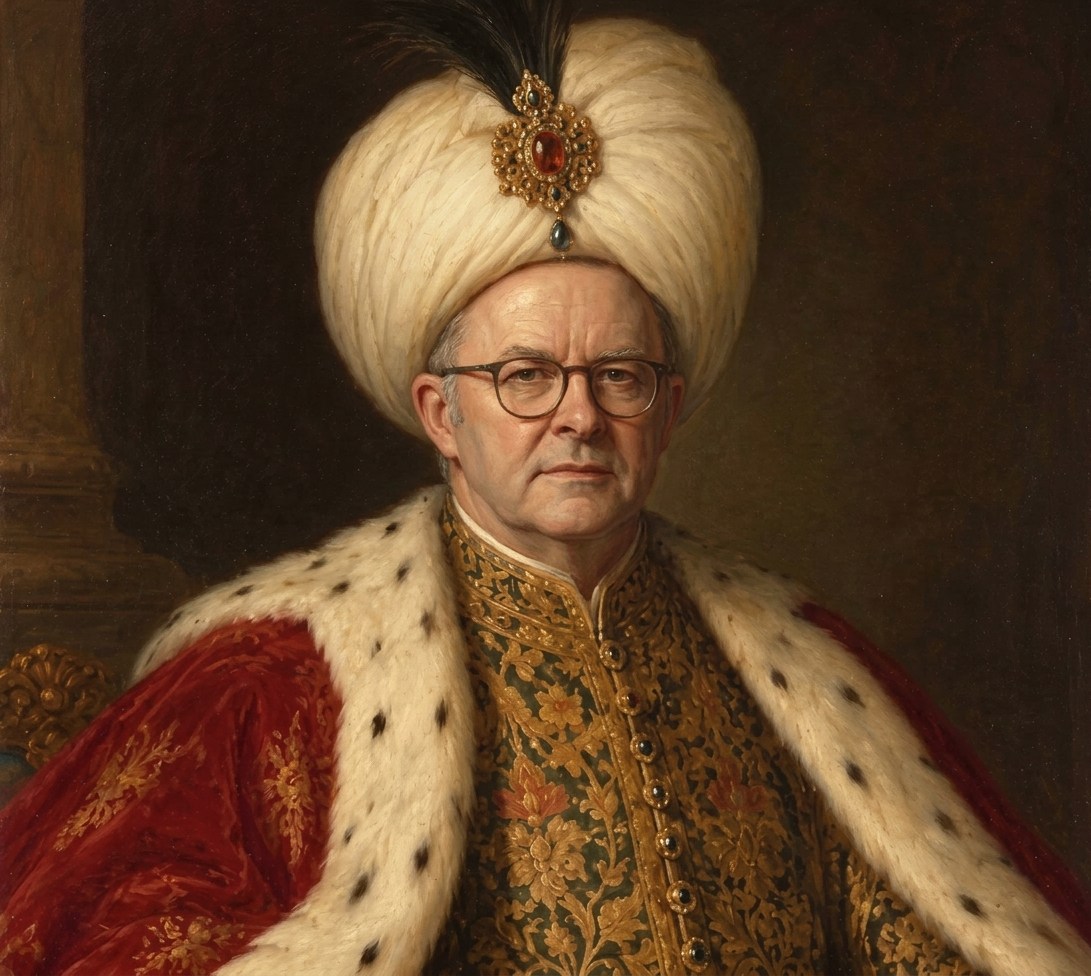
Anthony Albanese as Sultan Mustafa II. Photo: Simon Kuestenmacher/AI
Let’s start at the top. Australia is home to 28 million people, matching one historical estimate of the Ottoman Empire’s population around 1700.
Our present-day ruler is Prime Minister Anthony Albanese, 63, while his imperial counterpart was Sultan Mustafa II. The Sultan certainly wins the fashion contest.
In around 1700, the Ottoman Empire remained one of the world’s great powers, stretching across three continents and governing a vast, culturally diverse population.
“Sultan Albo” may rule over only one continent, but he also rules over a diverse population.
However, things weren’t going particularly well for the Ottomans in 1700.
Following a famous failed siege of Vienna in 1683, the Ottomans had lost significant European territories and faced growing military and financial pressures.
Mustafa worried about hostile armies, rebellious provinces, and the declining fortunes of his empire.
Albanese worries about housing shortages, inflation, an ageing population, and getting eight state and territory governments to agree on anything.
Both leaders must govern vast distances, competing regional interests and a diverse population.
The Sultan could issue orders from his palace in Constantinople. Ruling from a less impressive abode in Canberra, Albanese must negotiate with the states, establish working groups, and commission Productivity Commission reports.
NSW
Guzman y Gomez aren’t the only Mexican Empire
NSW has 8.7 million residents, remarkably close to the estimated 8.3 million people of the Second Mexican Empire in 1865.
This makes Premier Chris Minns, 47, the unlikely modern equivalent of Emperor Maximilian I, an Austrian archduke who was in his early 30s in 1864.
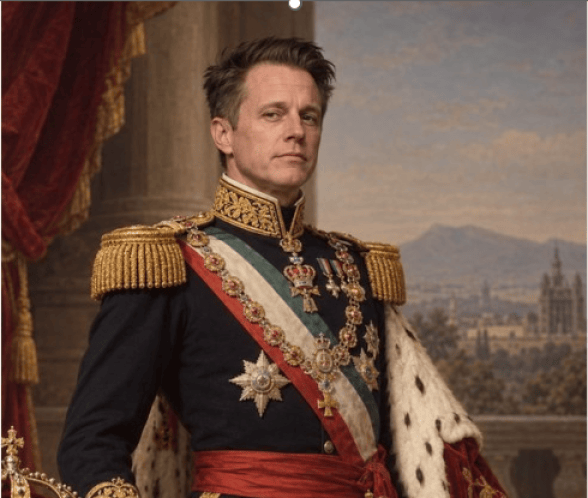
Chris Minns as Emperer Maximilian I. Photo: Simon Kuestenmacher/AI
Maximilian acquired his throne with French military backing, a rather unconventional pathway to government compared with winning an election in NSW.
Unfortunately for Maximilian, plenty of Mexicans preferred a republic, and his empire collapsed in 1867.
Minns faces fewer existential challenges, although anyone who has experienced Sydney’s rental market might disagree.
Both leaders governed territories dominated by a powerful capital city, with regional populations demanding their fair share of investment and attention.
Maximilian worried about hostile armies, political rebellions and keeping his empire together. Minns worries about housing shortages, overloaded hospitals, transport congestion and keeping Sydney moving.
Maximilian depended on French troops to secure his position; Minns depends on finding enough construction workers to build homes and infrastructure.
Both faced serious logistical challenges, but Minns should be grateful his political survival doesn’t depend on Napoleon III.
Victoria
The Ptolemaic Empire of Australia
Victoria has 7.15 million residents, which makes Premier Ben Carroll, 51, the modern equivalent of Ptolemy III Euergetes, who ruled Egypt’s Ptolemaic Empire when it had around 7 million inhabitants.
Both men presided over highly centralised states dominated by one enormously important city.
In Ptolemy’s case that city was Alexandria, the intellectual and commercial showpiece of the eastern Mediterranean.
In Carroll’s case it is Melbourne, where Victorians like to imagine they are also the intellectual and cultural showpiece of their region – is Victoria still the Education State?

Maybe Melbourne isn’t ancient Alexandria. Photo: Simon Kuestenmacher/AI
The Ptolemaic Empire was wealthy, urban, sophisticated and plugged into international trade, but it also depended on careful administration and a steady supply of grain, taxes and loyalty from surrounding territories.
Victoria, likewise, depends on Melbourne’s economic muscle while trying to keep regional communities on side.
Ptolemy worried about rival kingdoms, dynastic politics and projecting power across the Mediterranean.
Carroll worries about state debt, pot holes, housing affordability, transport bottlenecks, and whether Melbourne can keep growing without becoming even more expensive and congested.
Ptolemy built temples and fleets while Carroll removes level crossings.
Queensland
Our Aztecs
Queensland is home to 5.74 million people, similar to the Aztec Empire’s population in 1519.
Premier David Crisafulli, 47, is therefore our modern Moctezuma II, who was in his early 50s when the Spanish arrived in Central America.
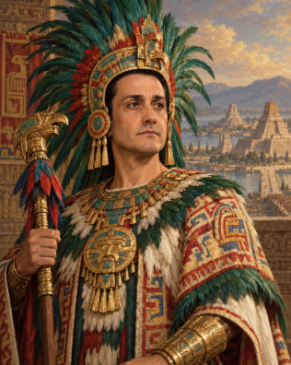
Crisafulli as the premier of the Aztecs? Photo: Simon Kuestenmacher/AI
Moctezuma governed a sprawling network of cities, markets and tribute-paying territories from Tenochtitlan, a spectacular capital built on a lake.
Brisbane also has a water problem, although ours usually arrives from above.
The Aztecs built causeways to connect their capital to the surrounding world. Queensland builds roads and railways to connect its south-east, then discovers another 100,000 people have moved in.
Moctezuma worried about rebellious provinces and extracting enough tribute to keep the imperial machine running. Crisafulli worries about regional Queensland, housing shortages, and convincing Canberra to contribute to the bill.
Both leaders understood the political importance of impressive sporting venues.
The Aztecs had ceremonial ballcourts, Crisafulli has a new stadium planned for the 2032 Olympics – with rather more complicated procurement arrangements.
Moctezuma’s reign ended badly after the Spanish arrived. Crisafulli should be safe from conquistadors, although negotiating Olympic budgets might occasionally make him wish for a simpler empire.
Western Australia
The Empire of Brazil
Western Australia has just over 3 million residents, making the Empire of Brazil of around 1822 a rough population match.
Premier Roger Cook, 61, becomes Emperor Pedro I, who was only 27 or 28 when his magnificent 1826 portrait was painted.
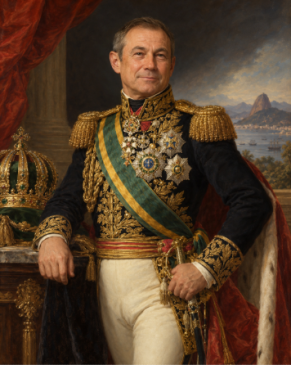
Cook as Brazil’s esteemed ruler. Photo: Simon Kuestenmacher/AI
Both men govern enormous territories with spectacular coastlines, vast natural resources and most residents concentrated in a few cities.
Pedro ruled from Rio de Janeiro, while Cook rules from Perth, a city so geographically isolated that flying to another Australian capital feels like international travel.
Pedro’s empire relied heavily on agricultural exports and enslaved labour. Cook’s economic fortunes depend on iron ore, gas and mining workers earning salaries that would make Brazilian emperors jealous.
Both leaders must ensure that wealth generated in distant regions benefits the population as a whole.
Pedro worried about rebellions, regional rivalries and keeping his newly independent empire together. Cook worries about housing shortages, workforce shortages, and getting a boatloads of GST revenue shipped over from Canberra.
Pedro successfully separated Brazil from Portugal. Western Australia’s separation from the rest of Australia might still be in the works.
Fortunately for Cook, independence isn’t necessary when your state already controls so much of the nation’s mineral wealth.
South Australia
The late Byzantine Empire
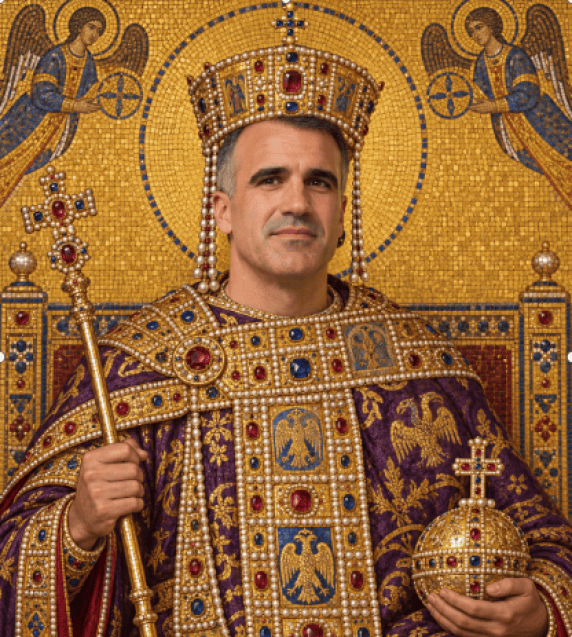
Malinauskas rules no empire, but SA is not a small state. Photo: Simon Kuestenmacher/AI
South Australia, the state that started this entire exercise, has 1.92 million people.
Our best numerical match is the Byzantine Empire around 1312, when one reconstruction puts its population at about 2 million.
This was not Byzantium at the height of its power. It was a diminished empire facing territorial losses, fiscal pressures and an increasingly difficult security environment.
Constantinople remained a place of remarkable culture and commercial importance, even as its government struggled to hold together its shrinking possessions.
South Australia is growing its population modestly, and its economic opportunities are plentiful – defence manufacturing, shipbuilding, renewable energy, mining, healthcare and tourism (that includes business tourism and is a great excuse to share my claim that on average South Australian business events have the best catering).
Its challenge is not to defend a medieval capital against rival armies but to secure the skills, investment and infrastructure that allow Adelaide and regional communities to prosper.
Malinauskas rules no empire, of course, yet 2 million people is a serious population.
No South Australian should feel obliged to apologise for living in a “small” state. Especially not within earshot of a demographer.
Tasmania
King Baldwin IV of Jerusalem
Tasmania’s 581,000 people finally allow us to enter the world of medieval kingdoms.
The Kingdom of Jerusalem in the late 12th century may have contained roughly 400,000-600,000 people, depending on the historian and the territory counted. That’s a wonderfully close match in scale, if not in politics or climate.
Premier Jeremy Rockliff is 56. His counterpart, King Baldwin IV, was only about 13 when crowned in 1174.
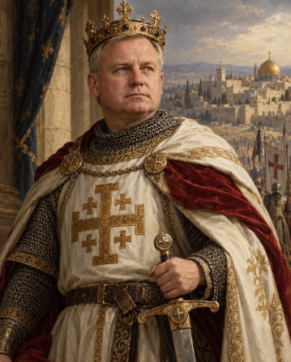
Tasmania’s challenges are happily not medievel. Photo: Simon Kuestenmacher/AI
The image showing his coronation is a later medieval manuscript illustration, not a portrait painted while he sat for the artist.
Baldwin died in his 20s after a reign marked by conflict and unstable succession. In terms of life expectancy, Premier Rockliff already surpassed Baldwin – we would of course expect nothing else from our oldest state by population (median age 42.5 – four years above the national figure).
Tasmania’s challenges are pleasingly less mediaeval. It must grow a strong workforce, maintain transport and health services across a dispersed island population, and respond to the rising demand for aged care.
Its older age profile, limited labour market scale and expensive connections to the mainland create distinctive demographic pressures.
Both the kingdom and Tasmania were strategically shaped by geography, but there the comparison should stop.
Tasmania’s forests, renewable energy, agriculture and visitor economy offer opportunities that its medieval numerical twin could scarcely imagine.
A king might have spent his days organising fortifications; Rockliff’s more pressing concern is ensuring the island has enough nurses, builders and teachers.
ACT
Emperor Jacques I (Dessalines)
The ACT is approaching half a million residents, making it a reasonable match for Haiti’s estimated 380,000 people in 1805.
Chief Minister Andrew Barr, 53, becomes Emperor Jacques I, better known as Jean-Jacques Dessalines.
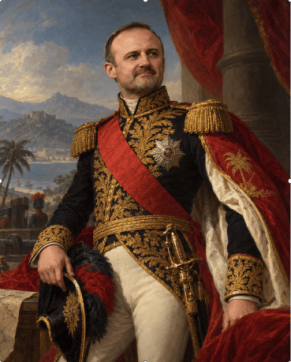
Barr and Dessalines had to manage powerful people. Photo: Simon Kuestenmacher/AI
The similarities largely end with population. Dessalines governed a tropical Caribbean nation emerging from a brutal revolution against slavery and French colonial rule.
Barr governs a chilly inland territory where the greatest threat from France is probably a diplomatic complaint about Australian wine.
Dessalines faced hostile foreign powers, a devastated economy and the monumental task of building a new state. Barr faces housing shortages, light-rail arguments and the monumental task of persuading federal public servants to return to the office.
Haiti had hurricanes, sugar plantations and tropical beaches. Canberra has winter frosts, roundabouts and an astonishing concentration of people who describe themselves as “working across government”.
Both leaders had to manage powerful interests. Dessalines needed to keep his generals loyal. Barr must keep federal politicians, public servants and residents of leafy suburbs reasonably happy.
Northern Territory
The Empire of Trebizond
Lia Finocchiaro (age 42) as Emperor John IV Komnenos, Empire of Trebizond, around 1450, population around 200,000-250,000
The Northern Territory has 269,000 residents, close to the 200,000 to 250,000 souls that historian Anthony Bryer estimated for the late mediaeval Empire of Trebizond.
The name deserves to be used more often. It was a small successor state on the Black Sea coast, surviving for centuries between powerful neighbours.
Trebizond depended on commerce, rural communities, diplomacy and its ability to navigate difficult geography.
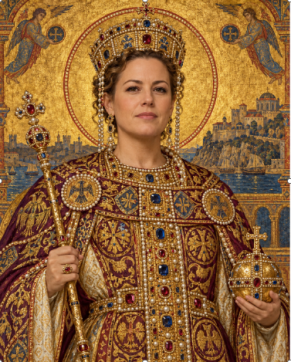
The NT may mirror the medieval kingdom of Trebizond. Photo: Simon Kuestenmacher/AI
The Northern Territory also demonstrates that low population does not mean low strategic significance. Its ports, defence facilities, energy resources, tourism industry and links to Asia carry national importance.
Yet the NT also faces stubborn problems of distance, service delivery, workforce retention and uneven population growth. Its Aboriginal cultures have histories extending tens of thousands of years, far beyond Trebizond’s relatively brief imperial existence.
Finocchiaro’s challenge is connecting people with jobs, housing and services over an immense area. John IV worried about neighbouring powers.
For the NT, finding enough health professionals across remote settlements can be a logistical campaign of its own.
Conclusion
I doubt Premier Malinauskas expected our conversation at the SA Business Index to end with his face superimposed onto a Byzantine emperor.
But that’s the danger of making small talk with a demographer. Mention two million people, and before long you’ve got nine empires, nine rulers and a column full of historical comparisons nobody asked for.
So, the next time someone dismisses South Australia as a small state, I suggest they show a little more respect. Entire empires have been built on fewer people. And I have apparently managed to build a week’s work out of a single offhand remark.
Simon Kuestenmacher is a co-founder of The Demographics Group. His columns, media commentary and public speaking focus on current socio-demographic trends and how these impact Australia. His podcast, Demographics Decoded, explores the world through the demographic lens. Follow Simon on Twitter (X), Facebook, or LinkedIn.