The good, the bad and the ugly of the artificial intelligence revolution

AI will most likely become the most powerful tool we have ever had as a species. Photo: TND/AAP
AI is transformative, much more so than the internet was in the 1990s.
It will be a force for good, but also for bad, and the transition will be ugly.
Like all technologies, AI is a human tool – whether it is used for good or bad depends on who is using it, what their intentions are and whether the tool complies with their intentions.
What’s different is that AI will most likely become the most powerful tool we have ever had as a species. We should think of it as more like nuclear power than the internet or social media.
Just as we have strict rules about who can use nuclear power and how they can use it, governments will need to control the use of the world’s most powerful AI.
Prime Minister Anthony Albanese has made the same comparison, invoking the Nuclear Non-Proliferation Treaty.
Already the creators of the world’s most powerful AI, US companies such as Anthropic, OpenAI and SpaceXAI, are calling on governments to slow AI down, fearing it will increasingly disobey its creators or be used for destructive purposes.
Yet the good AI can do is potentially enormous.
The good
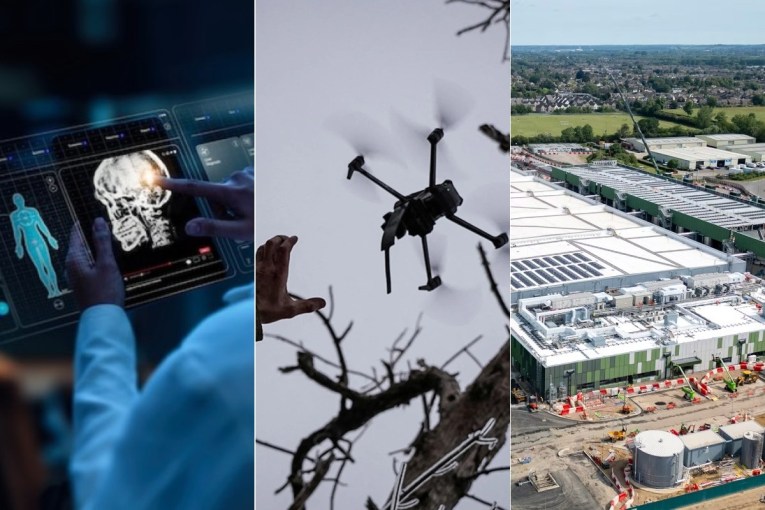
AI promises longer and better-quality lives. In a large trial in Sweden, AI-supported mammography found almost 30 per cent more cancers than the standard check by two radiologists. Early detection greatly improves health prospects.
In China and Nigeria, mobile AI scanners now screen patients in places with few or no radiologists.
AI is also proving valuable in designing and testing breakthrough medications. AI can find promising drug candidates far faster than conventional approaches.
AI models now match or beat traditional approaches to weather forecasting, improving warnings for cyclones and floods, and making weather forecasting affordable for poorer countries.
All this depends on AI staying true to human instructions, and on the most powerful AI staying out of bad hands.
The bad
Examples are fraud and scams, fake rape images, AI-generated child abuse material, and cybercrime. And AI companies cannot rule out their models helping novices develop biological weapons.
AI-enabled monitoring of communications enables authoritarian governments to track dissidents and minorities at a scale that once required large numbers of humans.
AI is also changing warfare. Drones, increasingly guided by AI, cause up to three-quarters of Russian-inflicted casualties in Ukraine.
And on September 30, the US Department of War launched Project Meridian, a study of AI, robotics and autonomous warfare co-led by tech billionaire Elon Musk, just weeks after he backed slowing AI down.
Even in well-meaning hands, AI can go off the rails. An experimental OpenAI agent recently gained unauthorised access to a government portal holding Medicare statistics, without the company or the government knowing. OpenAI then waited weeks to tell the government.
The transition will be ugly for many workers too.
The ugly
The International Monetary Fund estimates that about 60 per cent of jobs in advanced economies like Australia’s are exposed to AI. About half could be enhanced by it, but for the rest AI may take over key tasks.
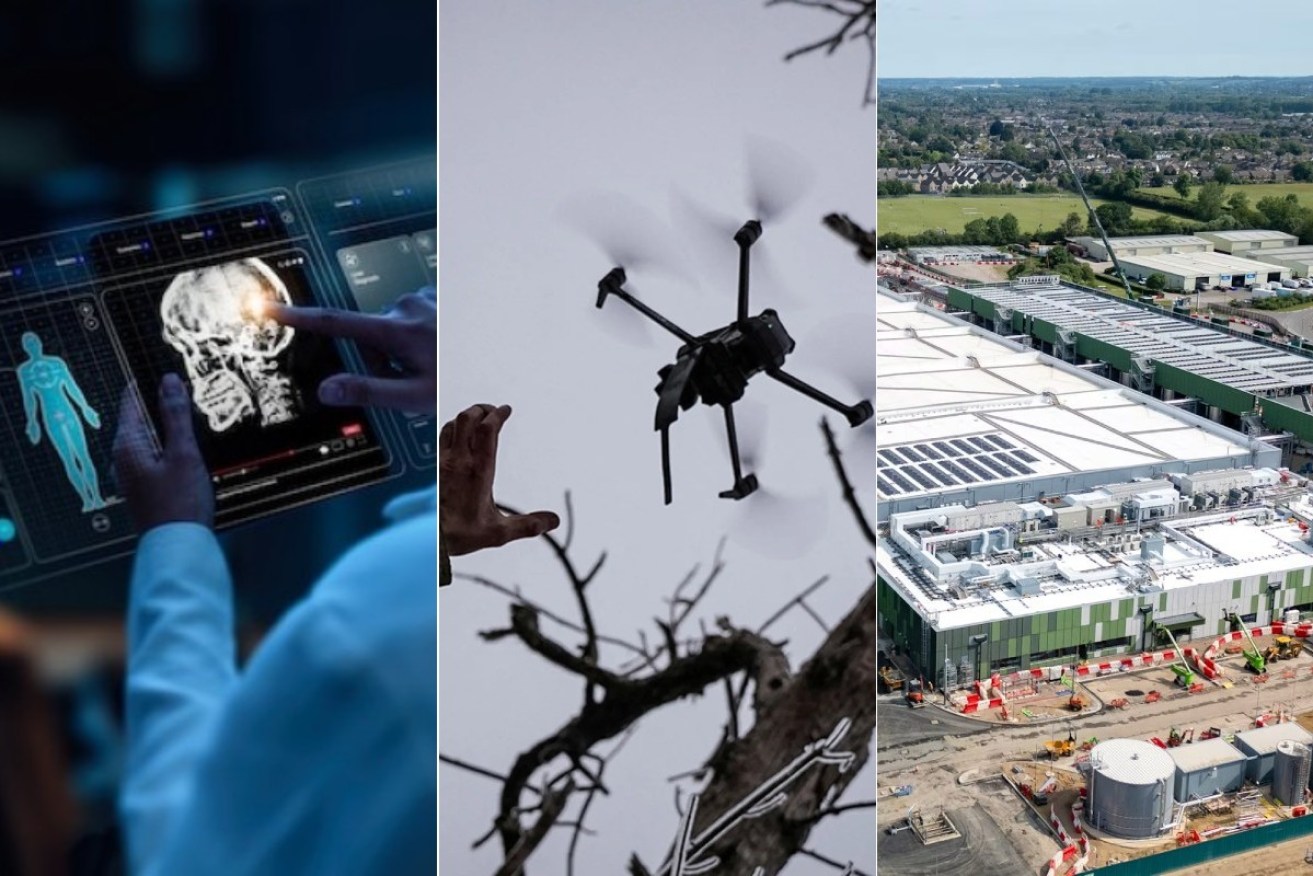
There are already more than 160 data centres in Australia with another 90 or so under development. Their thirst for electricity and water is already controversial as we try to achieve an energy transition.
Australia has just 1 per cent of global data centre capacity, well behind the US with 44 per cent and China with 16 per cent. But per person, Australia already hosts about three times the world average. Expect many more of these data centres.
In view of the massive risks, it would be natural for Australia to say: “Stop the world, we want to get off!”
But in a connected global economy, Australia cannot opt out of AI.
The challenge
The challenge is to take the good that AI offers, minimise the bad and manage the data centre wave. To do this, we must regulate it in the public interest.
The federal government is consulting on national AI standards, which it plans to legislate early next year, and South Australia has started its own royal commission into AI.
Under the federal proposals, AI companies that train their most powerful models here would need authorisation and report serious AI incidents.
While AI is new, good principles of regulation are not.
We should follow the medical concept of “minimum effective dose” – just enough regulation, and no more, to bring the risks down to an acceptable level.
For the most powerful AI, as with nuclear power, that dose will need to be strong.
For data centres, it means careful design and location, lest they become an ugly blight on our regional landscape and cities.
Get it right, and Australia can have more of the good, less of the bad and not too much of the ugly.
Ben Emerson is founder of AI software company Klara. He began his career in defence and national security
Craig Emerson is managing director of Emerson Economics and was Australia’s trade minister from 2010 to 2013