There is a sun for everyone: How to put power into people’s hands

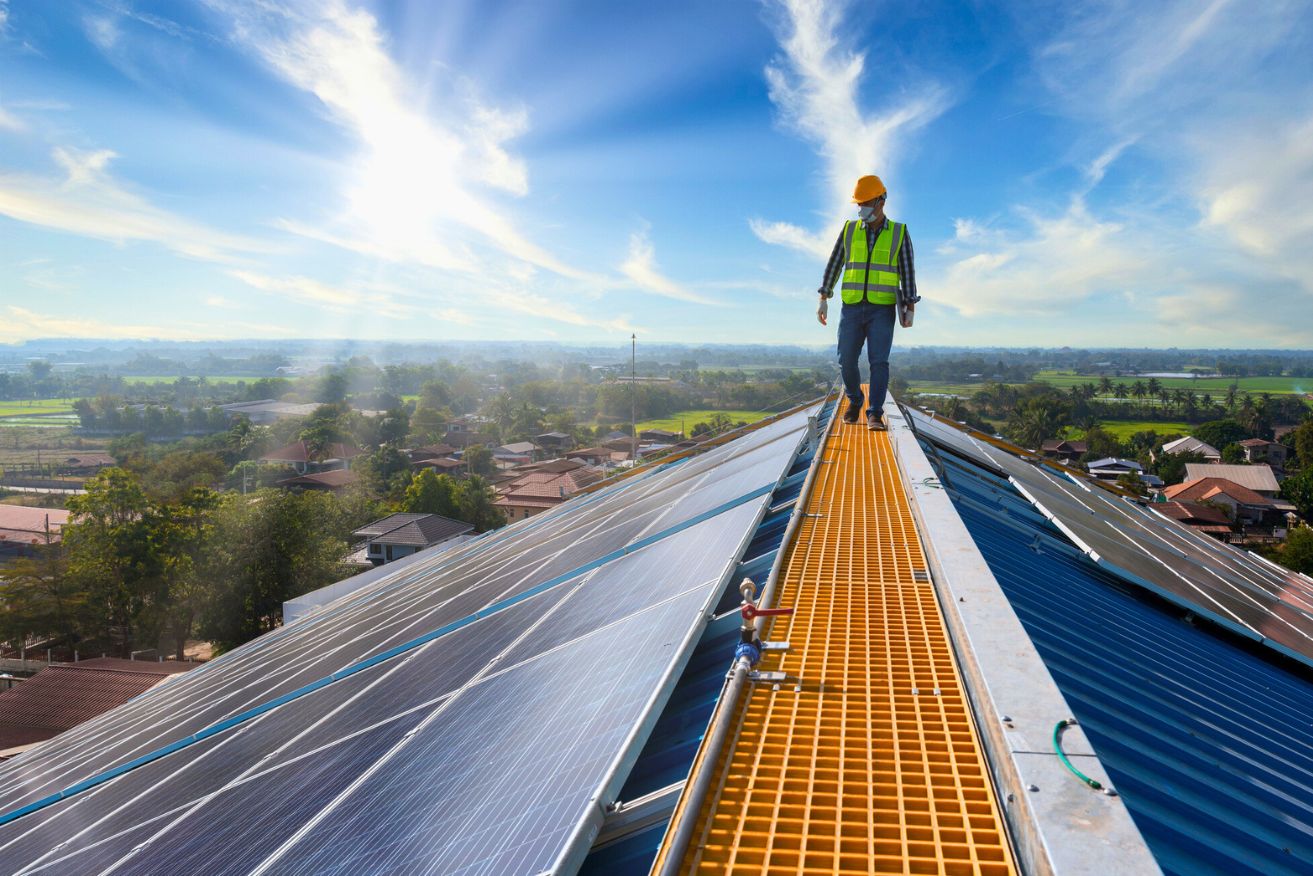
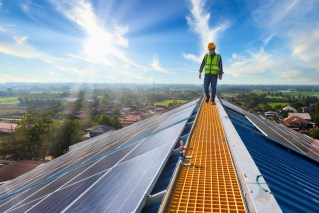
About 150 million homes and buildings globally generate their own solar power. Photo: Getty
At the COP30 climate summit in Brazil last year, I learned a Brazilian saying that has stayed with me: “There is a sun for everyone.”
This week, Australia took an important step towards turning that simple idea into global policy.
In Fiji on Thursday, Australian Minister for Climate Change and Energy Chris Bowen backed the Global Rooftop Solar Declaration, supporting an ambition for the world to have at least 300 million rooftop solar systems by 2030.
Right now, about 150 million homes and buildings globally generate their own solar power.
The push comes at a time when there is a bigger global spotlight on Australia, as Bowen holds a key role as President of Negotiations for the COP31 climate summit to be held in Turkey next month.
Rooftop solar is a climate solution, but it is also improves energy security. The sun doesn’t send a fuel bill. No country owns it. No cartel controls it.
No tanker needs to carry it through a contested shipping lane. And increasingly, ordinary people can capture its energy on their own roofs.
The 300 Million Solar Homes initiative would create hundreds of millions more solar citizens – people who aren’t simply buying electricity from an energy system, but generating it, storing it and participating in shaping our energy future.
It is people power in the most literal sense.
For more than a century, access to energy has shaped geopolitics. Nations have competed for oil and gas. Economies have been exposed to global fuel shocks. Families have seen their energy bills rise because of events happening thousands of kilometres away.
When a family, school, health clinic or small business can generate electricity where they use it, particularly when solar is backed by batteries, they gain greater control over something fundamental to modern life.
Households have greater protection from price shocks and global volatility. Communities become more resilient. Countries can reduce their exposure to imported fossil fuels.
Australia shows we can transform our energy systems to be more distributed and democratic. Almost four million Australian homes now have rooftop solar, and increasingly those homes are adding batteries.
Electric vehicles are batteries on wheels. Homes and businesses can shift when they use electricity and increasingly feed the electricity they generate and store back into the wider system.
Our community-based organisation, Solar Citizens, campaigned for three years for a national household battery rebate, as Australians were telling us the upfront cost was holding them back, resulting in the government’s extraordinarily popular Cheaper Home Batteries program.
Australians weren’t waiting for governments to pay for the whole energy transition. They needed governments to create the conditions that allowed them to invest in it themselves.
But Australia’s success also exposes what happens when those opportunities aren’t shared fairly. Around one-third of Australians rent, and renters are far less able to access rooftop solar, batteries and energy upgrades.
I have seen another possibility firsthand overseas. In Pakistan, we met families who rent and are able to use rooftop solar and batteries to support household finances and provide electricity for large extended families.
We saw mothers in rental homes using solar and batteries to help stretch household budgets and homes where as many as 17 people were benefiting from cheap electricity generated on the roof.
Yet in one of the sunniest countries on Earth, and a world leader in rooftop solar, millions of Australian renters are still locked out because they don’t own the roof over their heads.
That means we must give renters meaningful rights to request solar, batteries and energy upgrades. We must also open pathways for technologies such as safe plug-in solar and portable batteries, improve minimum energy standards, and design incentives that work for tenants and landlords.
Australia has a particular opportunity and responsibility as one of the world’s great rooftop solar success stories but also one of its biggest coal and gas exporters. There is a dirty cloud at our back.
Australia can use our experience, expertise and influence to help countries that have bought our coal build energy systems that allow them to need less of it.
The policy solutions will differ from Pakistan to Indonesia to Brazil, but we can share what we have learned about rooftop solar and batteries, grids, flexible electricity use, electrification and consumer protections, including the need to give people a fair opportunity to participate.
Bowen’s backing of the Global Rooftop Solar Declaration is so important, because it helps put household and community solar onto the global climate agenda.
We are calling on governments around the world to sign the Global Rooftop Solar Declaration and back the ambition of at least 300 million rooftop solar systems by 2030, while ensuring renters, low-income households and communities that have historically missed out are part of this energy revolution.
The energy system of the industrial age concentrated power. We now have the opportunity to distribute it. There is a sun for everyone.
Heidi Lee Douglas attended the pre-COP talks in Fiji and is chief executive officer of independent community organisation Solar Citizens.


Listen, deliver, rebuild trust to quiet the populist right