Appeasement of authoritarian voices dooms us to repeating a disastrous history

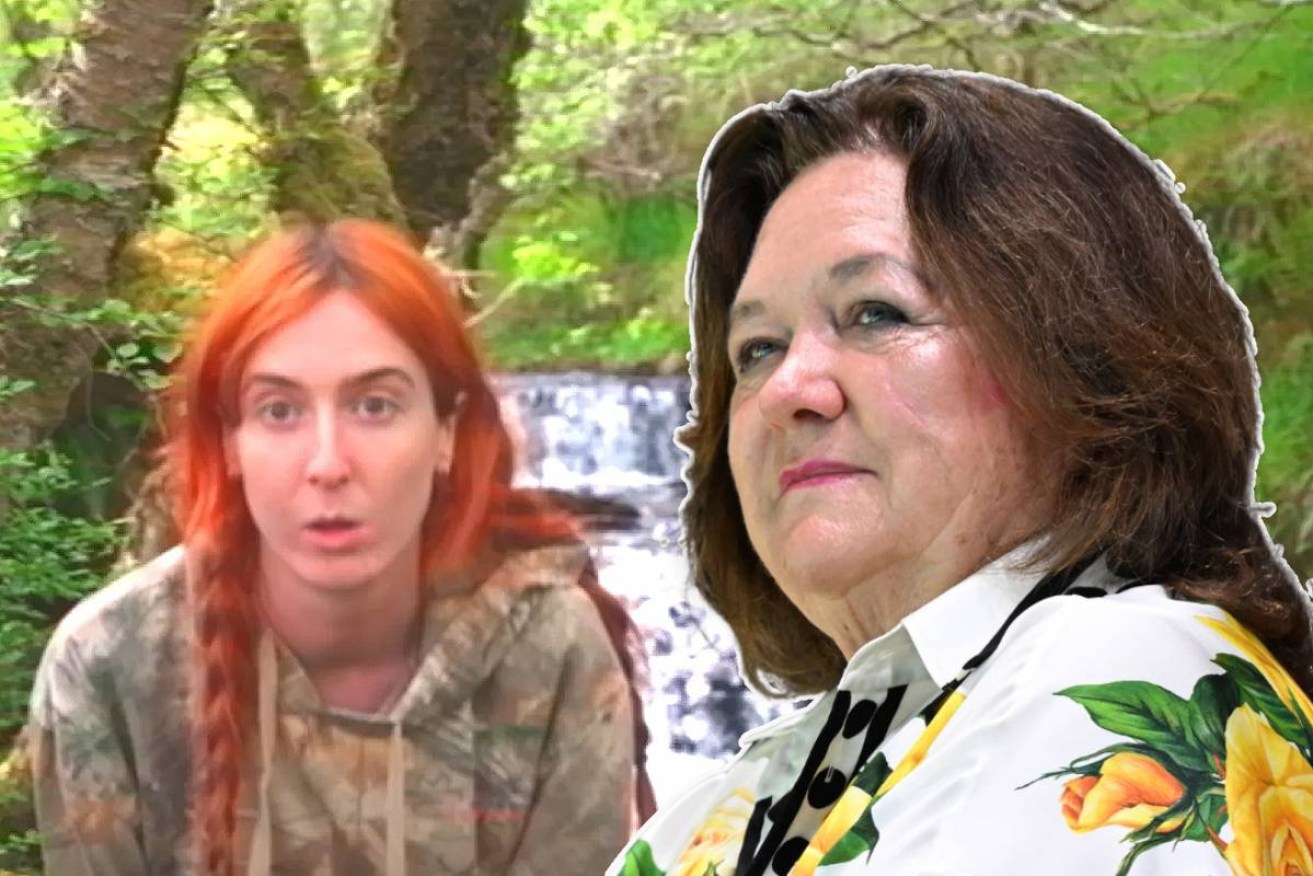
The entire political spectrum in Australia jumped up to defend Rinehart. Photo: ABC/AAP
It seems no matter how much we know about history, we are doomed to repeat it.
The false equivalence between people who do not care about equal human dignity – and in fact seek dominion over others depending on their identity or beliefs – and those who push back against that as being ‘equally radical’ is civility brain rot.
The ‘both sides are wrong’ so let’s just call this complicated and take the neutral road is destroying us.
That we consider this to be sensible debate proves American author and journalist Ta-Nehisi Coates’ point that we value intellect over wisdom and take simple matters and make them ‘complicated’ just to prove how smart we are.
We know that the recent Race Around the World ‘controversy’ was manufactured outrage from someone used to getting their own way and a media machine that has destroying the public broadcaster as one of its only guiding principles.
We know that the comment was satirical. Clunky, but satire.
Gina Rinehart is not without power. She is not part of a historically maligned and downtrodden group, oppressed for her identity.
She is one of the most powerful people in the world – the world.
She is a member of a billionaire class many blame for tearing the fabric of our society apart, destroying our environment and setting the dictates of what is and isn’t acceptable.
Rinehart has been so successful, through her various companies and influences, of managing any discontent including what images of her are used to accompany media stories, the public broadcaster is now running ‘supplied’ photos of the billionaire surrounded by cherry blossoms under a headline that reads ‘Gina Rinehart puts ABC on notice over Race Around the World episode action’.
Such is the civility brain rot that the entire political spectrum in Australia jumped up to defend a billionaire who is openly supporting a far right party and floated giving away Australian territory to both Israel and Elon Musk.
And in supporting Rinehart they are also supporting News Corp, which led the campaign. Over satire.
Appeasement – doesn’t – work. It has never worked. It never will work.
Appeasement is compliance with a fancier name. It does the work of allowing the biggest bully in the room to get their way and make everyone else fall over themselves ensuring they are never uncomfortable.
Appeasement of these authoritarian voices is the reason we only ever discuss politics by the terms of who deserves what.
Gas companies obviously deserve everything, ‘they help the economy!’, but those on welfare should be grateful for what they’re given.
We’ll interrogate how much money is being spent on subsidising public transport, demanding to know ‘HOW WILL YOU PAY FOR THIS’, while reporting hundreds of billions in defence spending as not being enough.
Social housing is obviously ridiculous, unless it’s for the military. And violence against women is complicated, with no clear answers apparently.
But it’s a national emergency if a comic makes a joke about one of the most powerful people in the world, who also happens to be a woman.
Where exactly do our leaders think this will lead?
The past is always a good indicator of future behaviour, so let’s go back to the 1930s shall we, where in the UK, newspapers were considered the major information source, followed by radio, when it came to foreign affairs, and shaped public opinion on the world.
Radio was dominated by the BBC and almost 9 million people owned a radio licence.
The head of the BBC at the time, Sir John Reith “accepted government interference in foreign affairs reports and programming on current affairs”, according to historian Frank McDonough, who also reports “the views of opponents of government policy were hardly aired at all.
“A major reason for the BBC being keen to avoid controversy was its dependence on the licence fee, raised annually by the government,” he wrote.
The Times newspaper was known as one of the most influential media outlets in the UK and its editor thought of as one of the “four most powerful figures in public life, along with the king, the prime minister and the archbishop of Canterbury”.
It will not surprise you, that the Times and the BBC were both, at least according to the historical review by McDonough, censoring criticism of the appeasement policy, and Hitler himself, who was sensitive to critical reporting even when it came from other nations.
Editorial decisions were centred around building better ‘Anglo-German relations’ and correspondents found it increasingly difficult to have their reports on the growing anti-semitism, rearmament plans or the realities of the 1930s concentration camps run in Britain.
Radio coverage of 1930s Germany from the BBC was found to have been ‘severely restricted,’ “though a combination of discreet pressure, self-censorship and guidance from Downing Street and the foreign office”.
When a Labour opposition MP criticised Hitler and Mussolini on a radio talk show in 1939 and refused to delete the comments, the broadcast was canceled.
The BBC allowed the government to vet any scripts of radio programs which mentioned the Czech crisis. The lack of discussion about what was happening in Czechoslovakia on the BBC was so obvious it was a story for other media outlets.
At the same time, polling revealed the British public had little knowledge of the Czech crisis –one of the precursors to war – which they put down to government secrecy and contradictory media coverage.
As we know, Hitler’s appetite for power was unable to be covered up any longer and World War II began shortly after.
In the months before, the British people felt betrayed by what they had not been told through secrecy and government censorship.
They were making decisions without all the information, lulled into complacency by powerful forces who thought they knew better.
It might seem an extreme example, but it’s also the most obvious.
If the media and political classes don’t report what is happening in full context, or allow themselves to be used by vested interests, the public they are supposed to serve is kept in the dark.
Eventually it all becomes too big to ignore and people no longer know who, or what to trust. Capitulation to these forces costs us all.
Amy Remeikis is a contributing editor for The New Daily and chief political analyst for The Australia Institute
Want to see more stories from The New Daily in your Google search results?
- Click here to set The New Daily as a preferred source.
- Tick the box next to "The New Daily". That's it.