Trump forced to face his political mortality – it’s time Australia did too

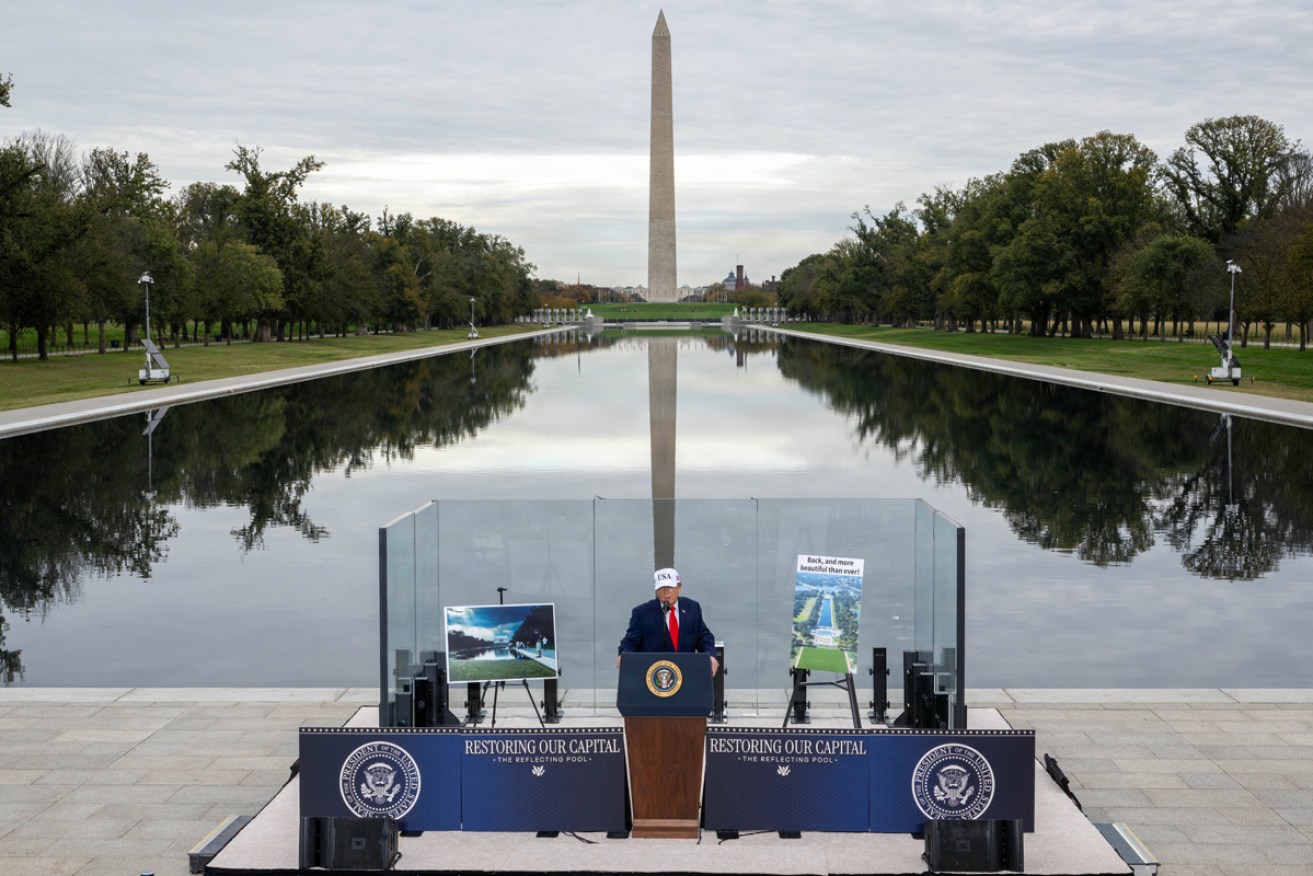
Donald Trump chose the disastrous reflecting pool renovation as the site of his last speech before the elections. Photo: AAP
It’s very easy to feel powerless as you watch democracy backslide.
Part of that is by design; the hypernormalisation of the global polycrisis – genocide, climate catastrophe, economic distress, you name it – is all about making people feel defeated, and accepting the broken as just the way it is.
The more broken a voting public feels, the less it feels able to influence it in any way, and the more normal the brokenness becomes.
Then there are days like yesterday, where among the doom and gloom are outbreaks of electoral bravery.
For one, Donald Trump is facing his political mortality. He did it facing perhaps one of the greatest visual metaphors for his presidency – the Lincoln Memorial Reflecting Pool, a $14-million disaster of a project, besieged by algae and Trump tantrums of imaginary vandalism.
“This has been, this is a massive piece of … pool,” Trump said on the eve of the midterms, in his last speech to voters he’d told to imagine him on the ballot paper, after complaining about the pool’s “aroma”.
Trump has been telling voters to just eat cake for years, now he is telling them to swim in it. But as a metonymy, the Reflecting Pool saga, like his White House ballroom project, is perfect. Vanity projects he can see himself reflected in, where others once dreamed and inspired. Narcissus, so entranced by his reflection, he wasted away, still gazing at his reflection in the River Styx as Charon ferried him to the underworld.
In Trump’s case, it’s personal irrelevancy. It’s not the end of MAGA, or the Trump legacy, or the end of the damage of the Trump presidency. But, no matter the next two years now, Trump’s acolytes will begin to plan a world beyond him.
Will Australia?
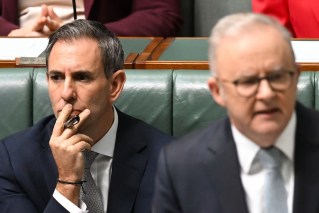
Anthony Albanese and Labor’s line in the Trump presidency has been that the Australian relationship is stronger than any leader.
But Albanese is quickly becoming one of Trump’s only remaining allies. The Albanese government could not bring itself to criticise the horrific bread and circuses spectacle of a livestreamed firing squad execution, nor join with other traditional allies in sanctioning Israeli terrorist settlers in the West Bank.
Trump has embraced the tech titans who push AI and, while Australia has pushed back in some areas, we are accepting the lie that if we don’t rush in where angels fear to tread, we’ll miss out when it comes to data centres. Even as business investment in the data centres Australians say they don’t want contributes to inflation and increased unemployment.
As the results from the US midterms began to flow in and America began the process of rejecting Trump, at least for now, in both the House and the Senate, the report into the People’s Inquiry into AUKUS was being handed down at the National Press Club.
Here too is another decision being imposed upon Australians, without even debate in the Labor caucus room as to whether or not the deal Scott Morrison and his British mirror Boris Johnson cooked up over a dinner and then sold to the United States as a way of building their shipyards with minimal commitment, was a good one for Australia.
There, as part of the commission, was retired admiral Chris Barrie, a former head of the Australian Defence Force, speaking calmly and rationally not just about how AUKUS needs to be scrapped, but how climate change, not China, is Australia’s biggest national security threat.
“The largest national security threat, and most important national security threat to this country, comes from climate change consequences. China and submarines is a man-made issue. Climate change is coming down the turnpike much faster than anyone expects. That’s the serious priority,” Barrie said.
True words, but not those that Australians can expect to hear from an elected official anytime soon.
Whether he accepts it or not, Trump has discovered what happens when you spend your time and energy lost in your own reflection, surrounding yourself in human mirrors, who reflect back what you ask.
The Albanese government has now seen the leaders of its AUKUS partners stumble through ignoring the people who put them there, confident in their own authority even as their choices erode public trust. Does three really need to be the charm that breaks this particular spell?
Amy Remeikis is a contributing editor for The New Daily and chief political analyst for The Australia Institute


Rate rises and a recession we don't have to have