What Australia can learn from the UK in managing heatwaves

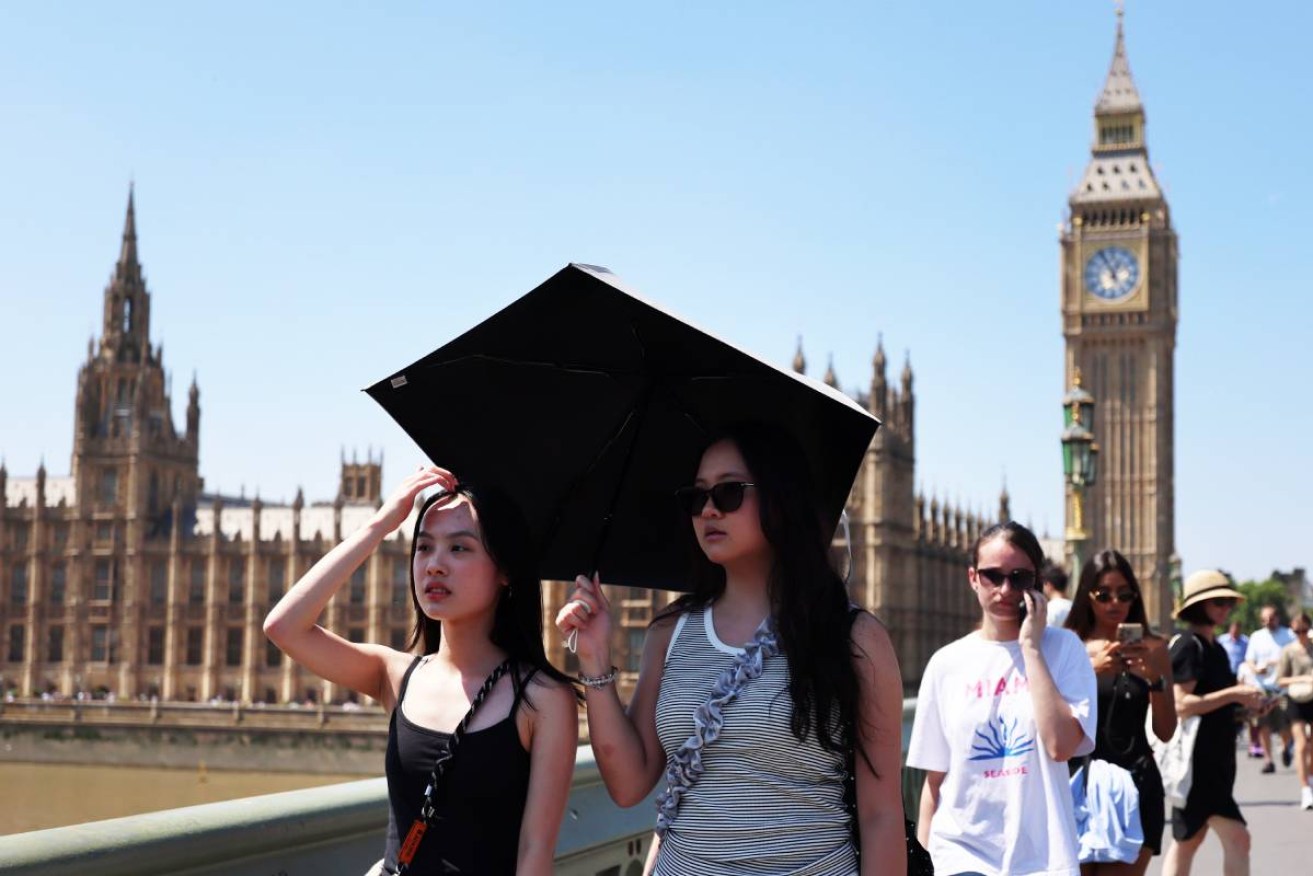
The UK is now sweltering through the third heatwave of the year, with an Amber alert in place. Photo: AAP
In late June, during London Climate Action week, I experienced the extreme heatwave that closed schools, shut down public transport and led to Britain’s Met Office issuing a Red heat alert warning three days in a row for the first time.
People expressed shock that Britain had faced two heatwaves so early in the year, but it was clear to me that there was more to come.
The UK is sweltering through the third heatwave of the year, with an Amber alert in place.
As an Australian heat expert, I’ve watched people underestimate heat again and again.
While many people might think that our hot country might be far ahead on heat resilience, I’m surprised to see that there are things that the Brits are doing better.
The UK is far better at sharing public heatwave warnings compared to Australia. I saw Amber and Red warnings, and how heat advice and reminders to drink water were shared at tube stations and public events.
The Met Office and UK Health Security Agency moved to impact-based warnings in 2023, and the colour system clearly conveys the level of risk.
In Australia, our heat warnings aren’t fit for purpose. The three categories are “low intensity”, “severe” and “extreme” based on the definition of three or more days of unusually high minimum and maximum temperatures, and the Excess Heat Factor.
But, the levels of danger and how people should respond are hard to understand, as “severe” and “extreme” don’t indicate a clear difference in danger for most people.
On top of that, shorter dangerous periods of extreme heat, like when Melbourne reached 43 degrees in January this year, don’t meet the three-day minimum. So the heat-risk warnings were delayed and confusing.
Our bushfire danger warnings are clear and consistent, but we could learn from the UK on how to improve our heatwave warnings.
In June, the Mayor of London Sadiq Khan also launched Heat Ready London, the city’s first heat plan.
They’ve identified that there are more than a million homes in London that may be at risk of overheating, as well as dozens of hospitals and over 1300 schools that are in high-risk areas.
The plan includes 37 priority actions from better access to drinking water in public spaces, to making sure public transport can run in extreme heat, to housing upgrades for the people most at risk.
This year Britain also announced a National Heat Risk Commission to investigate how it can tackle the impact of rising temperatures.
While Australia has some world-class heat resilience programs, like the Greater Sydney Heat Smart City Plan, we could do with more of the political leadership we’re seeing from Britain to give this work the urgency and ambition that it needs.
It was also interesting to note that, in my regular conversations with Australians about what they consider “hot”, they’ll often say 35-37 degrees if they live on the mainland.
While in Britain, people told me that 28-30 degrees can feel extremely hot and the built environment in many cities is making it worse.
As in Australian cities, the urban heat island effect means that some areas can be 10-15 degrees hotter than others. Too much concrete, dark surfaces and having no shade or trees all mean that the temperatures you are experiencing might be much higher than the weather reports.
When Melbourne reached over 40 degrees in January, I took a terrifying temperature reading of 68 degrees on the footpath at a bus stop.
However, our houses are better designed to handle heat in Australia.
Far fewer British homes have air-conditioning or ceiling fans, and their houses are designed to keep the heat in.
Even with temperatures dropping overnight, people have been sweating it out during sleepless nights in the UK. Some of the worst physical and mental health impacts of heat are driven by high night-time temperatures, as our bodies don’t have time to recover.
We know that people can feel the danger of this type of heat and its impact on our bodies.
I won’t forget the story of a mum in Melbourne with two kids under five who would put her kids in the coolest room in their home during heatwaves.
She had a cheap Kmart fan pointed at each of them, trying to keep them cool, but would watch them toss and turn and sweat all night.
She was anxious about their health, and furious at her landlord for not making any upgrades to keep their home a safe temperature.
As in Australia, the three heatwaves in the UK have happened in the context of a cost-of-living crisis.
Even though far more Australian homes have air-conditioning, in Sweltering Cities’ 2026 Summer Survey more than 60 per cent of respondents said concerns about the high cost of electricity stopped them turning it on.
Some Australians can work from home or in air-conditioned offices on very hot days, but gig economy workers, people who do outdoor labour, people who provide care and others have been forced into dangerous heat at work.
The people most at risk are always those who cannot afford to keep cool and who have no choice but their dangerously hot homes and workplaces, whether indoor or outdoor.
The difficult truth both Brits and Aussies have to grapple is that what feels extraordinary now will become our new normal.
I’ve previously spoken to people across Australia who said the same things I heard in London in late June. For many people there was been a moment where they recognised that the extreme heat is not normal or OK.
In 2022, London reached 40 degrees for the first time, and almost everyone I’ve spoken to said that it was a shocking moment and a wake-up call that Britain would face dangerous record temperatures in the future.
It was the same when Penrith in Western Sydney reached 48.9 degrees in January 2020, making it the hottest place on Earth at that moment.
That day not only lives on in people’s memories but also triggered momentum for heat planning that means that Sydney is at the forefront of heat resilience planning in Australia.
We’ve seen the same thing happen in Paris and other European cities. The City of Paris has even organised “stress test” simulations to see how its systems and communities cope with a future 50-degree heat event.
Every story that we hear about schools closing, people collapsing at work, public transport being cancelled, infrastructure failing and our friends, families and neighbours getting sick in the heat should be a reminder that while global temperature increases might sometimes feel abstract, their impact is extremely local.
It’s also an urgent reminder of why our governments must stop approving new coal and gas projects, and speed up the installation of renewable energy, to reduce emissions and climate change; the root cause of worsening heatwaves.
Every fraction of a degree that the planet warms means more of us will experience dangerous, inescapable heat and its deadly consequences.
Emma Bacon is founder and CEO of Sweltering Cities, Australia’s national community voice for heat safety