Just what’s been agreed to, however, will likely remain contested until the deal is expected to be signed on Friday.
Spurred on by Israeli Prime Minister Benjamin Netanyahu, Trump launched the war on February 28 with the goal of toppling the Iranian regime and making Tehran capitulate – much as he had done in Venezuela.
However, he could not achieve this goal in the face of Tehran’s robust defensive response. Under enormous domestic and international pressure, Trump ultimately decided he had to take the diplomatic resolution available to him to end the conflict as quickly as he could.
The “memorandum of understanding” that Washington and Tehran have just announced is a confirmation of this reality.
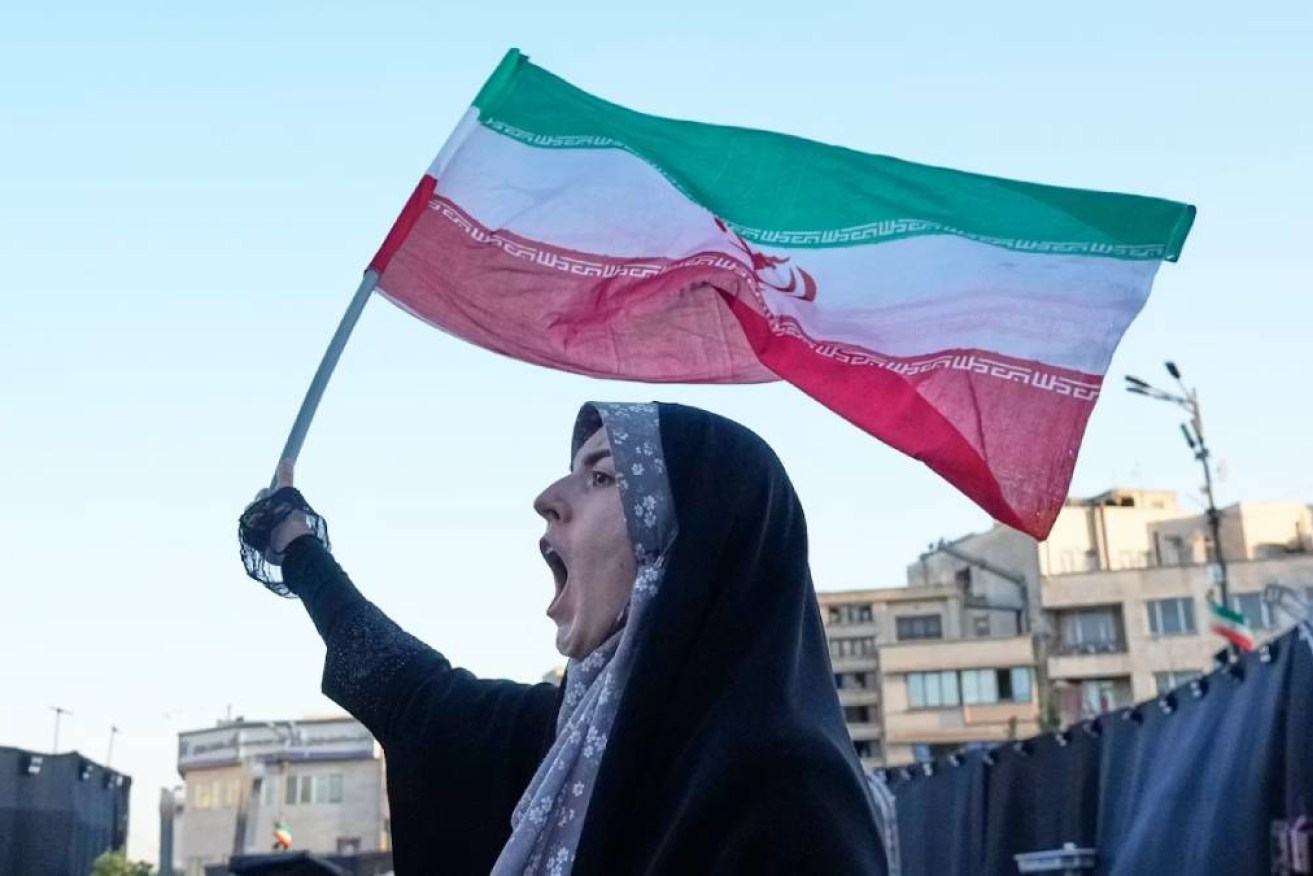
It will leave Iran in a stronger position than before the war, the US with far less leverage in the region, and Israel in the lurch. The deal will also prompt the Arab states in the Persian Gulf to reassess their security alliances with the US and come to terms with Iran as an influential regional player.
Few apparent points of agreement
Iranian and US sources have provided different versions of the deal.
Both sides seem to have agreed to allow traffic to resume in the Strait of Hormuz and lift the US naval blockade of Iran’s ports. Negotiations will also continue over the next 60 days on Iran’s nuclear program.
Beyond this, the two sides appear to be far apart on other issues.
According to Iranian media, the deal would halt the fighting on all fronts, including Israel’s bombing of Lebanon, and reopen the Strait of Hormuz within 30 days “under Iranian arrangements”.
It also calls for the release of US$24 billion ($34 billion) in frozen Iranian assets during the 60-day negotiations, and obliges the US and its allies to deliver reconstruction plans for Iran worth at least US$300 billion ($424 billion).
According to the US media outlet Axios, however, the deal calls for the strait to be reopened immediately without tolls. A US official told Axios that after reopening the strait, Iran would be given “temporary sanctions waivers” to allow it to sell oil.
Trump also made no reference to Lebanon in his announcement of the deal on Truth Social, though Pakistani mediators said Lebanon was included in the deal.
Many contentious issues related to Iran’s nuclear program remain to be resolved, as well. These include the future of Iran’s stockpile of highly enriched uranium and whether Iran should be allowed to enrich uranium at an agreed level for peaceful purposes.
An end to a meaningless war
When Trump and Netanyahu launched the war, they aimed to topple Iran’s government, destroy its nuclear program and missile capability, and sever its ties with its regional affiliates – the Lebanese Hezbollah, the Yemeni Houthis, the Iraqi Shia militias, and Palestinian Hamas and Islamic Jihad.
The overall goal was to alter the regional order to the advantage of the US and Israel. This would allow Netanyahu to achieve his long-cherished objective of turning Iran into a feeble entity and pursue his vision of a “Greater Israel” in the strategically vital and oil-rich Middle East.
However, despite its authoritarian nature and all the domestic and foreign policy challenges confronting it, the Iranian Islamic system has shown it is built to survive. It has endured the decapitation of its leadership, the massive US-Israel military bombardment and subsequent US blockade of Iranian ports.
Iran has certainly sustained heavy damage to its infrastructure and economy – as well as civilian casualties. But the regime was able to respond in ways that has proved very costly for the US, its regional Gulf Arab allies, and Israel.
Its control over the Strait of Hormuz, which Tehran never had before the war, has triggered a global energy and fertiliser crisis and provided Tehran with massive leverage.
Trump, meanwhile, was dealing with increasing domestic opposition to the war, combined with diminishing air defence interceptors and a lack of support among traditional US allies. Given all this, Trump has had good reasons not to allow the conflict to go on for too long, especially in an election year.
The deal must be very disheartening for Netanyahu, whose determination to fundamentally weaken Iran is potentially unravelling.
He may still try to undermine the peace deal by continuing strikes on Lebanon and perhaps formally annexing Gaza and the West Bank. But given Netanyahu’s dependence on the US for his military operations and political survival, Trump has plenty of leverage to force him and the far-right ministers in his cabinet into line.
If and when a final peace deal is signed, it carries the potential to open the way for some kind of rapprochement between Iran and the US as a prerequisite for a more stable and peaceful Middle East. But it is not time yet for excessive jubilation.
Both sides have been here before. They had been negotiating a deal on Iran’s nuclear program for months before the US and Israel attacked Iran. According to Omani mediators, a deal was “within reach” when the bombs started falling.
This means any ceasefire reached now could be very fragile. It also raises the question of what this war – waged with no concern for international law or US Congressional approval – was all about in the first place.
Amin Saikal is Emeritus Professor of Middle Eastern Studies at Australian National University; The University of Western Australia; and Victoria University