Luxury apartments won’t teach our kids or treat our sick

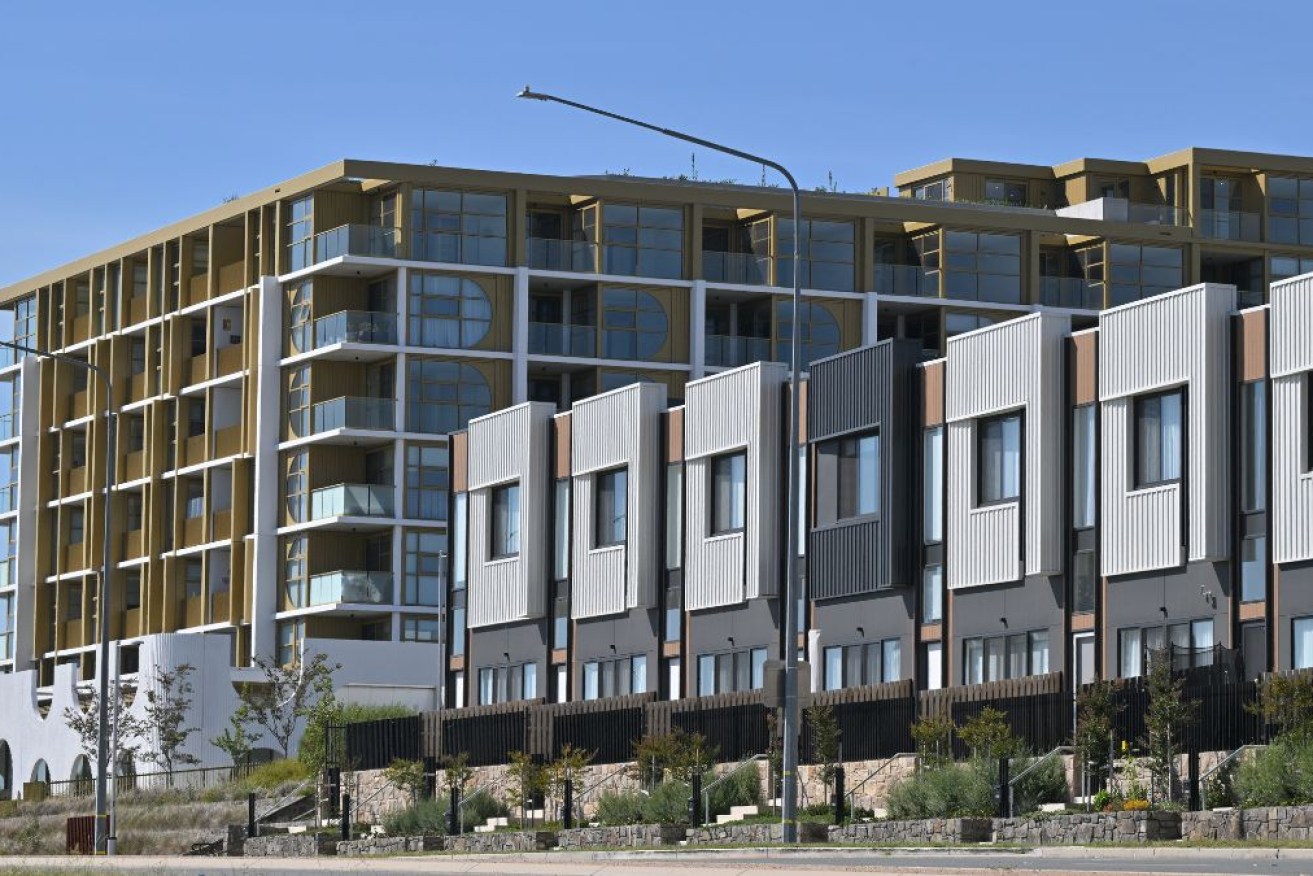
Developing housing near jobs and transport delivers better outcomes for us all Photo: AAP
Australia’s housing crisis is a failure to provide a basic human right – that of a roof over one’s head.
But it also poses a serious threat to the national and international competitiveness of our cities and coastal centres.
There’s a pattern emerging in capital cities and regional centres across the nation in which the people who teach our children, treat the sick and care for the elderly are being squeezed out.
Australia is not only battling a cost-of-living crisis, but a productivity crisis.
Governments, of all political persuasions, are making it worse by selling off prime land with the power to shape better-functioning and more productive local economies.
If essential workers can’t afford to live near centres of economic activity, it will become harder for businesses, hospitals, universities, schools and transport providers to operate.
In most of our cities, governments own surplus land parcels close to city centres and key infrastructure, including hospitals and educational institutions.
These publicly owned land banks could play an important role in safeguarding the nation’s economic future.
The economic health of cities is not an abstract or esoteric concern; it is the basis of our livelihoods and social wellbeing.
Cash-strapped governments are under pressure to simply sell these sites to the highest bidder.
State and federal governments around the country are taking a “supply, now, at any cost” approach, when what we need is a vision that sees further than the next electoral cycle.
The Queensland government recently announced it would sell a large parcel of inner-Brisbane land next to the new Woolloongabba Cross-River Rail Station and another seven hectares on the South Brisbane riverside.
These sites represent a major opportunity to house thousands of residents close to committed transport investments and within walking distance of the city centre and major hospitals and universities.
But Deputy Premier Jarrod Bleijie’s announcements make it clear there won’t be any requirement for affordable housing as part of the development on these sites.
Similarly, the sale of Defence Department-owned land by the federal government focuses on achieving “market value” with no affordable housing conditions attached.
The well-located Defence sites in several states range from inner city to regional and suburban locations, including a 127-hectare site in Maribyrnong in Melbourne’s west.
A NSW government audit identifying unused sites suitable for housing gives priority to its own agencies to develop social and affordable housing, but there are no requirements for those sold to the private sector.
Unless this pattern changes, our cities will suffer as the workers we all rely on, including nurses, aged-carers, teachers, police and paramedics find themselves squeezed out.
It’s already happening – as housing costs ballooned and supply tightened, nurses and teachers across Australia reported spending around 60 per cent of their income on housing.
Housing is generally considered “affordable” when it costs no more than 30 per cent of household income.
The federal government’s proposed changes to capital gains tax and negative gearing may make housing more affordable for owner-occupiers, but there are no guarantees they will help high rents come down, at least in the short term.
Governments can, and should, do more to ensure our cities can affordably house the workers that service them.
That starts with requiring and incentivising developers to provide more affordable housing when they purchase strategically valuable government-owned land, which essentially belongs to the community.
These sites near transport hubs, hospitals and universities are not ordinary development opportunities – they are critical pieces of city-building infrastructure that can shape housing outcomes for decades.
Part of the challenge is that public debate often confuses affordable housing with social housing.
They are not the same thing. Affordable housing is aimed at moderate-income households, including many essential workers who earn too much to qualify for social housing but too little to compete in increasingly expensive rental markets.
When essential workers can no longer afford to live near their workplaces, the consequences extend far beyond individual housing stress – our cities become less resilient and less productive.
Long commutes increase congestion, reduce quality of life and make staffing critical services more difficult. In extreme cases, entire systems become vulnerable.
Sydney has already experienced the risks associated with pushing workers further and further from the city.
When transport disruptions occur, whether through bushfires, floods or network failures, workers living on the urban fringe can struggle to reach their workplaces.
A city that can’t reliably house its workforce close to essential jobs is creating unnecessary risks for itself.
Adelaide recognised this, adopting in parts of the city a mandatory inclusionary zoning approach requiring 15 per cent of all new developments of more than 20 dwellings to be affordable housing.
The South Australian government is expanding the program to cover all of greater Adelaide and reviewing the 20-dwelling minimum to capture more developments.
And as an example of how housing policy can reshape entire cities, it’s hard to go past Melbourne’s Postcode 3000 initiative back in the 1990s. The project to grow inner-city housing took the city’s CBD from 685 central city dwellings in 1985 to 8000 by 2000.
Melbourne’s inner city has since been lauded as one of the most vibrant mixed-use urban environments in Australia. But even with 65,000 CBD dwellings by 2025, Melbourne still faces affordability issues for key workers.
In different ways, both these ideas demonstrate how crucial housing policy is when it comes to place-making.
Developing housing near jobs and transport delivers better outcomes for us all when it serves the broader community, not just the highest bidder.
If governments continue treating precious publicly owned land banks as standard property assets, they will continue undermining the very workers our cities depend upon.
Dr Daniel O’Hare is Associate Professor of Urban Planning at Bond University
Want to see more stories from The New Daily in your Google search results?
- Click here to set The New Daily as a preferred source.
- Tick the box next to "The New Daily". That's it.

Pork barrel rolls out again – it's time for a change

Long-awaited migrant plan reflects needs and fears



Migrant debate is just hot air looking for a problem