Coalition eyes climate, housing money to fund tax cuts
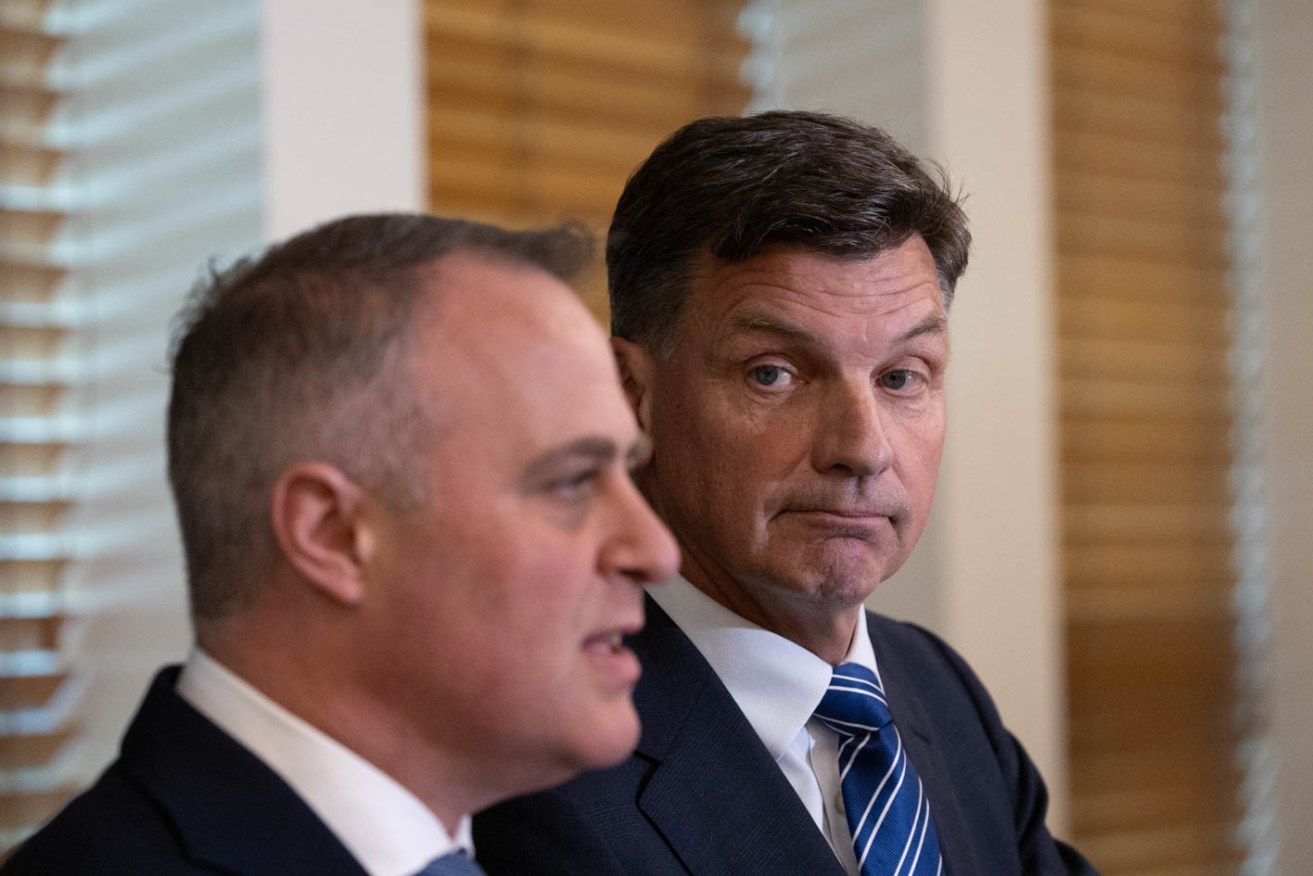
The Coalition has proposed taking a chainsaw to services such as EV subsidies to save $31 billion. Photo: Mike Bowers
Funding for renewable energy projects, electric vehicle subsidies and social housing will be slashed under a future Coalition government to pay for income tax cuts.
The proposed savings would add $31 billion to the federal budget bottom line, more than paying for the proposal to index income tax brackets to inflation, Opposition Leader Angus Taylor said on Monday.
In his sights are the Australian Renewable Energy Agency, which hands out grants to renewable energy projects, the Housing Australia Future Fund, which gives money to social and affordable housing, and the National Reconstruction Fund, responsible for industry funding.
All three would be scrapped, along with the Net Zero Economy Agency and subsidies for home batteries and electric vehicles.
Taylor said the savings would more than pay for the tax indexation plan, leaving the budget an extra $22 billion better off over the four years from 2028-29 to 2031-32.
“We’ve been very clear about axing Labor’s toxic taxes, but also bringing down income taxes over time with our tax back guarantee,” he said in Canberra.
“But we know, we know, that it is absolutely critical at this time to control spending, ensure the economy grows faster than spending, in order to bring down inflation and interest rates.”
Labor’s “climate bureaucracy” was failing to lower emissions and its “housing bureaucracy” was not delivering houses, Taylor said.
The Australian Renewable Energy Agency directly adds to the underlying deficit through non-repayable grants. But the Housing Australia Future Fund and the National Reconstruction Fund are self-sustaining, meaning axing them will only reduce the headline cash balance, not the underlying deficit.
The Coalition’s costings also did not take into account additional spending and tax cut promises, such as a pledge to automatically lower the fuel excise when oil prices rise above a certain level or its vow to reverse Labor’s budget tax changes.
It also assumes that slashing the tobacco excise will improve the budget by an extra $7.9 billion by breaking the back of the black market and encouraging smokers to return to over-the-counter cigarettes.
Shadow treasurer Tim Wilson said banning non-citizens from accessing welfare and NDIS payments would boost the budget by another $2 billion.
The Coalition would also refresh the Charter of Budget Honesty, binding governments to a cap on taxes and spending.
Scope 3 reporting requirements for businesses would also be scrapped, as well as Labor’s Help-to-Buy and Build-to-Rent housing schemes.
“Now more than ever, with rising costs, households and particularly Australia’s small businesses, need economic hope,” Wilson said.
“They need confidence to look to the horizon and believe that they can have a better economic future than they have today.”
Treasurer Jim Chalmers earlier accused the opposition of failing to say how it would pay for $110 billion in unfunded commitments.
“For people who think we should cut much harder, they should nominate, I think, those areas that should be cut more substantially,” he told the Nine newspapers’ Inside Politics podcast.
“But we have been finding savings, many more savings than our predecessors, and that’s because we take the hard yards of budget sustainability seriously.”
The Coalition has opposed several of the government’s savings measures, including bringing the private health insurance rebate for over-65s in line with the rest of the population and selling underutilised defence land.
-AAP
Coalition eyes climate, housing cuts to reduce taxes
Tearful tributes for Haines as Parliament returns
Leaders will 'try to do justice' to wounded MP

Hanson hits back after AFP cartoon claims

Choosing One Nation: Disillusioned or just fed up?
Helen Haines reminds us that politics can be good


A week that’s left Raf Epstein ‘punch drunk’