Health Minister Mark Butler gets history wrong on tobacco enforcement

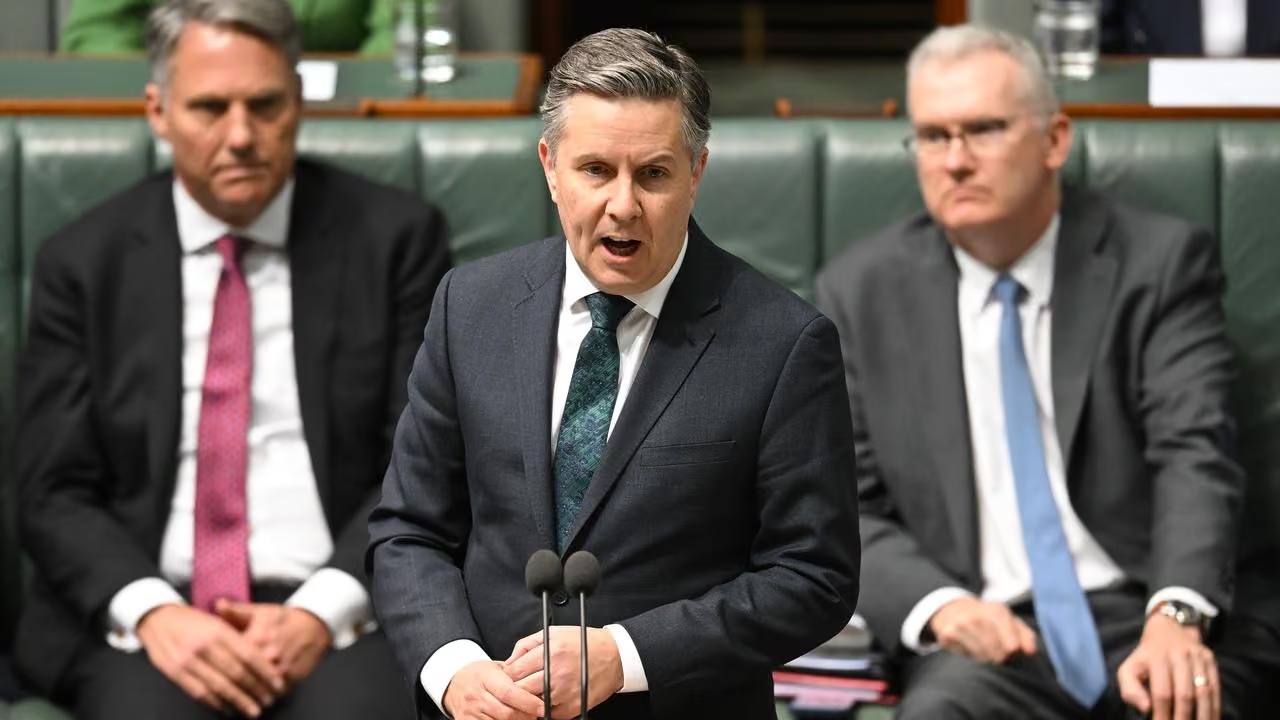
Butler claimed the Coalition 'trousered' tobacco excise revenue. Photo: AAP
Health Minister Mark Butler has repeatedly and incorrectly claimed the Coalition hiked the tobacco excise and pocketed the revenue without spending more on enforcement.
The Coalition increased funding to crack down on illicit tobacco, including launching the Illicit Tobacco Taskforce in 2018.
Butler has also claimed the Coalition failed to invest in public health tobacco campaigns, but the evidence for this is mixed. It cut spending on anti-tobacco ads, but increased funding for a program to reduce Indigenous smoking rates.
Butler made the claims several times in Parliament in September amid public debate about tobacco taxes and a burgeoning black market for illicit cigarettes.
On September 7, he said that tobacco excise had risen by less than 40 per cent under the Albanese government, compared to 215 per cent under the Coalition.
“They trousered every single dollar,” Butler said.
“Not a single dollar went into enforcement. Not a single dollar went into public health campaigns.”
He made a similar statement on September 8, claiming the Coalition did “nothing extra on enforcement” and “not a single dollar [went] into public health programs”, while the excise tax proceeds went into “general revenue”.
He repeated the claim on September 9, saying that under the former government, “there was a 215 per cent increase to excise, all of it trousered by the government – not a single dollar into enforcement, not a single dollar into public health campaigns”.
When asked for evidence for his claims, Butler’s office directed AAP FactCheck to a webpage managed by Cancer Council Victoria that outlined tobacco tax changes between 2013 and 2026, based on Australian Taxation Office data.
This showed tobacco excise rose from $0.35 per cigarette in August 2013 to $1.12 by March 2022 – a 220 per cent hike during a period mostly covered by the Coalition government, which was in power between September 2013 and May 2022.
The tax has risen a further 38 per cent over the four years since, to $1.55 in September 2026.

Butler’s office did not respond to a follow-up question asking for evidence that no funding went into enforcement.
David Bond, an accounting expert at UNSW, said all revenue the Commonwealth government raised – , including tobacco excise revenue – went into a central pot of money called the Consolidated Revenue Fund.
Section 81 of the Australian Constitution requires that all revenue the Commonwealth government raises “shall form one Consolidated Revenue Fund” to fund government spending commitments.
“The statement [by Butler] that the increased excise goes into general revenue is correct, but also uncontroversial, as that is where all revenues and moneys raised goes,” Bond said.
The government can set aside revenue from a tax or levy for a specific purpose by creating a “special account”. But it hasn’t done that with tobacco excise, according to a May 2026 list of special accounts published by the Department of Finance.
Bond said budget documents showed the Coalition funded new enforcement programs after hiking tobacco taxes.
“The statement that not a single dollar was put into enforcement is incorrect,” he said.
James Martin, a criminologist and expert in illicit tobacco markets at Deakin University, agreed the Coalition had increased enforcement funding.
“This claim isn’t correct,” Martin said.
“It is a reasonable claim that insufficient resources were allocated to enforcement, but additional resources certainly were made available.”

The Turnbull government set up a dedicated Border Force ‘strike team’ in 2015 to address tobacco smuggling, according to an October 2015 media release by Peter Dutton, then minister for home affairs.
It subsequently announced $7.7 million for the strike team in the 2016/17 budget, which it said was being made “in conjunction” with a rise in excise (page 16).
A June 2016 government press release said this was “additional funding” that would “establish two new specialist investigation teams comprising 14 personnel”.
This strike team was replaced by a new multi-agency Illicit Tobacco Taskforce in 2018.
This was part of a suite of illicit tobacco policies that was costed at $117.7 million over four years in the 2018/19 Budget, labelled as the “Black Economy Package — combatting illicit tobacco” (p12).
A Treasury briefing from October 2019, released under Freedom of Information laws, said $59 million of this went to the taskforce and $9 million went to the ATO to “combat illicit domestic tobacco” (p6).
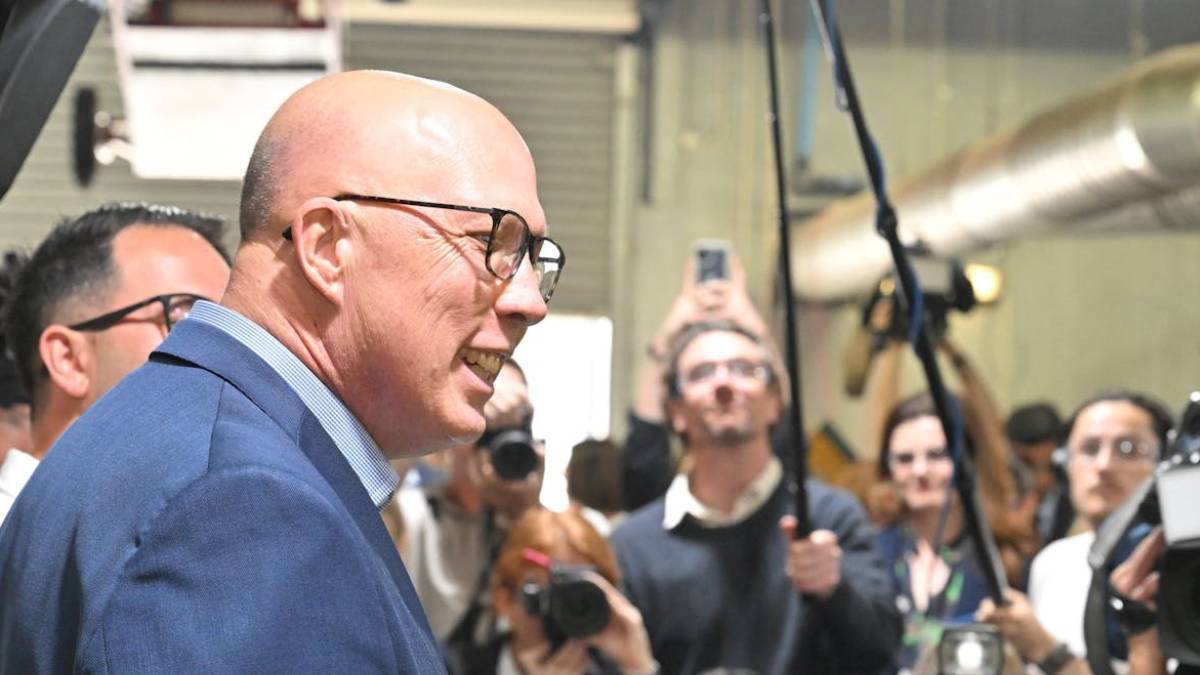
Dutton announced measures to address tobacco smuggling while in office. Photo: AAP
The 2018/19 budget package also included a new permit system to improve illegal tobacco detection at the border (p13).
The 2018/19 budget measures helped increase tobacco tax revenue by $4.6 billion in 2019/20, according to the Department of Home Affairs 2019/20 portfolio budget statement (p61).
In a 2024 press release, Butler acknowledged that the taskforce had achieved “significant outcomes” since it was created in 2018.
While the Coalition did fund new enforcement programs, its record on funding tobacco public health campaigns is mixed.
Professor David Thomas, an expert in tobacco control at the Menzies School of Health Research, said Butler was “probably correct”.
He said two main programs covered federal public health campaigns on tobacco – an anti-smoking advertising campaign and the Tackling Indigenous Smoking program.
The Coalition reduced funding for public health tobacco ads when it came to power and cut it entirely in 2018, according to annual reports on government advertising.
The annual reports show spending fell from $25.2 million under Labor in 2012/13 (p15 and p33) to $9.6 million under the Coalition in 2014/15 (p33).
Funding continued to decline each year, reaching $7.1 million in 2017/18 (p29), before funding ceased from 2018/19 onwards, according to the reports.
Advertising spending resumed under Labor, with $9.9 million spent in 2023/24 (p31).
Budgeted funding for the Indigenous anti-smoking programs was cut after the coalition came to power in 2013, then increased in later coalition years.
Labor established the Tackling Indigenous Smoking and Healthy Lifestyles program in 2010/11 as part of a broader three-year deal to address chronic disease in Indigenous communities.
Budgeted funding for the program was $67.4 million in 2013/14, then cut by “about 30 million” for 2014/15, according to Department of Health officials in May 2014.
The Coalition redesigned the program following a 2014 review, shifting funding away from general healthy lifestyle initiatives towards specific tobacco reduction outcomes, according to a government report (p i).
The redesigned program was given $116.8 million over three years from 2015/16 (p i).
In February 2018, the government announced a further $183.7 million over four years for the program, according to a press release.
The Coalition extended the funding again in 2021, allocating $187.8 million over four years from 2022/23, according to another press release.
-AAP
Ugly shift highlights Australia's biggest challenge
MPs to get security briefings after attack
'Shady' Labor grants under inquiry spotlight
Pauline Hanson apologises for vulgar cartoon on rival