There’s been an ugly shift in Australia. Our biggest challenge is a clear-eyed examination of why

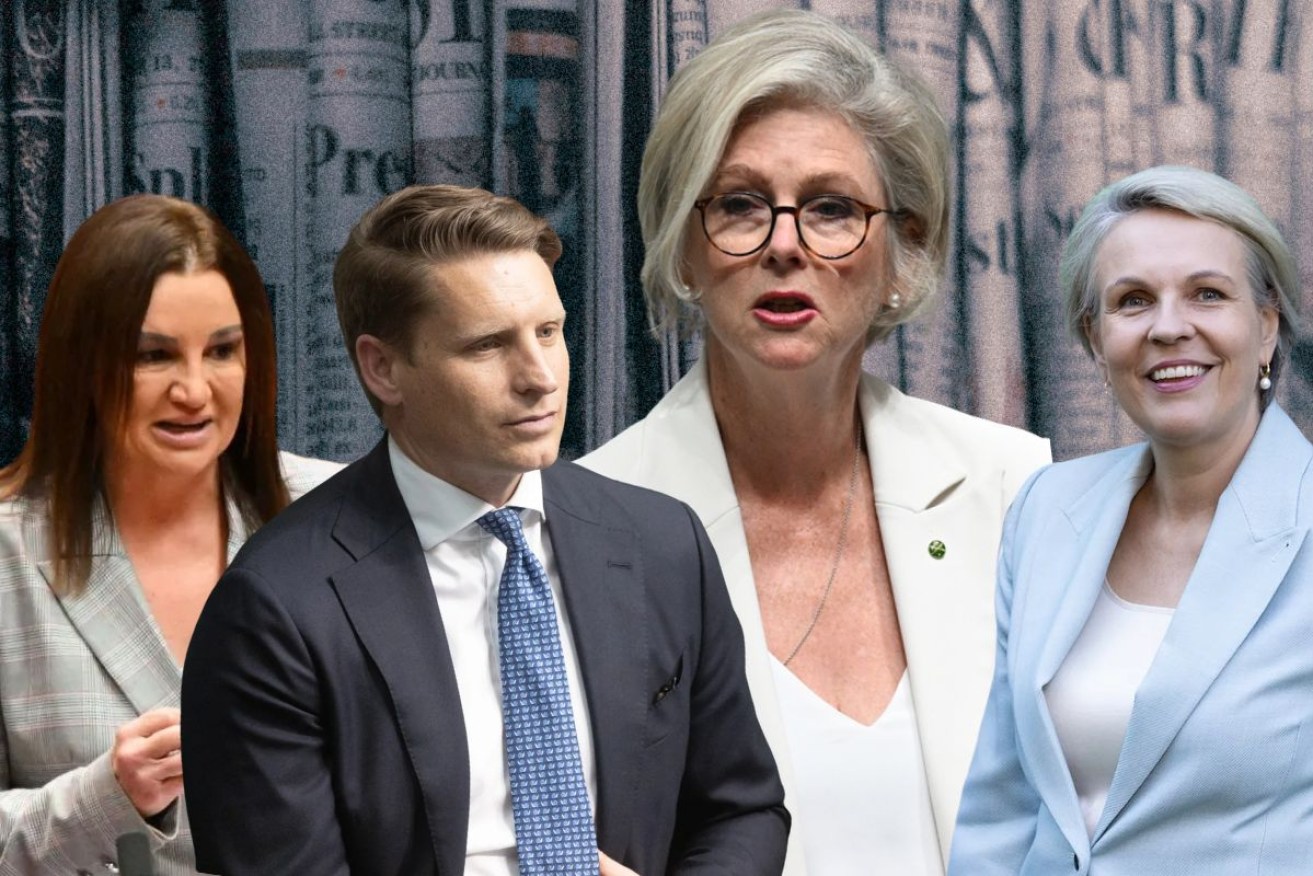
Photo: TND
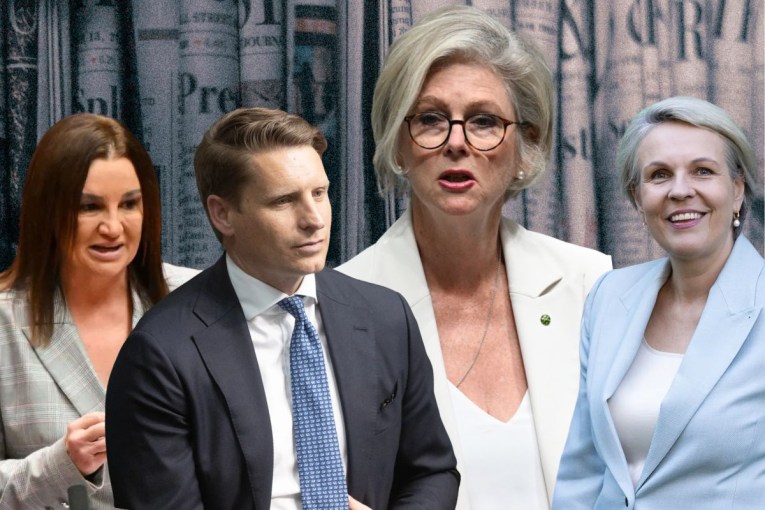
Just hours after Helen Haines was struck by a Toyota LandCruiser in an alleged deliberate act, Tanya Plibersek was interviewed about her experience with threats:
“There’s always been threats. Years ago, I had someone slip a note under my front door at home – no stamp on it or anything, they’d obviously turned up in person – saying they hope my children die of painful cancers. I’ve had, I mean, I couldn’t even count the number of death threats, rape threats that I’ve had over the years, including ones that have ended up in court.”
The thing that’s changed most is the industrial scale of that abuse now. And there’s always been abuse, but I am shocked by the tenor of it.
This week I posted something about Jacqui Lambie, saying that I thought that the cartoon mocking her vaginal prolapse was in extremely poor taste. And 24 hours after I posted that, after this attack on Haines, someone wrote under that post defending Lambie that “she deserves to meet a LandCruiser”. Now, I don’t know what kind of person does that.”
Liberal MP Andrew Hastie, who has been public about the abuse he has received from One Nation supporters, stemming from his court testimony against an alleged war criminal, was asked the same question:
“In my own case, I didn’t seek any security upgrades, the Minister for Home Affairs approached me about that and said that I had been identified and it was over the last six months, particularly, that I’ve come under sustained abuse online. I don’t stay online, I hand that off to my staff – it’s better for my mental health, frankly. But it is an issue and my concern is people being whipped up in, into a frenzy. And people at the margins who we can’t track, who show no signs of being a potential threat, end up taking action because it’s very easy to weaponise a car, a kitchen knife, a cricket bat or anything else to take action against a public official.”
In a press conference on Monday night, Home Affairs Minister Tony Burke reported:
“Last year, or the year before last, we had 951 reports of harassing and threatening behaviour against various high office holders. In the more recent financial year, that 951 has gone to 1067.”
ASIO boss, Mike Burgess has previously warned that “elevated levels of grievance, intolerance and polarisation continue to create a permissive environment of violence”. Earlier this week, he said he had “repeatedly put on the record my concern about the use of violent rhetoric in public discourse. Words matter”.
“While political differences, debates and peaceful protests are essential parts of a healthy democracy, ASIO has seen direct correlations between inflamed language, inflamed tensions and acts of violence. Disagreement is OK but acts of violence and intimidation are not — especially against those democratically chosen to represent us,” Burgess said.
“This incident occurred in an environment where politically motivated violence is more likely than previous years. I genuinely believe the temperature of our security environment would be several degrees lower if we recommitted to conversing with civility, debating with respect and disagreeing with restraint.”
All reasonable people abhor violence, in all its forms. As a society, we rightly resile from it. But we are no good at examining it, and we certainly aren’t practised at dealing with it. We see some people’s anger and grievance as legitimate and wave away their rhetoric as righteous emotional outbursts, and others as illegitimate and as causing the problem. If you weigh perpetrators of political violence only by their politics, then it is not the impact to people you prioritise, but the score.
Perhaps one of the biggest differences is when one act speaks for a whole movement, but if an equally heinous act is carried out by a person with politics of a different type, it’s an individual act, with regrettable consequences.
It’s common to see people cherry-pick the facts that suit the case they are making, taking comments out of context to prove their case, while wiping their own slate clean. We know Charlie Kirk’s name, but not Melissa Hortman’s.
Make a dehumanising joke about someone you don’t like and they should just “get over it”, but if the subject represents your side, it’s a capital offence. The outrage, and the response, is rarely applied equally.
In terms of political debate, we weigh the calling out of the increasing dehumanisation and vilification of members of our society as equal to the dehumisation and villification itself, and then decry an end to civility. Meanwhile, ASIO reports that the median age that children first appear on its radar is 15; 85 per cent of them are boys, with radicalisation now occurring within weeks, mostly online.
In its submission to the parliamentary joint committee on intelligence and security inquiry into the nature and drivers of radicalisation in Australia, which was established before Monday, ASIO reported “drivers of radicalisation into violent extremism are also now numerous and diverse. Complicated ideologies and grievances, technology, and world events are interacting with and compounding each other – and can be internalised by an individual to explain their own grievances and circumstances”.
“Additionally, since the Covid-19 pandemic, ASIO has also observed increasing anti-authority beliefs, lower trust in institutions, spikes in societal and political polarisation, non-peaceful debate and protest, intolerance, and the normalisation of provocative and inflammatory behaviours. As a result, the environment is more conducive to an increase in acts of violence,” it said.
Most people in Australia will have felt this shift. And the answer requires more than repeated, if well-meaning, calls to take the “temperature down”.
We need to examine what’s fuelling the fire, with clear, non-partisan eyes. That also means challenging who we allow to be dehumanised, and how. Not by what best suits a particular cause, but all of the permissiveness we have accepted into the mainstream, almost without question.
And it needs to happen now. Alarm bells are already blaring about what the future of technology will exploit, compounding what we’ve already lost control of. That’s not a partisan issue, it’s a fact. One that will impact all of us, whether we believe in it, or not.
Amy Remeikis is a contributing editor for The New Daily and chief political analyst for The Australia Institute
Ugly shift highlights Australia's biggest challenge
As anti‑govt violence grows, a response must too