Who owns intimacy? When governments start regulating love, sex and reproduction


Can government intervention help us find love? Singapore is about to find out. Photo: Unsplash
Singapore has a new dating app. Unlike Tinder, Bumble or Hinge, this one has the government playing matchmaker.
FirstDate, developed by Singapore’s Government Technology Agency, is being trialled among public servants aged 21 to 35. It uses verified identities, an established mathematical matching algorithm and government-supported dating activities to help singles find compatible partners. Rather than endless swiping, users receive one match at a time.
The initiative arrives against a backdrop of declining marriage rates and a fertility rate of just 0.87 children per woman. Although its developers describe FirstDate as an experiment in improving dating, it has inevitably become part of a much broader conversation about Singapore’s demographic future.
On the surface, the proposition is appealing. Dating apps have become environments characterised by exhaustion, commodification and, increasingly, violence. A platform offering verified identities and fewer opportunities for deception might be welcome.
But it raises a more provocative question: When governments begin intervening in how we meet, fall in love and reproduce, where does public policy end and the regulation of intimacy begin? Historically, governments have never been particularly comfortable leaving reproduction to chance.
China’s one-child policy, introduced in 1979, remains one of the most consequential examples of state intervention in reproductive life. Through financial penalties, surveillance and coercive reproductive practices, the state attempted to engineer population outcomes. Today, China faces the opposite demographic challenge, encouraging births after decades of restricting them.
Singapore has its own history of social engineering. In 1984, it established the Social Development Unit to encourage marriage among university graduates. This reflected an uncomfortable intersection between reproduction, education and class: The belief that certain relationships, and certain reproductive outcomes, were more desirable than others.
This regulation is hardly confined to Asia.
In the United States, the overturning of Roe versus Wade in 2022 removed federal constitutional protection for abortion. As of September 2026, 13 US states had total abortion bans in effect, with many others imposing gestational restrictions.
These are vastly different interventions. Singapore’s voluntary matchmaking initiative cannot be equated with coercive population control or restrictions on reproductive healthcare. Yet each illustrates how the state can become involved in decisions traditionally understood as deeply personal.
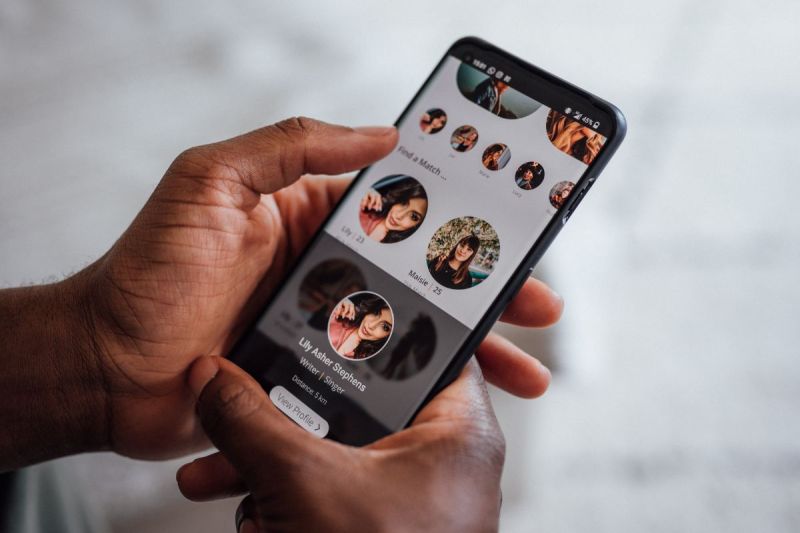
Dating apps have become uncomfortable, even dangerous, spaces for many women. Photo: Canva
Historically, it is women who have carried a disproportionate burden of reproductive regulation.
The question is not simply whether governments should intervene, but what they are seeking to achieve, whose interests are being served, and who ultimately retains the right to choose.
There is also something revealing about the class dynamics of Singapore’s experiment.
FirstDate is initially restricted to public servants, creating a relatively defined professional dating pool. Elsewhere in Asia, dating platforms increasingly filter potential partners through educational qualifications, employment credentials and institutional affiliations. Researchers have described this phenomenon as credentialised intimacy.
Generally, marriage has been about far more than love. It has preserved wealth, consolidated family alliances and reinforced social hierarchies. Modern dating algorithms might appear revolutionary, but they can reproduce remarkably traditional structures through education, occupation, income and perceived desirability.
The technology changes. The social ordering remains. Which brings us to the potential benefits of government intervention.
Recent Australian research paints a disturbing picture of digital intimacy. A September 2026 study of 1008 heterosexual women found that 99 per cent of those surveyed had experienced at least one abusive behaviour on dating platforms in the preceding three months. Psychological manipulation, monitoring, sexual harassment and coercive behaviours were widespread. The findings relate to the women surveyed, rather than representing all Australian dating-app users.
Research by Indigenous scholar Professor Bronwyn Carlson adds another critical dimension. Her work demonstrates how Aboriginal and Torres Strait Islander women experience technology-facilitated violence through intersecting systems of racism, misogyny and colonial power. Dating platforms can become sites of racialised sexual harassment, fetishisation and dehumanisation. Carlson also questions why Indigenous communities are so frequently researched without being given sufficient power to shape the research and solutions themselves.
These are not simply technological failures. They are manifestations of existing social inequalities. Perhaps this is where government intervention becomes necessary.
Identity verification, enforceable safety standards, transparent reporting mechanisms and independent oversight could make dating platforms considerably safer. Australia is already considering how a digital duty of care might require technology companies to take greater responsibility for preventing harm. But regulating the architecture of dating is not the same as addressing the architecture of misogyny.
Governments are increasingly concerned that people are not partnering, marrying or reproducing. Yet the policy conversation frequently treats intimacy as a logistical problem rather than confronting the economic pressures, gender inequalities and cultural expectations shaping people’s decisions.
Women are not simply failing to find suitable matches. Some are making deliberate choices about the relationships they are willing to accept. If governments genuinely want healthier relationships, perhaps the most meaningful intervention is not matchmaking but education, prevention of violence, economic security and greater gender equality.
Singapore may succeed in creating more matches. Whether those matches become loving, equitable relationships is another question entirely. The future of intimacy should not be measured simply by how many people marry or how many children they produce. It should be measured by whether people are free to love, to leave, to choose and, importantly, to say no.
Dr Lisa Portolan is a casual academic at the University of Technology Sydney. Her PhD on dating apps and intimacy from Western Sydney University was published in 2024. It has also been released as a book: Love, intimacy and online dating (Routledge, 2023)

Who owns intimacy? When govts regulate love