Anti‑government violence is growing. The response needs to be more than just increased policing

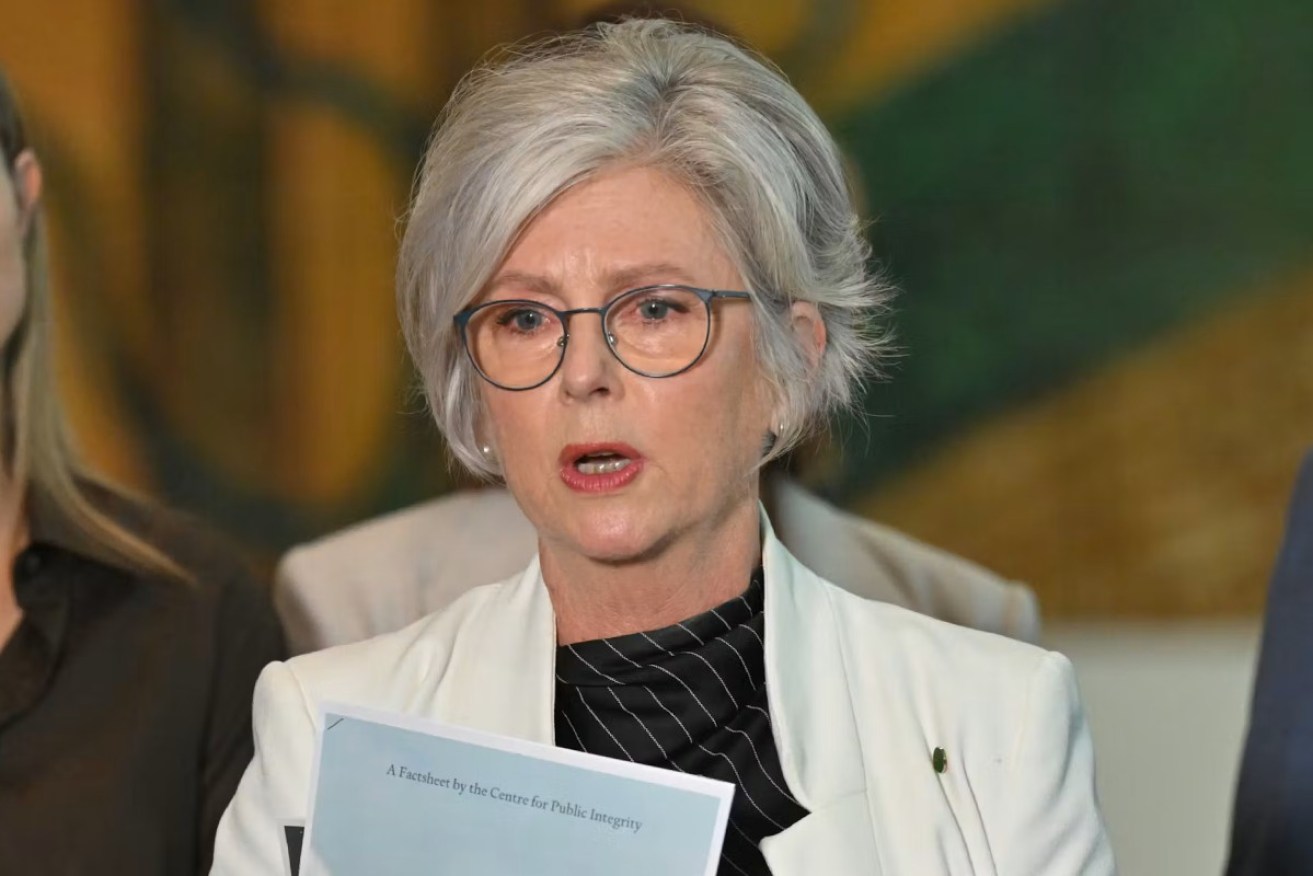
We do not know the motivations for the attack on Helen Haines. Photo: AAP
Independent federal MP Helen Haines remains in critical condition after being struck by a vehicle outside her electorate office in Wangaratta, Victoria.
Forty-three-year-old Brendan Nugent from nearby Tarrawingee, has been arrested in relation to the incident.
Prime Minister Anthony Albanese, meanwhile, has described the incident as a deliberate targeted act, and the joint counter-terrorism team has been activated.
Investigators have stressed the motive remains unknown, but the incident occurs against a troubling backdrop.
Australian authorities and researchers have warned for years about increasing anti-government and anti-authority sentiment, conspiracy beliefs and the potential for political grievances to spill over into violence.
Threats against politicians are also increasing. The Australian Federal Police recorded 1067 reports of violent threats against high-office holders in 2025-26, up from 951 in 2024-25.
Threats are not just restricted to politicians or the government of the day: They extend to anyone in a position of authority.
What is anti-government extremism
Anti-government extremism is not one coherent ideology or organisation. It can encompass sovereign citizens, conspiracy theorists and others who come to see government institutions as fundamentally corrupt, illegitimate or actively working against ordinary citizens.
It covers the entire political spectrum from the extreme left to the extreme right, as well as other movements that may reject the legitimacy or authority of the state.
It is a subcategory of political extremism, where anti-government extremists primarily or consistently focus on government as a source of perceived grievances and the perceived cause of crises.
This can then lead to threatened or actual violence against government targets, their representatives, or anyone else in a position of authority.
Recent Australian experience demonstrates why authorities take anti-government sentiment seriously.
In August 2025, self-described sovereign citizen Dezi Freeman shot dead two Victorian police officers when police arrived at his Porepunkah property to issue a search warrant.
Freeman fled, triggering a seven-month manhunt that ended when he was shot dead by police in March 2026.
Freeman had publicly identified as a sovereign citizen and expressed hostility toward police.
Reports following the attack documented his long-running embrace of anti-government beliefs and conspiracy theories. Freeman’s case illustrates an important feature of anti-government extremism. It does not necessarily resemble traditional, organised terrorism.
However, it is equally important to not assume that everyone who distrusts government or believes in conspiracy theories will become violent.
The critical question is why, for a small minority, profound distrust and grievance develop into a willingness to use violence against authority figures.
My colleagues and I recently examined this question. Using survey data from 1595 Australians, our research found that those who held anti-government conspiracy beliefs were more likely to support violent insurrection against the government.
They were also more likely to support violent intentions towards government officials, and self-reported engaging in anti-government violence in the past.
The important finding was how that relationship operated. Anger and perceptions that government lacked legitimacy explained why conspiracy beliefs increased willingness to use violence.
Those who held stronger anti-government conspiracy beliefs reported heightened anger, and were more likely to perceive that the government lacked legitimacy. This in turn increased their willingness to commit violence.
Policing alone not a solution
The obvious response to political violence is stronger security.
Protecting politicians, monitoring credible threats, and intervening when people move towards violence are clearly necessary. But enforcement deals largely with the threat once it has developed.
Prevention requires us to think about why some people become profoundly alienated from government in the first place.
Our research points towards an approach known as procedural justice. “Procedurally just” governance is about how governments exercise their authority.
It means treating citizens with respect, making decisions fairly and without bias to prevent benefiting one special-interest group over another, being transparent about motives for legislation or new government processes.
It also means giving people meaningful opportunities to have their voices heard.
Importantly, our study found that when people perceived government as more procedurally just they reported lower levels of anger and were less likely to perceive the government as illegitimate.
This relationship was evident among both conspiracy believers and non-believers. It means procedural justice shouldn’t be dismissed as merely good public relations. It potentially forms part of Australia’s strategy for preventing violent extremism.
Government legitimacy is a security issue
Again, we do not know the motivations for Monday’s incident. However, the rising threat against those in public life is an issue that needs to be taken seriously and addressed.
When authorities confront political extremism or violence, the temptation can be to clamp down harshly on would be troublemakers or enact more laws.
Yet if people already believe government is corrupt and illegitimate, interactions and decsions they perceive as procedurally unjust can backfire and reinforce that worldview.
This certainly does not mean governments should accommodate false conspiracy claims, pseudo-law arguments or threats of violence.
Rather, governments need a two-track response. They need to identify and disrupt people moving towards violence. But they also need to reduce the conditions that can make that violence attractive in the first place.
These include alienation, anger and a belief that public institutions exercise power without listening to people or treating them fairly and equally.
Australia needs to think about countering anti-government extremism not only as an intelligence and policing problem, but as a governance problem. Procedurally just governance must be part of the solution.
Kristina Murphy is Professor and former ARC Future Fellow at the Griffith Criminology Institute, Griffith University
This article is republished from The Conversation under a Creative Commons licence. Read the original article
Anti‑govt violence is growing. A response must too